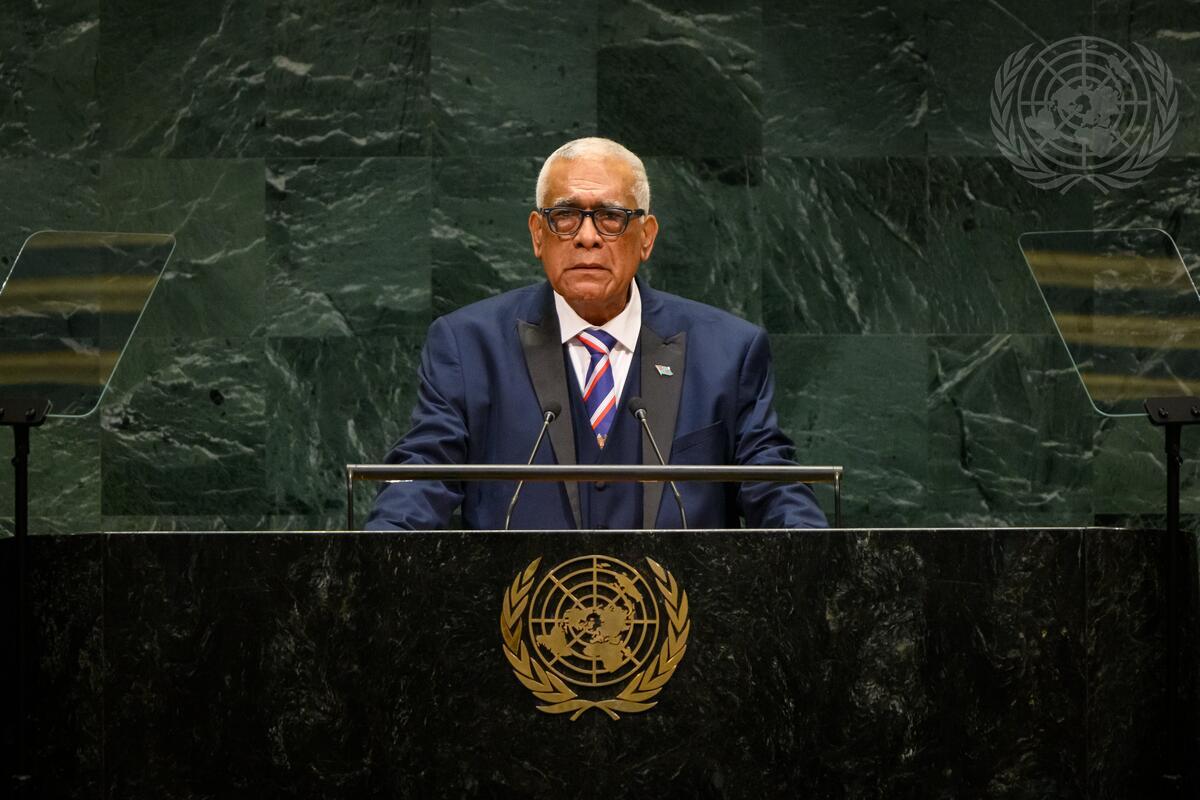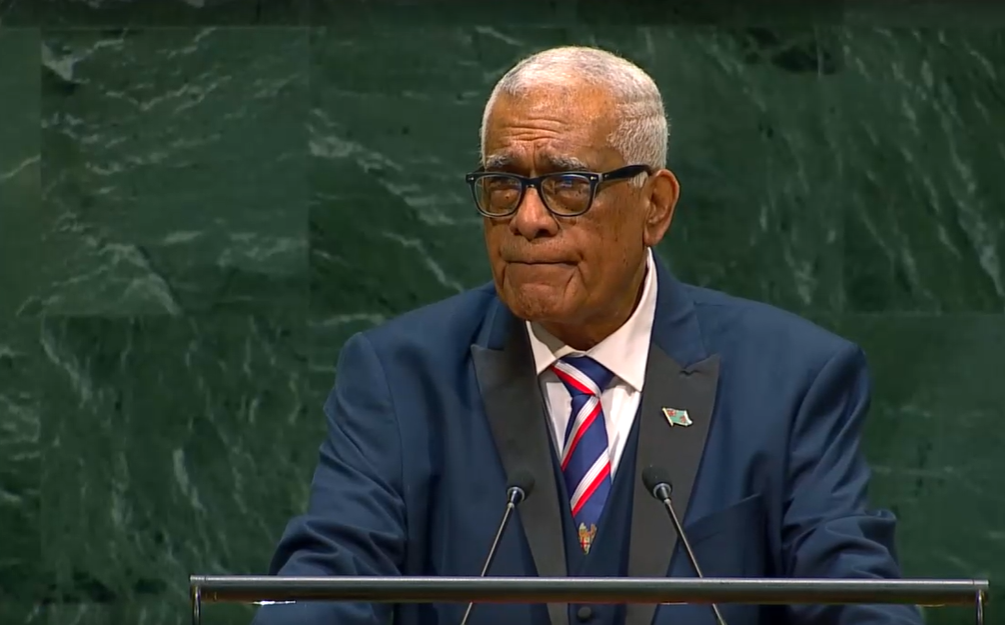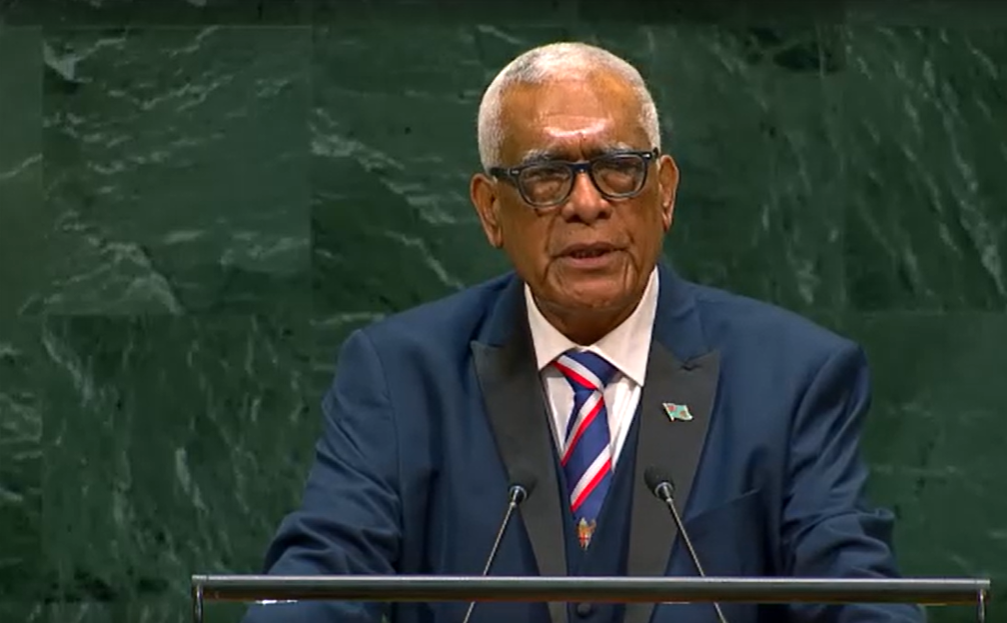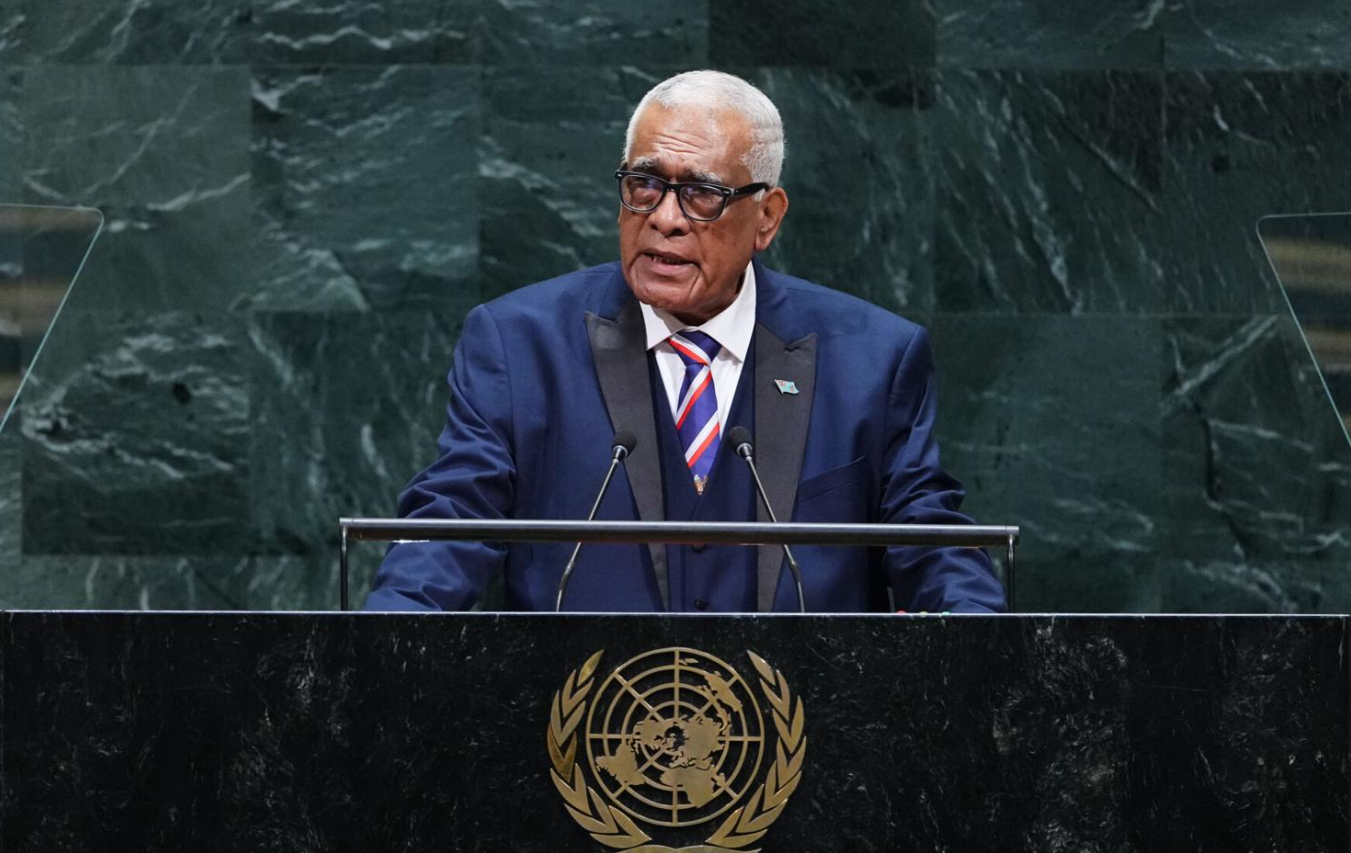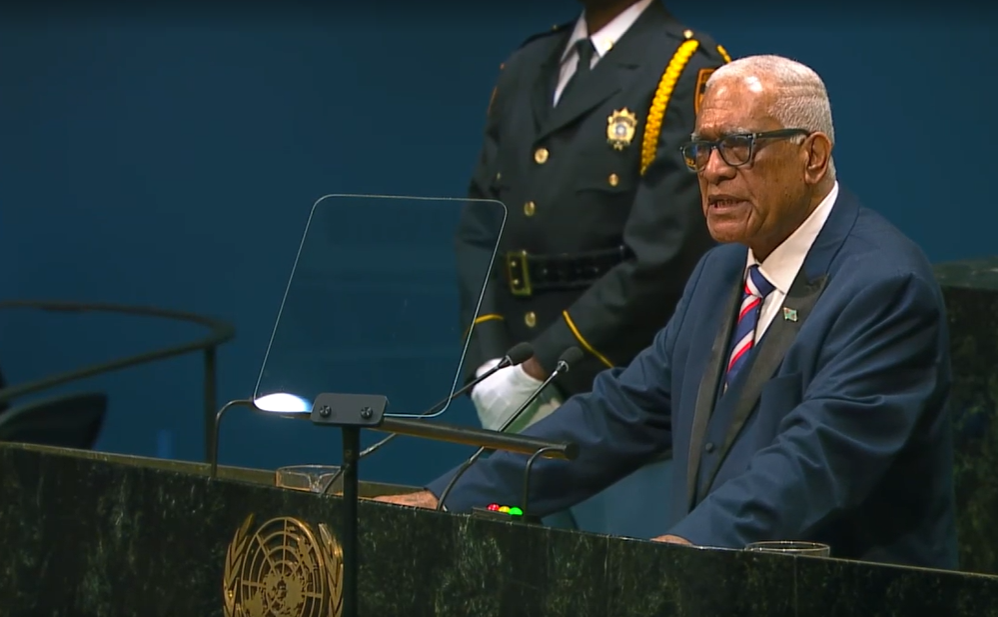
No Pacific nation should lose its statehood, maritime rights or place at the United Nations because climate change has altered its coastline, President Ratu Naiqama Lalabalavu has told the UN General Assembly.
Addressing world leaders in New York, Ratu Naiqama said climate change was already affecting Pacific communities through coastal erosion, saltwater intrusion, stronger storms and threats to food security.
“For the Pacific, climate change is not a future scenario,” he said.
“It is salt water entering farmland, coastal erosion moving closer to homes, stronger storms damaging schools and roads, pressure on fisheries and food security, and communities facing relocation.”
Ratu Naiqama said climate change was not only a question of science but also one of justice, particularly as rising seas raised fundamental legal questions for island states.
“Statehood, once established, continues,” he said.
“Maritime zones once lawfully established and deposited with the United Nations must remain, notwithstanding the physical changes brought by sea-level rise.”
He said no country should be stripped of its rights or international standing because of climate-induced changes to its territory.
“No state should lose its rights, its identity, or its seat in this hall because others have altered its coastline.”
Ratu Naiqama called for this principle to move from international declarations into settled international law.
He also welcomed the International Court of Justice’s advisory opinion on states’ obligations in relation to climate change, saying it confirmed that climate responsibility was “not only political or moral, it is legal”.
“The task now is implementation,” he said.
The President also called for climate finance to move “from promise to access, from announcement to disbursement”, saying the Loss and Damage Fund needed to operate at a scale reflecting the actual needs of vulnerable countries.
“For small administrations, the cost of applying should never exceed the capacity to apply,” he said.
Ratu Naiqama invited international delegations to visit the Pacific ahead of COP31 to witness the effects of climate change firsthand.
“Come to the Pacific. See what a rising sea means to a village that has nowhere to move,” he said.
He said Fiji would continue advocating for action on adaptation, climate finance, loss and damage and the transition away from fossil fuels.
Ratu Naiqama also called for stronger protection of the ocean, warning that illegal fishing, pollution, biodiversity loss, warming and acidification crossed national boundaries.
On deep-sea exploitation, he said Fiji’s position was that development should not proceed until adequate scientific knowledge and effective rules were in place.
“The common heritage of humankind is an obligation owed to those not yet born,” he said.
Ratu Naiqama said Fiji’s small size did not diminish its role in global affairs.
“Our size does not diminish our voice. Our vulnerability does not diminish our agency, and our distance from the centres of power does not distance us from its consequences.”