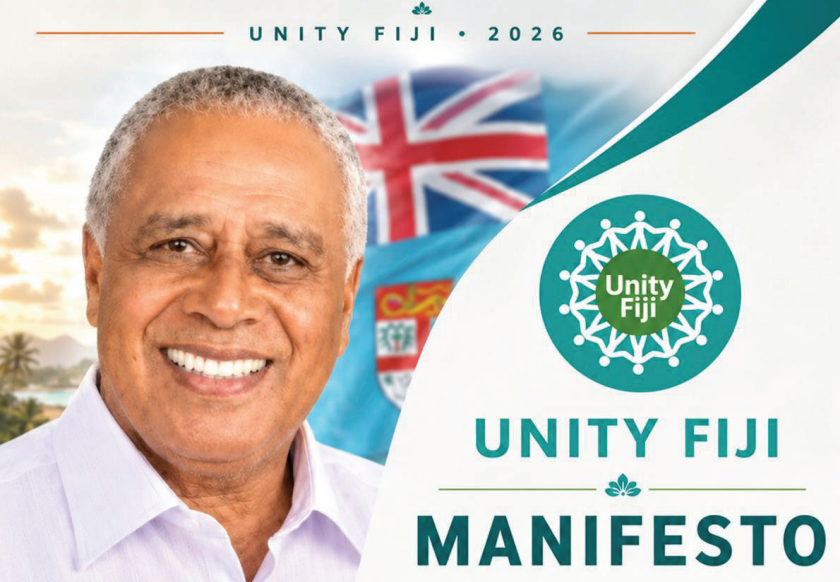
Unity Fiji has become the first political party to release its manifesto ahead of the 2026 General Election, putting forward major pledges on wages, taxation, tertiary education, housing, sugar and government debt.
The party, led by former Reserve Bank of Fiji governor Savenaca Narube, launched the manifesto at its annual general meeting and campaign rally in Sigatoka today.
The manifesto describes Unity Fiji as a moderate and multiracial party founded in 2017 by the late Adi Sivia Qoro, Kaliopate Tavola and Mr Narube.
Among its key election promises is a phased increase in the national minimum wage to a living wage of $8 an hour, with conditions aimed at protecting small businesses.
Unity Fiji is also proposing to increase the income tax threshold from $30,000 to $40,000 and senior citizens’ allowances to $150 a month.
Education features prominently in the manifesto, with the party promising an automatic scholarship for every student who secures a place at a registered tertiary institution and forgiveness of remaining student debt owed to Government under the existing scholarship scheme.
In housing, the party proposes increasing annual funding for new housing from $20million to $80million, with a target of constructing 1000 homes annually, relocating informal settlements and assisting first-home buyers.
The sugar industry also receives significant attention. Unity Fiji promises to increase the cane price to $110 per tonne and allow farmers to receive their total crop income within three months of cane delivery. It also proposes exploring mobile mills and providing farmers access to machinery and alternative crops through its Economic Transformation Program.
On government finances, Unity Fiji says it would move away from what it describes as a “borrow-and-spend” approach, introduce zero-based budgeting and undertake a comprehensive expenditure review. It also proposes reducing the number of ministers.
Its financial projections estimate reducing the overall budget deficit from the Government’s projected 7 per cent of GDP in 2026-27 to 1 per cent in 2027-28, with the longer-term aim of reducing the debt-to-GDP ratio to below 50 per cent. These figures are the party’s own projections, based on publicly available information.
On constitutional and governance issues, Unity Fiji says it would consider the findings of the Constitutional Review Commission, pursue municipal elections by the end of its second year in government and establish a land tribunal to hear land disputes.
The party also proposes strengthening the independence of institutions including the Reserve Bank, Office of the Director of Public Prosecutions, Auditor-General, FICAC, Human Rights Commission and Elections Office.
Unity Fiji had signalled as early as January that it intended to be early with its manifesto, with Mr Narube telling The Fiji Times at the time that drafting was already underway.
The Fijian Elections Office currently lists Unity Fiji among Fiji’s registered political parties.