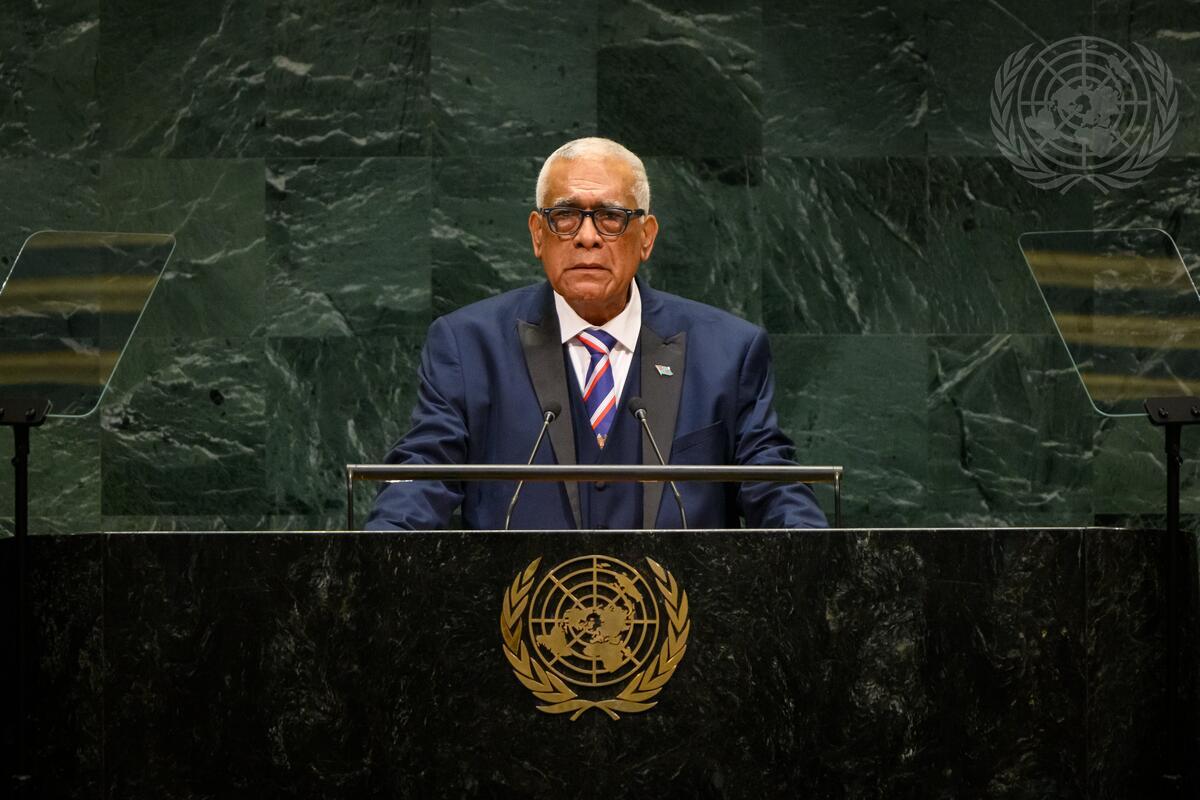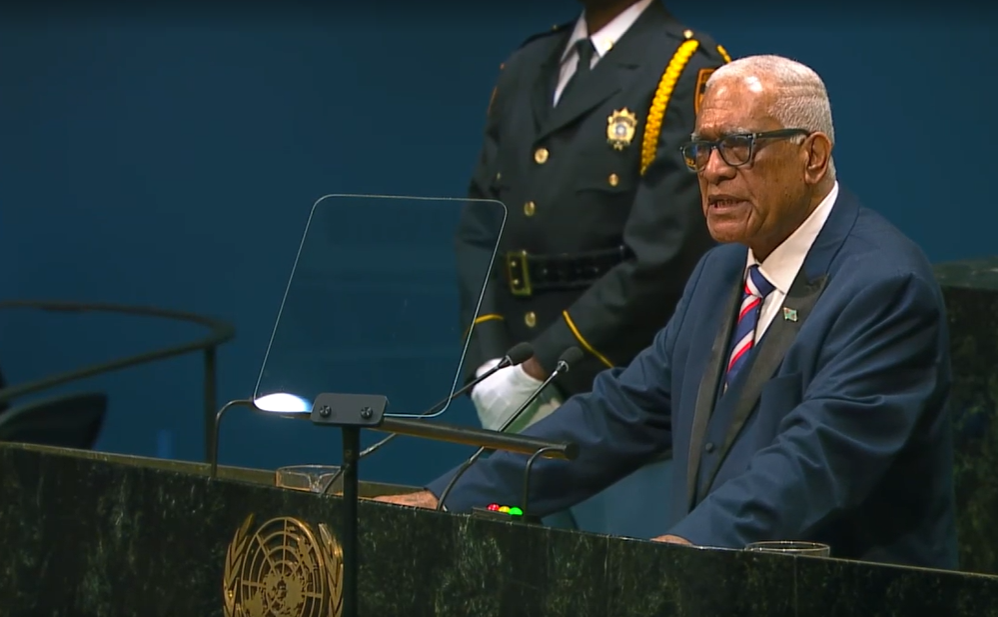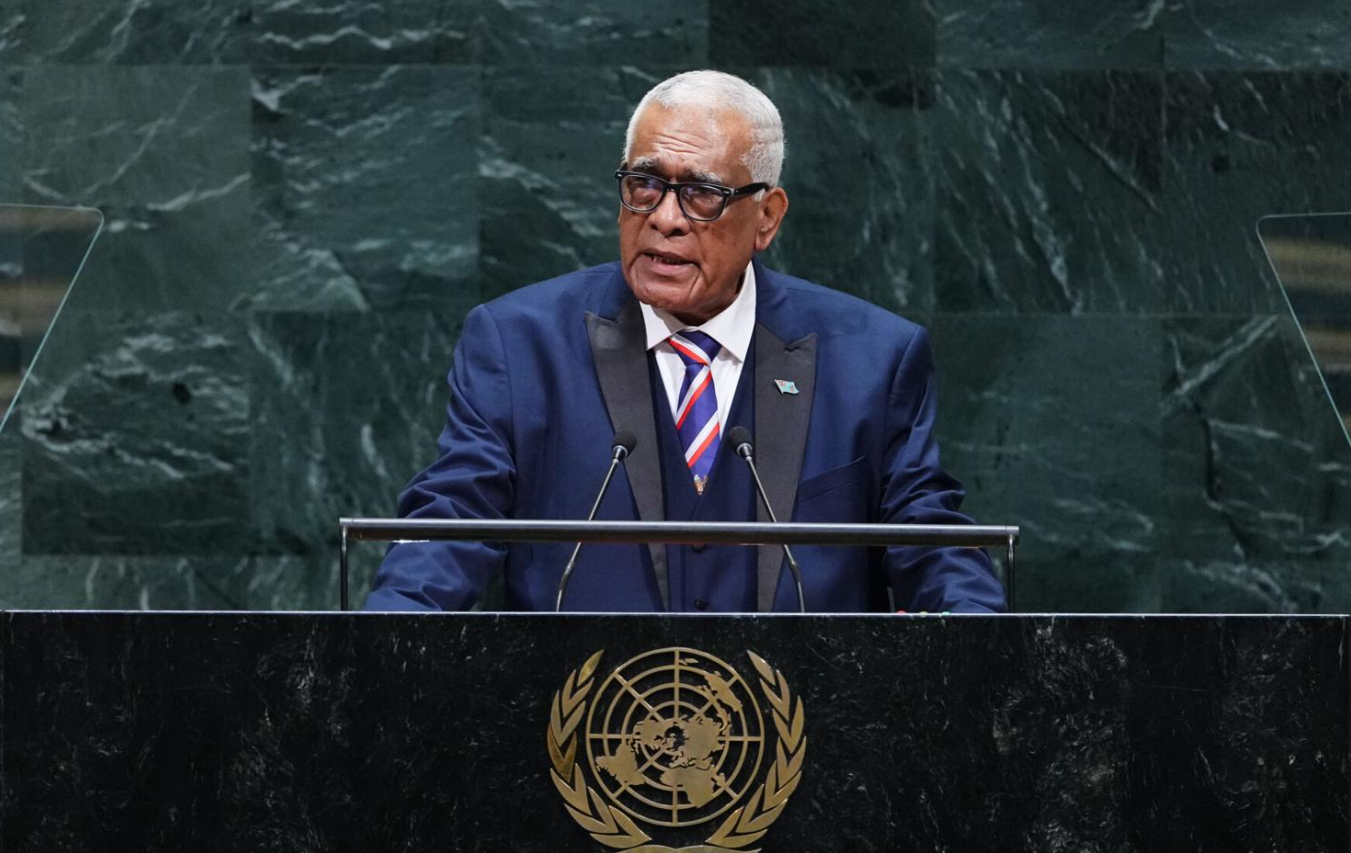
Fiji will not be drawn into choosing between competing global power blocs and will instead stand by international law and the principles of the United Nations Charter, President Ratu Naiqama Lalabalavu has told the UN General Assembly in New York.
Addressing world leaders, Ratu Naiqama said international law was particularly important for small states, whose security could not depend on military strength.
“International law is not optional and peace cannot be secured by power alone,” he said.
“For small states, the principles of the Charter — sovereign equality, territorial integrity and peaceful settlement of disputes — are the safeguards against a world in which the size of military strength decides whose rights matter.”
Ratu Naiqama said Fiji’s position was clear when faced with competition between major powers.
“When the world asks small states to choose between competing power blocs, Fiji chooses principles and we choose the Charter.
“We choose international law. We choose dialogue over coercion, human dignity over domination and cooperation over confrontation.”
He called for the peaceful settlement of conflicts and urged parties to protect civilians, respect international humanitarian law and return to negotiations.
“The Charter does not apply differently according to who is involved or where,” he said.
“Fiji asks the same of every party in every theatre.”
Ratu Naiqama also stressed the importance of freedom of navigation under international law, including the United Nations Convention on the Law of the Sea, and reaffirmed Fiji’s commitment to UN peacekeeping operations.
He said peacekeeping missions must be “properly mandated, properly financed and properly supported”, while greater investment was needed in prevention, mediation and diplomacy.
“We carry a very simple conviction: the life of a stranger is worth protecting. Dialogue is worth pursuing, and peace, however difficult, is always worth building.”
Turning to the Pacific, Ratu Naiqama said the region continued to carry the legacy of militarisation and nuclear testing.
“Our ocean carries the memory of decisions made elsewhere, but suffered by Pacific peoples,” he said.
That history, he said, strengthened the Pacific’s determination to remain a region of peace.
“Our message to all partners is clear: the Pacific welcomes friendship, investment and genuine cooperation. But our ocean must not become a theatre in which others settle their rivalries.”
Ratu Naiqama also highlighted the Pacific Resilience Facility, saying it was the first climate and disaster financing facility owned, governed and hosted by the states it serves.
He said the facility had an initial capitalisation target of US$500 million by December, with US$173 million pledged so far.
“I thank all those who have come forward, and I ask those who are able to close the gap to do so willingly,” he said.
“Cooperation of this kind does not diminish our sovereignty. It strengthens our ability to exercise it.”