In September, a group of Japanese university students will land at Nadi International Airport. They are not tourists, and they have not come to teach anyone anything. They are undergraduates in the Faculty of Well-being at Musashino University in Tokyo, and Fiji is their fieldwork. That sentence is stranger than it sounds, so let me explain it.
JAPAN is one of the wealthiest countries on Earth. We have the longest life expectancy in the world, and streets safe enough that a seven-year-old rides the train to school alone. We are also, by our own reckoning, not a happy country. In global happiness rankings we sit below nations with a fraction of our income.
In 2021 the Japanese government appointed a minister for loneliness, the second country in the world to do so after Britain. The immediate trigger was a rise in suicides, the first in 11 years, with women accounting for most of the increase. A government had decided that a private feeling was now public business. We have another word, karoshi. It entered English untranslated, as karoshi, because English had never needed a single word for working yourself to death.
So a Japanese university built an entire faculty around the study of wellbeing, and it sends its students here. I am the lecturer who brings them. This will be the second year.
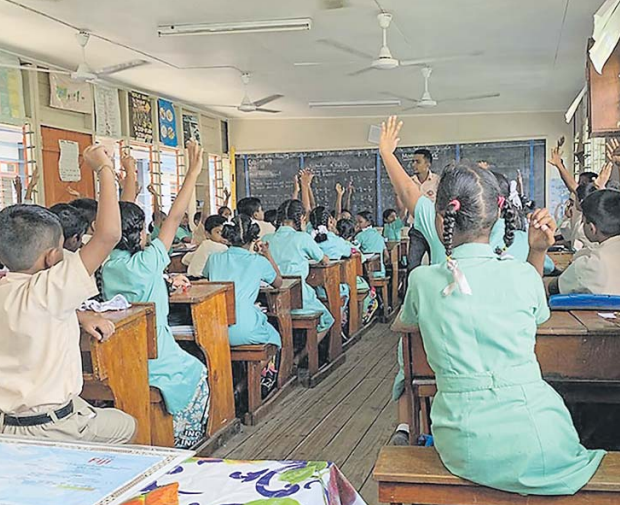
I am not a visitor to Fiji. I lived here for 17 years, ran a language school in Nadi, and went home to Japan in 2024. I am writing this not from Tokyo but from a cafe in Nadi Town. This month my children have been attending a local school here.
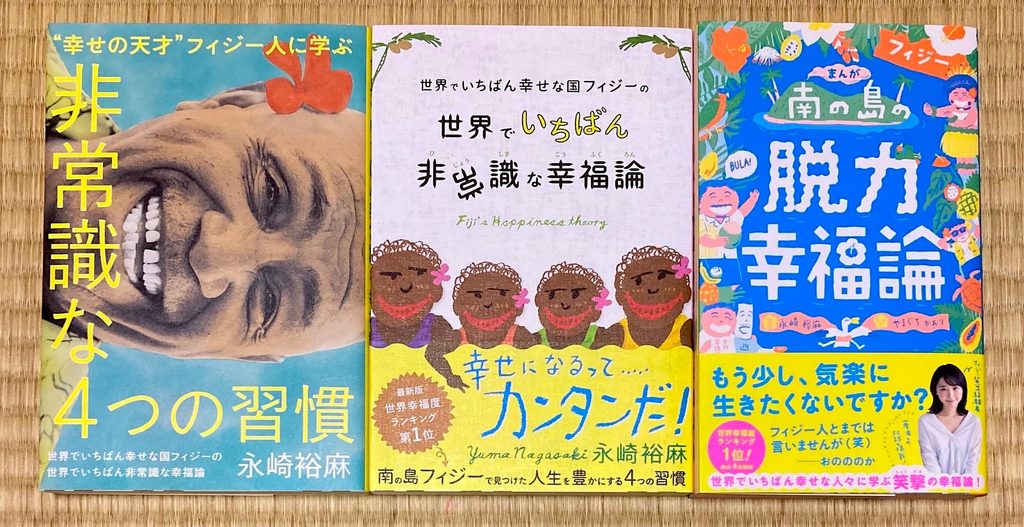
Let me say how I came to live here at all. In my 20s I travelled looking for somewhere to live, and I visited a hundred countries doing it. Then I met Fijians, and I concluded that these were people who understood happiness better than anyone I had met anywhere else. So I moved here to learn how they did it. I have since written books in Japan about Fijian happiness, and I have spent years giving talks about it.
Written down like that, I sound like another foreigner arriving to tell you about your happy island. So let me say this first. I read The Fiji Times. In the same week I am writing this, these pages have carried the Assistant Minister for Health’s warning that HIV is a time bomb, and an economist describing young Fijians leaving in every direction. Fiji is not a happiness theme park. I am not asking anyone here to be poor and cheerful for the education of Japanese undergraduates, and any program built on that premise would deserve to fail.
But a country can be under real strain and still hold knowledge that richer countries have mislaid. In fact I suspect the two are connected. Japan solved a great many hardships, and somewhere in the process we stopped needing each other. That was the trade we made. My students are here because their faculty thinks it was a bad one.
There is an economic argument in this, and Fiji already holds half the answer.
In 2023 Tourism Fiji changed its brand platform from “Where Happiness Finds You” to “Where Happiness Comes Naturally.” The reasoning given was that happiness here is not something switched on for visitors, but the product of a culture built over generations. I think that is correct. And I think that single change of wording has a consequence the industry has not yet followed all the way through.
Scenery and culture are entirely different products. Scenery is something you look at. You photograph it, admire it, and go home. You cannot copy it, but you cannot learn it either. Scenery also competes on price: Beaches, palms and turquoise water are available in the Maldives and in Thailand. Culture, by contrast, is a set of things people do. Because they are things people do, they can be watched, and they can be picked up. What I spent 17 years learning was that kind of thing. The way someone is already moving to help before anyone has asked. The way a day that was, by any measure, a disaster turns into something the whole group can laugh at over a bowl of grog that evening. Neither of those is scenery. Both of them are things a person can decide to do.
From which the conclusion follows. If happiness here is culture rather than scenery, then it can be learned and what can be learned attracts students, not only holidaymakers. Students stay longer than tourists. They spend time in villages and not only in resorts. They come back, and they bring others. My group is in its second year. This is not a market Fiji would have to invent. It is the next step of a brand Fiji already owns.
The same thinking is visible elsewhere. This week these pages reported that Rosie Travel Group and the Market Development Facility are moving into accessible tourism, building the capacity to serve travellers with particular access needs properly. Visitors who come to learn can be understood as the same kind of judgement.
Which brings me to the departures. When a nurse leaves for Australia and a teacher for New Zealand, Fiji loses their labour, and everyone knows how to count that. What is harder to count is that the classroom goes with them. The knowledge I am describing is not stored in a curriculum or a ministry. It lives in villages, in the length of a conversation, in whether a bad day ends as a complaint or becomes a story. It cannot be exported by air freight. It can only be visited.
My children came back from that school with something I cannot buy in Tokyo, and it was not English. That is worth naming, and it is worth charging for.
YUMA NAGASAKI lived in Fiji for 17 years and was general manager of a language school in Nadi. He is the author of books published in Japan on Fijian happiness, and is an adjunct lecturer in the Faculty of Well-being at Musashino University in Tokyo, where he leads the university’s Fiji program. The views expressed are those of the author alone and do not necessarily represent the views of this newspaper.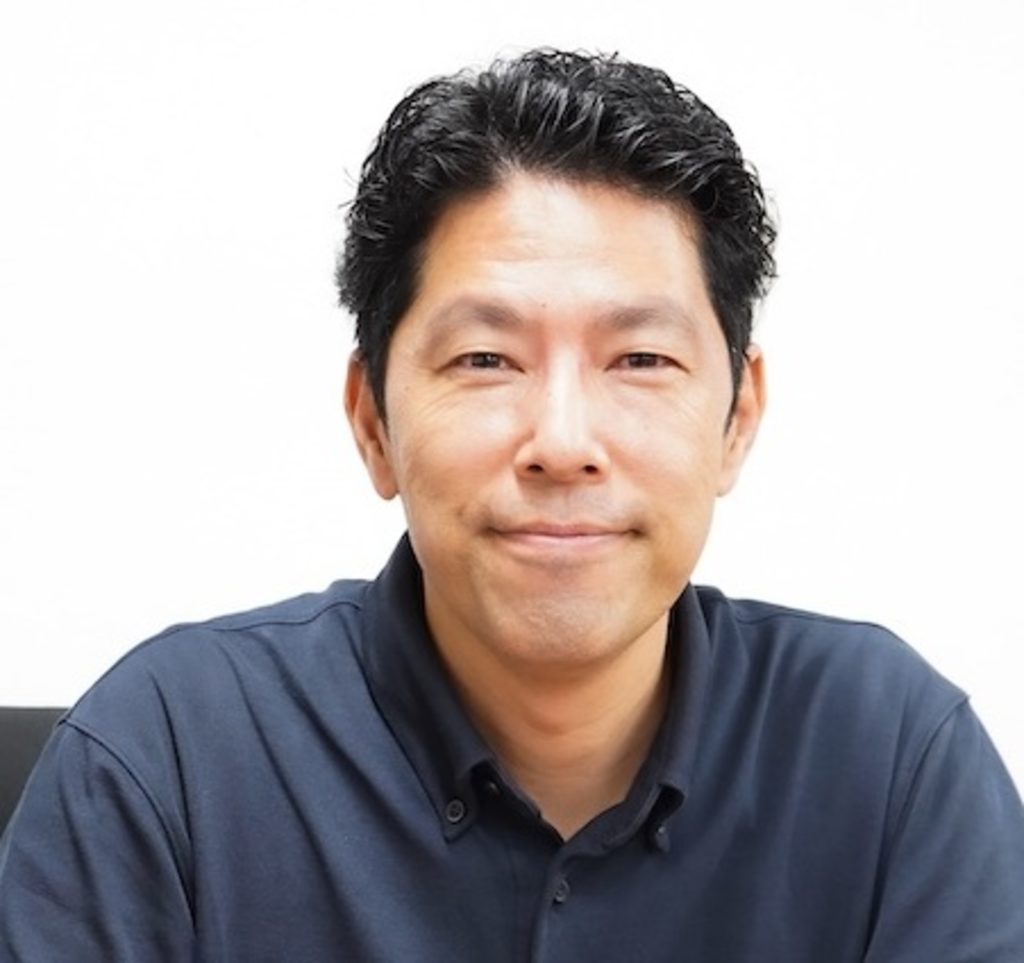
By Yuma Nagasaki