Fiji’s latest proposal — a 5 per cent tax on kava, alcohol, sugary drinks and junk food to fund healthcare — is being sold as a clever fix for a strained health system. It is not. It is a distraction. It reveals how far Fiji’s tax architecture has drifted from coherence, and how quickly new levies are being offered as substitutes for structural reform.
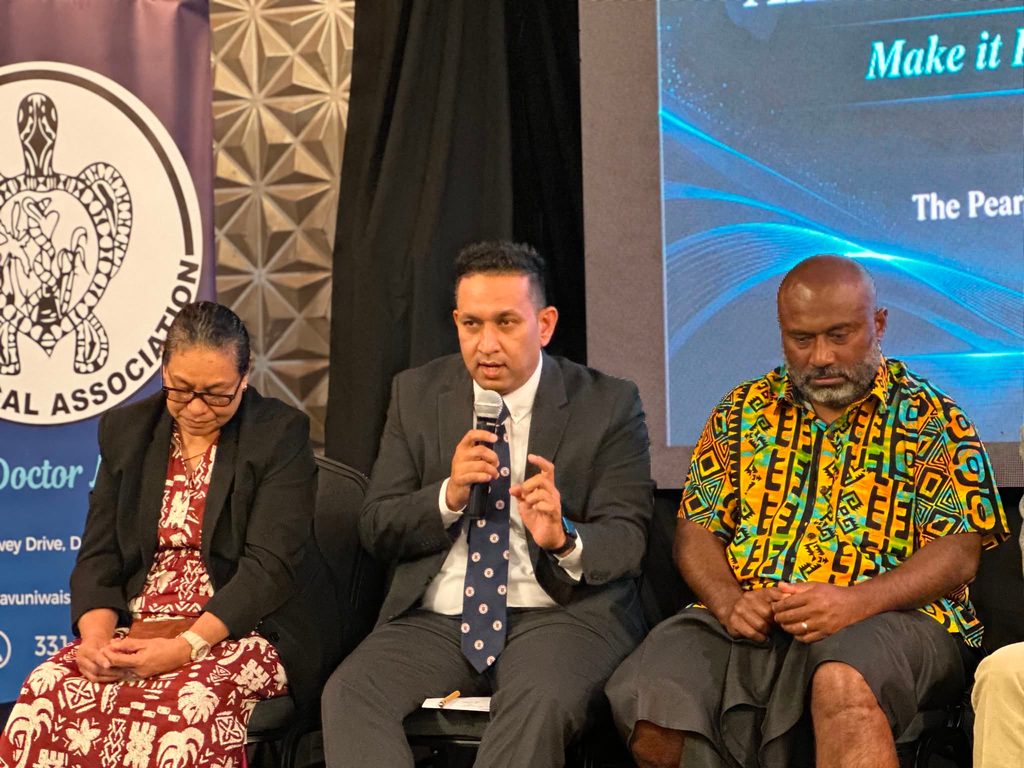
Fiji College of General Practitioners president Dr Dhirendra Lal argues that supermarkets are saturated with unhealthy products and that taxing harmful consumption could fund healthcare without charging patients directly. But this proposal arrives at a moment when Fiji is already drowning in hidden taxes: a new 5 per cent Tourism Services Tax (TST), 12.5 per cent VAT, a $200 departure tax, fuel excise, road levies, LTA charges, municipal fees, hotel licence fees, and industry specific levies. The issue is not whether Fiji needs revenue — it is whether Fiji can continue layering taxes without collapsing under the weight of its own fiscal fragmentation.
The tourism levy shockwave
THE tourism levy demonstrated how fragile Fiji’s fiscal design has become.
Initially intended to apply retrospectively, it threw travel agents in Australia and New Zealand into confusion before the Government reversed course.
The Fiji Hotel and Tourism Association warned adding 5 per cent on top of 12.5 per cent VAT effectively created a 17.5 per cent tax burden on accommodation alone — before the departure tax is counted.
Tourism contributes roughly 40 per cent of GDP and earned around $FJ2.8 billion in 2025.
A levy that looks modest on paper becomes a serious drag once layered onto existing charges.The 5 per cent health tax proposal now risks repeating the same pattern: a targeted levy introduced without considering the cumulative burden on households and businesses.
The health tax proposal and its fault lines
Dr Lal’s proposal reflects genuine concern about Fiji’s health crisis. Non communicable diseases are rising, and hospitals are strained. But targeted taxes rarely fix structural problems.
They are fiscal band aids applied to deep institutional wounds. A tax on kava or sugary drinks may raise revenue, but it does not address procurement failures, outdated systems, or chronic underinvestment.
Former health minister Dr Ifereimi Waqainabete has already warned that rural families who fish and farm cannot be treated the same as urban households facing high living costs.
Former attorney general Aiyaz Sayed Khaiyum has cautioned that rising prices already push families toward cheaper, less healthy food. The health tax may appear neat in theory, but in practice it risks becoming another regressive levy that punishes those least able to absorb it.
Equity and the burden on low-income families
The health tax proposal exposes a central tension in Fiji’s tax system: indirect taxes hit low income families hardest. Wealthier households can absorb levies on alcohol or sugary drinks; poorer households cannot.
When indirect taxes accumulate — fuel excise, road levies, LTA road user charges, vehicle registration fees, excise duties, tourism charges — the cumulative pressure becomes unbearable. A tax that looks small in isolation becomes oppressive in aggregate. The health tax would not operate in a vacuum; it would sit atop a growing stack of levies that already push many families toward cheaper, less nutritious food. Fiji’s tax system cannot claim fairness while relying increasingly on indirect charges that disproportionately burden the poor.
Management failures in the health sector
The health tax proposal also distracts from deeper issues. Fiji Medical Association president Dr Ronal Kumar argues doctors should not be running hospitals, pointing to Aspen Medical’s model where professional managers handle administration and doctors focus on clinical work.
Former FMA president Dr Alipate Vakamocea notes Aspen’s patient safety systems could be replicated at CWM Hospital without significant cost. These insights reveal Fiji’s health challenges are managerial, structural, and systemic. A new tax cannot fix procurement delays, staffing shortages, or outdated systems. Without governance reform, any health levy risks becoming another fiscal dead end — a revenue stream swallowed by deficits rather than improving hospitals.
A decade of rising debt and fiscal pressure
The health tax proposal must be understood within Fiji’s broader fiscal context. Public debt has climbed from roughly $F4bn in 2016 to close to $F12bn by the end of 2026 — a threefold increase in 10 years. The debt to GDP ratio has doubled from the low 40s to the mid-80s.
Revenue is down, expenditure is up, and the deficit exceeds $FJ1bn. In this environment, targeted taxes become tempting tools: they allow governments to raise money without touching headline VAT or income tax rates.
But temptation is not a strategy. Fiji cannot rely on fiscal improvisation to navigate long term economic challenges.
The hidden layers of Fiji’s tax burden
The health tax proposal is not an isolated idea; it is another layer in an already crowded tax landscape.
Beyond VAT and income tax, Fijians face LTA road user charges, vehicle registration fees, licence fees, taxi and bus permit fees, fuel excise, road levies, and the Motor Vehicle Accident Compensation levy.
In tourism, hotels face VAT, TST, municipal rates, hotel licence fees, waste disposal fees, and airport related charges.
For many urban households reliant on purchased goods and services, and for businesses in tourism and transport, the effective burden creeps toward 20–25 per cent.
This is not theoretical; it is reality.
When taxes multiply without visible improvement in services, public trust erodes.
The health tax proposal risks deepening a system already drifting away from transparency and coherence.
Infrastructure and transport levies without outcomes
Transport and infrastructure levies illustrate the problem clearly.
LTA road user charges and registration fees were justified as necessary to maintain and improve Fiji’s road network and transport safety. Fuel levies and excise duties were sold as tools to fund infrastructure.
Yet Fiji’s roads remain chronically underfunded, with maintenance backlogs stretching years and rural connectivity still uneven.
Public transport systems struggle with reliability and capacity.
In tourism, operators face hotel specific taxes and charges while still dealing with ageing infrastructure and service gaps.
The levies continue, but the outcomes do not. The proposed health tax risks joining this list of charges that promise much and deliver little.
International benchmarks and Fiji’s divergence
Countries with consolidated tax systems — New Zealand, Singapore, Mauritius — rely on broad based consumption taxes with minimal surcharges.
Their GST or VAT rates may appear higher on paper, but the absence of multiple overlapping levies means citizens often pay less overall and can clearly see what they are paying for.
Fiji’s divergence from this model is stark. The nation has chosen fragmentation over consolidation, complexity over clarity, and improvisation over strategy.
The health tax proposal is not an outlier; it is a symptom of a system that has lost its way.
The risk of another fiscal dead end
Fiji has seen levies introduced with noble intentions that were never properly ring fenced, never transparently audited, and never clearly linked to outcomes. Without strict governance, the health tax could easily become just another general revenue stream, swallowed by deficits rather than improving hospitals.
The controversial Lautoka and Ba hospital outsourcing experiment is a reminder of what happens when health policy is driven by convenience rather than competence: trust is lost, and it takes years to rebuild.
Fiji cannot afford another fiscal dead end disguised as reform.
Fiji needs one transparent system
The health tax proposal is not merely flawed; it is a symptom of a deeper problem.
Fiji needs a single, consolidated, transparent tax framework — one that eliminates hidden levies, clarifies revenue flows, and restores public confidence.
That does not mean higher taxes; it means honest taxes. It means a structure where citizens can see, in one place, what the government collects, where it goes, and what it delivers.
Until that happens, every new targeted tax — whether for tourism, transport, health or anything else — will deepen the maze. Fiji’s people deserve clarity, coherence, and a tax regime that reflects reality, not political convenience.
The price of fiscal fragmentation is already too high. Fiji cannot afford to pay it any longer.