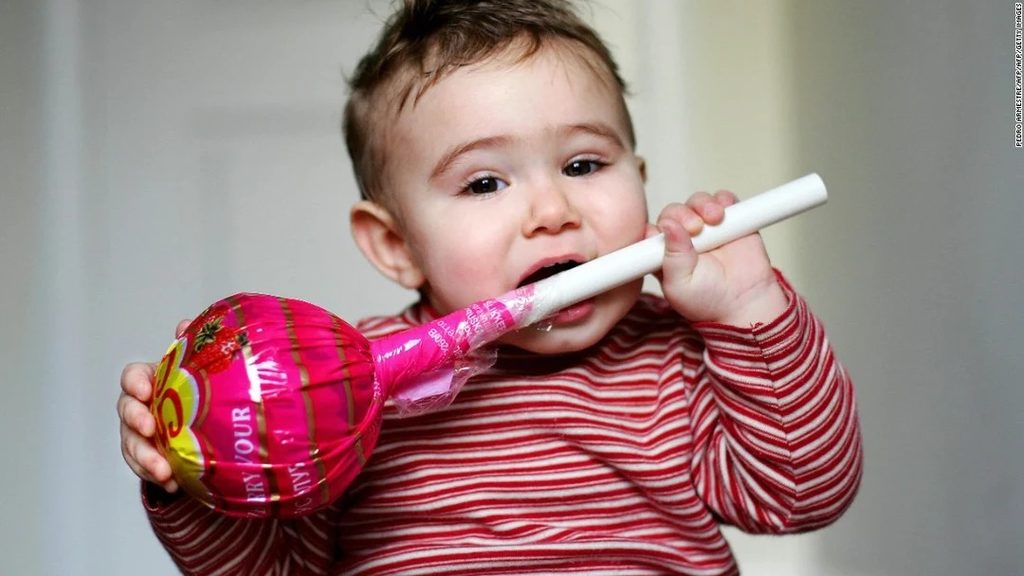
Is it OK to give sugar to babies? Recent research has been uncovering the link between sugar consumption during the first 1,000 days of life and health outcomes later in life. The 1,000-day window includes babies from conception (in utero) until roughly age 2.
We sometimes tend to think that children can eat whatever they want without serious consequences and that it’s only later in life, generally in our 30s or 40s, that we need to start thinking about diets.
However, recent research is starting to show the importance of completely avoiding – or at least strictly limiting – added sugar during this time. Added sugar includes all types of sweeteners, like for example sugar, molasses, syrups, and honey.
Honey in particular should be completely avoided at least until the age of 1, also due to the risk of a potentially life-threatening condition, infant botulism.
On the other hand, naturally sweet foods like fruit should not necessarily be limited, as long as the child is also regularly exposed to other flavours that are not sweet (such as vegetables, grains, and legumes).
Shaping their taste
One of the main reasons why children should avoid added sugar is that the first 1,000 days are crucial for shaping their taste.
Giving them good habits from the beginning and teaching them to appreciate natural, delicate flavours that are not necessarily sweet will considerably reduce the risk of sweet cravings later in life.
This is great, because a regular high consumption of sugar can lead to being overweight, obesity, and inflammation, and likely increases the risk of metabolic syndrome and NCDs.
Taking the space of more nutritious foods
Infants eat very small quantities of food but require a high intake of nutrients to grow and develop well, especially after 6 months of age when exclusive milk feeding stops.
Each meal is important then, and it is essential to nourish them with foods rich in key nutrients like iron, calcium, healthy fats, vitamins, and minerals in general. On the other hand, babies fed with high-calorie (like high-sugar), low-nutrient foods will likely miss out on the nutrients they really need and will quickly fill up on foods that contain calories but no meaningful nutrients.
Dental health
As with older children and adults, eating high-sugar foods can cause caries and dental problems for infants too. Infants are at an even higher risk of dental issues considering the fact that, at that age, it is very difficult to ensure a thorough dental hygiene routine.
Increasing the risk of hypertension and diabetes
Using data from World War II – when sugar rationing was in force in the United Kingdom – recent research has also highlighted that early exposure to sugar in utero and during infancy might affect the risk of diabetes and hypertension later in life.
Researchers found that those who had been exposed to sugar rationing longest had roughly 35 per cent lower chances of developing diabetes and 20 per cent lower chances of having hypertension later in life. They were also diagnosed, on average,two and four years later compared to those who were not exposed to restrictions.
Increasing the risk of anxiety and depression
More surprisingly, recent research has also highlighted a possible link between early sugar intake and mental health, with a higher risk of anxiety and depression later in life for kids with higher sugar consumption during infancy. Brain structural integrity and increased risk of dementia
It is during our first 1,000 days of life that the brain grows and develops most rapidly, and during this time it is also very vulnerable to disruptors such as sugar. Avoiding or considerably limiting sugar intake during this season can therefore help ensure the structural integrity of your children’s brain architecture and of their nervous system for their entire life.
Possibly linked to this, some research is also highlighting the potential link between early sugar exposure and a higher risk of Alzheimer’s, brain ageing, and all-cause dementia.
While the link between early sugar exposure and health during adult life is still being explored, there is sufficient data to suggest that strictly limiting exposure during a child’s first 1,000 days is important and should be recommended to the general population.
This includes the need for expectant mothers to considerably reduce their intake and for carers to completely avoid giving sweetened foods and beverages to infants and toddlers under the age of two.
Cheerful
mother and her cute little baby are eating healthy fruits and vegetables in the home kitchen.
Pictures: GOOGLE
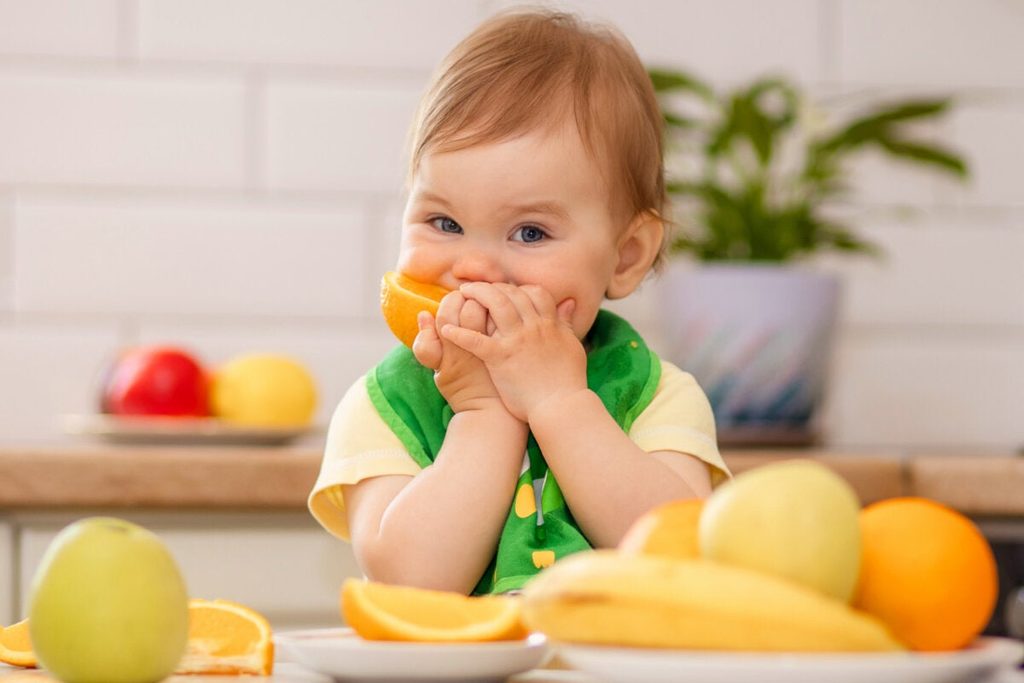
Baby enjoys a piece of orange.