Somewhere in rural Fiji right now, a grandmother is going blind from a cataract that a 20-minute operation could fix. A few villages over, a man with diabetes is losing his sight to a disease he doesn’t know he has. Neither of them is unusual. Across Fiji, the biggest barrier standing between people and clear vision often isn’t the cost of treatment or the distance to a hospital — it’s simply not knowing help exists, or not believing it’s worth seeking.
That gap between treatable and treated is what eye health workers in Fiji are increasingly trying to close, and the numbers explain why the effort matters.
A problem hiding behind “just getting old”
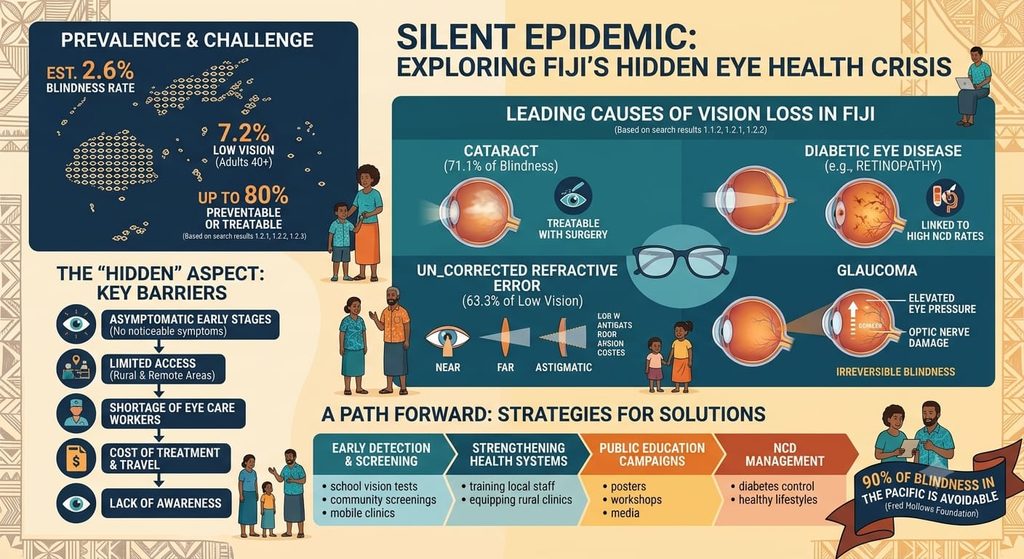
Globally, roughly nine in ten people living with blindness or vision loss didn’t have to be — their condition could have been prevented or treated if caught early enough. Fiji’s own research tells a similar story. A population-based survey of adults on Fiji’s main island found that more than half of people with a current vision problem — 53 per cent — had never sought treatment for it. When researchers asked why, the leading reason wasn’t money or distance, though those mattered too. It was attitude: 57 per cent simply accepted their failing sight as something to live with, something they “could manage.” Cost was cited by just 12 per cent, fear of treatment by 8 per cent. (Source: WHO Western Pacific data, Fiji-specific population health studies, and Fred Hollows Foundation reporting)
A separate household survey in Fiji’s Central Division found that while 86 per cent of people knew at least one place to get their eyes checked, only 66 per cent of those with an actual eye problem had ever gone. Older Fijians were the least likely of all to seek care — precisely the group most at risk of cataract, glaucoma and diabetes-related vision loss.
Diabetes is turning Fiji’s eye health into an emergency
Fiji’s eye problems are tangled up with one of its biggest public health challenges: diabetes. The Pacific region has some of the highest diabetes rates on Earth, and Fiji is no exception — research on Fijians aged 40 and over found a diabetes prevalence of around 41 per cent once adjusted for age, ethnicity and gender, and an estimated 60 per cent of those cases go undiagnosed, particularly in rural areas where testing is harder to access.
That matters for eyesight because diabetic retinopathy — damage to the blood vessels at the back of the eye — has become the second-leading cause of vision loss in Fiji after cataract. A study of patients newly referred to diabetic eye screening in Fiji found that more than a quarter already had sight-threatening retinopathy by the time they were checked, and nearly 7 per cent already had some degree of vision impairment from it. The disease is especially dangerous because it creeps up silently; people often feel fine until the damage is advanced and much harder to reverse.
Children lack immunity
Avoidable vision loss isn’t only an adult or elderly problem. A nationwide study of Fijian children found that roughly three in ten cases of childhood vision loss stemmed from causes that could have been prevented or treated, rather than from conditions present at birth. Left unaddressed, childhood vision problems don’t just affect reading and schoolwork — research elsewhere in the world has linked uncorrected vision loss in children to lower school performance and reduced earning potential decades later.
What’s actually being done
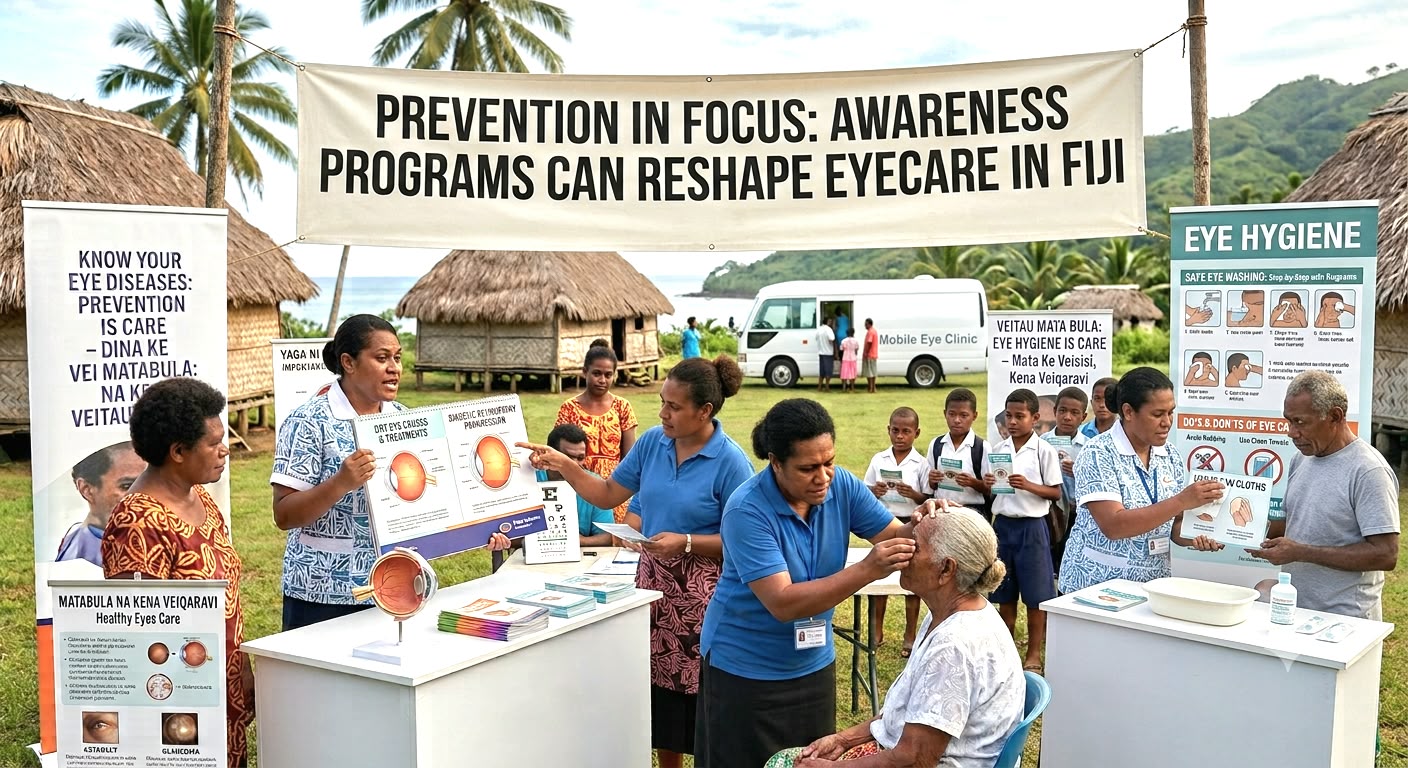
The encouraging part of this story is that Fiji isn’t standing still. The Pacific Eye Institute, based in Suva, has been running surgical outreach trips to underserved areas — a recent mission to Ba, run with Aspen Medical Ba Hospital and Lautoka Hospital, was specifically aimed at clearing a backlog of patients in Fiji’s Western Division. Alongside the surgery, the team has been training local nurses and primary health workers to spot eye problems early, rather than relying solely on specialists who are concentrated in a handful of hospitals.
One particularly promising approach tackles the diabetes-eye connection directly: rather than relying only on busy clinical nurses, programs backed by the Fred Hollows Foundation have begun training community health workers — the people already trusted and present in villages — to talk to residents about diabetic eye disease and refer them for screening. It’s a low-cost way of reaching people long before their vision is in serious danger.
Fiji has also had a genuine public health win worth highlighting: trachoma, a bacterial infection that remains one of the world’s leading infectious causes of blindness, was found in a survey of the Western Division to no longer meet the World Health Organization’s threshold for being a public health problem there — a reminder that sustained screening and hygiene programs can actually turn the tide on a blinding disease.
Why investing in this is worthwhile
There’s also a hard economic argument for funding this kind of work. Research commissioned by the Fred Hollows Foundation and Victoria University found that every dollar spent on cataract surgery generates, on average, more than $20 back into the local economy — through people returning to work, caring for family, and no longer needing support themselves. For a country like Fiji, where eye care budgets compete with many other health priorities, that’s a difficult figure to ignore.
None of this works, though, if people don’t know the services exist — or don’t believe their failing eyesight is worth mentioning to anyone. That’s really the heart of the matter: Fiji has surgeons who can remove a cataract in minutes, screening tools that can catch diabetic damage before it’s permanent, and outreach teams willing to travel to remote islands. What’s still catching up is the everyday awareness that vision loss, in the vast majority of cases, doesn’t have to be accepted as fate. A free eye check, a five-minute conversation with a village health worker, or simply telling family that your sight has changed — these small, ordinary acts may end up doing more to prevent blindness in Fiji than any single piece of medical equipment.
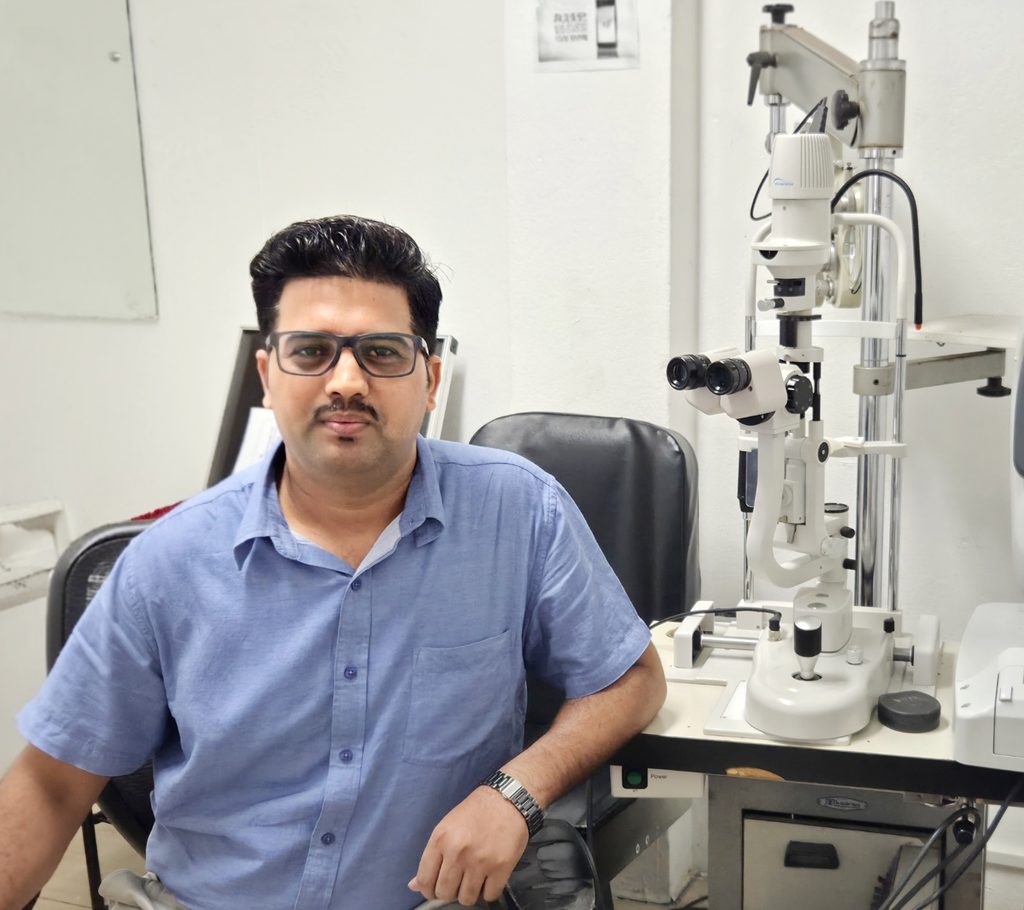
Bikash Gyawali is a consultant optometrist at Asgar Optometry.