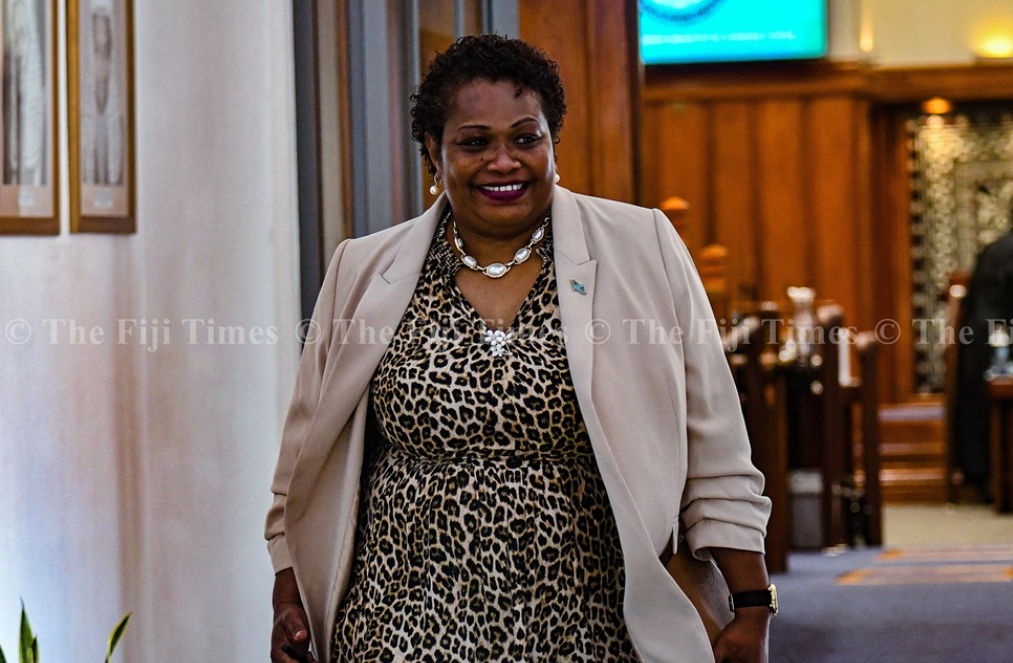
Minister for Fisheries and Forests Alitia Bainivalu says Government ministers face significant financial expectations from communities, with some expected to contribute hundreds or even thousands of dollars towards traditional, religious and community fundraising activities.
However, she has stressed that these obligations do not justify higher ministerial salaries, acknowledging the financial hardships faced by ordinary Fijians.
In a lengthy social media statement addressing public criticism of ministerial salary increases, Ms Bainivalu said she understood why taxpayers questioned the remuneration received by politicians, particularly during a period of rising living costs.
“I know this is a sensitive subject, especially when many of our people are struggling with the cost of living, trying to put food on the table, pay their bills, send their children to school and simply make ends meet.”
She said ministers were often expected to make substantial personal contributions when attending village, church, school and community fundraising events.
“When you’re a Government Minister, people don’t necessarily look at you as an ordinary individual anymore. They look at the position you hold. And with that position comes an expectation that you will contribute more than everyone else.”
Ms Bainivalu said while ordinary individuals might contribute $20 or $50, ministers could face expectations of contributing hundreds or thousands of dollars.
“People expect you to give hundreds, sometimes even thousands of dollars, depending on the occasion.”
She revealed that she attended two soli events over the Fiji Day weekend, which prevented her from participating in the official celebrations in Suva.
“In fact, I couldn’t attend the official Fiji Day celebrations in Suva because I had already committed myself to these community obligations.”
She explained that such contributions were generally paid from ministers’ personal salaries rather than Government funds.
“A significant portion of what some of us earn can end up going straight back into our communities through these contributions.”
However, Ms Bainivalu was adamant that community contributions should not be used to justify salary increases.
“I AM NOT SAYING THAT MINISTERS DESERVE HIGHER SALARIES BECAUSE WE ATTEND SOLI.”
She acknowledged that the financial pressures faced by politicians could not be compared with those experienced by struggling families.
“A mother struggling to buy groceries doesn’t have the luxury of worrying about how much to contribute to a fundraising event when she doesn’t even know what her children will eat tomorrow.”
Ms Bainivalu said members of the public were entitled to question whether ministers were being paid too much and whether their performance justified their remuneration.
“Because ultimately, a Minister’s salary should be justified by the work we do, the responsibilities we carry and the results we deliver for the people of Fiji, not by how much money we give away at fundraisers.”
She also acknowledged that her explanation might not satisfy those critical of the salary increases.
“I know that nothing I say today will ever be enough to justify the increase in our salaries as Government Ministers, especially when so many of our people are struggling to make ends meet.”
Ms Bainivalu said she was not seeking public sympathy or asking Fijians to defend her salary, but wanted people to understand the responsibilities and expectations associated with holding public office.
“At the end of the day, I’m not asking you to justify my salary. I’m simply asking you to understand my perspective.”