A strong El Niño event is firmly established in the tropical Pacific Ocean, with Fiji facing the prospect of worsening dry conditions, water shortages and increased pressure on agriculture and communities.
The Fiji Meteorological and Hydrological Services says the El Niño event is likely to reach very strong intensity and persist through the remainder of 2026 and into early 2027.
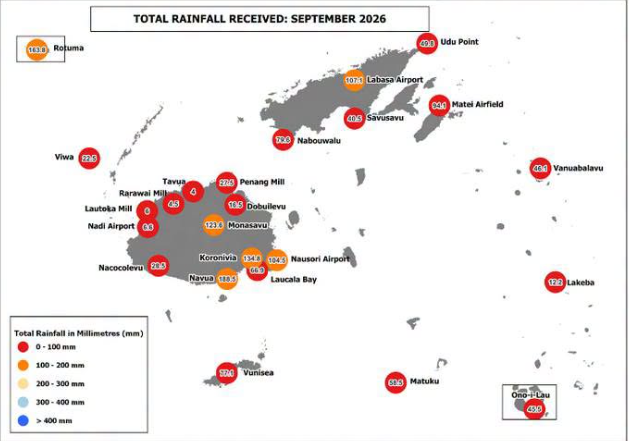
Rainfall monitoring for September showed drier-than-usual conditions across the Western, Central and Eastern divisions and most of the Northern Division.
The three-month period from July to September also recorded below-average to well-below-average rainfall at stations across the country, while Navua recorded average rainfall.
September rainfall was particularly suppressed in the Western Division, where Nacocolevu, Nadi Airport, Lautoka Mill, Rarawai Mill, Tavua, Penang Mill, Doubilevu and Viwa recorded less than 100mm.
Several stations in the Northern and Eastern divisions also received less than 100mm.
The Fiji Met Service warned that prolonged low rainfall could lower river flows and reduce groundwater recharge and reservoir storage.
Reduced rainfall could also affect soil moisture, crop growth and planting schedules, while prolonged dry conditions could increase drought stress on crops and livestock.
Drier conditions could increase vegetation stress and the risk of wildfires, while reduced water availability could place additional pressure on hygiene and sanitation.
Tourism facilities and services could also be affected by water shortages, while demand for water carting and relief assistance may increase.
The public is being urged to use water wisely, repair leaking taps and pipes, store water safely and avoid unnecessary wastage.
Farmers are also advised to monitor crops and livestock closely and plan activities according to rainfall forecasts.