Climate change, human rights
The Pacific Pre–COP Fiji/Tuvalu event in Nadi underscored what communities already live with daily: climate change is reshaping life in the Pacific.
Rising seas and stronger storms are destroying homes, contaminating water, and threatening livelihoods.
These impacts undermine basic rights to housing, health, and security. Transparent, urgent leadership is essential to protect vulnerable communities while balancing development.
Climate displacement is not only the loss of land but of culture and identity.
Immediate, accountable action is needed because the rising tide will not wait.
Edirth Savu USP student, Suva
Healthy living
In recent weeks, Fiji’s health statistics have become impossible to ignore. In markets, villages, and the corridors of our schools and workplaces, stories continue to surface of people facing illness, stress, and loss.
It is clear that our nation is at a health crossroad: HIV cases are rising, NCDs are taking loved ones too soon, and these crises still receive far too little attention.
Behind every statistic is a person, a family, and a future. That reality should compel us to reclaim the foundations of healthy living.
The figure of one in 60 individuals carrying HIV is not something to be taken lightly — it reflects ongoing gaps in awareness, open conversation, and irresponsible decision–making by the average adult.
It would also seem that many people still lack access to accurate information, while others feel ashamed or perhaps afraid to seek help.
We know too well that stigma keeps individuals silent at the very moment they most need support.
If we can speak openly, listen without judgement, and share correct information, we can protect one another far more effectively.
The same is perhaps true for non–communicable diseases such as diabetes, high blood pressure, and heart disease — conditions we hear about daily across media platforms and within our own communities.
Public health awareness tells us that these illnesses often develop gradually, shaped by the choices we make each day.
And that earlier generations ate fresher, locally grown food, stayed active through outdoor work, and relied on strong community support. Today, we consume more processed foods, spend more time sitting, and face increasing levels of stress — all of which are taking a toll on our wellbeing.
The encouraging news is that healthier living does not have to be complicated.
Our health outreach programs consistently remind us that small, manageable steps can make a meaningful difference: enjoying more local fruits and vegetables, reducing sugar and salt, taking an afternoon walk, choosing water instead of soft drinks, and getting adequate rest.
These changes may seem modest, but together they have been proven to improve health outcomes.
We can also protect ourselves and those we care about by practicing safe behaviors, getting tested for HIV, and seeking treatment early.
Caring for our mental health matters too — sometimes it begins with simply checking in on one another, speaking openly, and reaching out for support when stress becomes overwhelming.
Healthy living is not a luxury — it is a right we all deserve. And it is within reach when families and communities commit to small, steady improvements.
Fiji has always been a nation built on connection, resilience, and shared responsibility. Those values can guide us back to wellness.
The statistics may be alarming, but they are also a call to action.
If we want a healthier Fiji, we must begin with awareness and a renewed commitment to living well. All of our future depends on it.
Senilolia Tuiwawa Suva
A celebration in unity
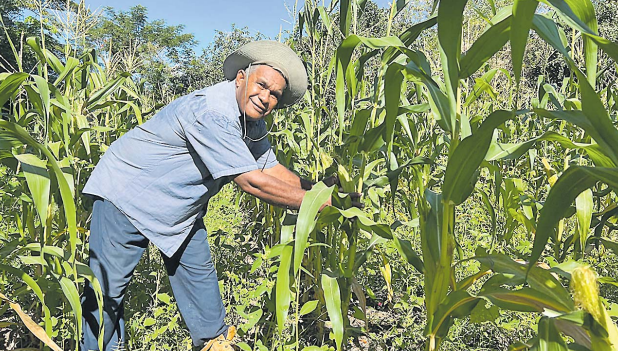
As the nation united to celebrate Fiji Day on Saturday, the residents of Balgovind Road, Nadawa, dressed in blue teamed up to celebrate Fiji’s 56th year of independence at the residence of Vinod Prasad, who has given eight decades of his life to Fiji as a farmer.
The sea of blue, smiles all around and unconditional love brightened the mood as we got together to thank the nation for accepting us and making us part of such a beautiful and multiracial country.
Members of Balgovind Road Nadawa Satsang Ramayan Mandali are no strangers to this nation as The Fiji Times has covered the generosity of the Mandali, which was at the forefront of the COVID-19 pandemic in 2021 distributing food, sanitary pads, water bottles, toothbrush and toothpaste to approximately 630 families along the Suva-Nasinu corridor. The blessings that members received continue to inspire them to reach out to families who need assistance. The Mandali reaches out to two institutions that looks after Fijians battling cancer — WOWS Kids Fiji and the Fiji Cancer Society every year.
It also reaches out to families who have a loved one undergoing medical treatment or those who lose their home through fire.
The members have a loving and caring heart, and service is at the top of their priority. Recently, members teamed up to fundraise and seek help for a little girl, Ruanshi Rattan, who will be travelling to India for her medical treatment. After the members read about Sonia Shainaaz’s plea to help her daughter, Aarna Sen, who is suffering from severe cerebral palsy, the members reached out to her with assistance in cash.
I thank the members for their generosity. Their actions remind us that Fiji Day should be celebrated every day and not just on October 10. I thought of sharing this to inspire others to help those in need. That brings out the true essence of Fiji Day.
To the staff of The Fiji Times, thank you for the wrap-around and the colourful features on Fiji Day that brought back many memories!
Rajnesh Ishwar Lingam Nadawa, Nasinu
People’s constitution?
A constitution is not merely a legal document produced by the government and approved by Parliament. It establishes the terms on which public power is exercised, the rights citizens may claim against the State, the institutions that restrain those in authority and the rules by which political power changes hands.
Its legitimacy therefore depends not only on what it says, but also on how it is made and whether citizens have a meaningful opportunity to understand and influence the settlement being placed before them.
Fiji now faces a constitutional exercise of extraordinary scale. Bill No. 32 of 2026 is formally called the Constitution (Amendment) Bill. Yet I believe clause 2 proposes repealing virtually all provisions of the 2013 Constitution except Chapter 10 and substituting a new constitutional text. The Bill contains a proposed Constitution of 229 clauses.
This is not a minor adjustment to selected provisions. Its practical effect is to replace most of the existing constitutional framework with a substantially different one.
That distinction matters because I believe Fiji’s constitutional history is marked by political ruptures, contested legitimacy and constitutions introduced without direct popular approval.
The question is not whether the 2013 Constitution should be beyond criticism.
It is whether the present Government is following a process sufficiently lawful, transparent and participatory to establish a constitutional settlement that Fijians can genuinely regard as their own.
Dr Sushil K Sharma Lautoka
Stop EFL from cutting power in Savusavu!
Open letter to Deputy PM Minister Manoa Kamikamica.
Dear Minister, we express dismay on behalf of Savusavu business community that EFL intend to shut down power to the entire town for the whole of Tuesday, October 13 so that just one dozen technicians can carry out routine maintenance on their power lines and distribution hardware, and a contractor can carry out tree-lopping.
The issue here is that EFL management have advised that they have a new policy of not carrying out any routine maintenance work after hours, or on weekends or on public holidays, so that they can reduce their wages bill.
In other words, for EFL to save overtime for their 12 workmen the entire business community and all government offices are required to foot the bill for the wages that we must pay our staff for a completely non-productive day. None of the offices in our 3-storey JKS Building will be able to operate because our building has no back-up power supply.
And the same situation will affect many other buildings, offices and shops throughout our town.
Hon minister, this outrageous selfish new policy by EFL, which has a monopoly on power supply in Fiji, and which is supposed to deliver a service to the electricity consumers of Fiji, is being implemented at the cost of the business community and Government itself. How can your Government offices deliver service when they have no power?
Why can’t EFL do their routine maintenance on Monday, October 12, a freshly gazetted public holiday? That will cause much less disruption than shutting down our town on Black Tuesday the 13th.
Hon Minister, as the Minister responsible for Public Enterprises, we request that you use your powers to direct your Government appointed directors on the Board of EFL to hold the CEO accountable for this irresponsible policy, and to instruct him to reverse this outrageous selfish costly policy.
Aren Nunnink Hooper Street, Savusavu
Crimes against humanity
While I do not condone Rodrigo Duterte’s crimes against humanity, I fail to understand why Rajend Naidu is not calling his most favoured nation, China to be investigated for its atrocities against the Wighur Muslims of Sinkiang Province. Also, what happens under “Sharia Law” in some Islamic countries should be a course for concern as well. Rubika Liyaquat, senior journalist and TV anchor in India says: “Indian Muslims should be grateful to be born in India. While Global Muslims suffer war, you pray in peace. This peace exists due to India’s democracy and majority Hindu tolerance. Stop cursing the land that protects you.” The ICC cannot be selective in condemnation.
Rakesh Chand Sharma Nadi
Soccer test With the high number of soccer players testing positive for drugs during the first three days of the IDC, I suggest Fiji Football Association should test the players for HIV as well.
Narayan Reddy Lautoka
What did he mean?
What did Mr Sakiasi Ditoka mean that the immunity sits outside the constitution amendment? (FT 9/10/26). Can he prove that Fijians have agreed as he claimed? If the immunity clause is stipulated within the 2013 Constitution, what makes it an exception? I am certain, the GCC, the RFMF and majority of Fijians, disagree. Practically, it undermines the institutional accountability and future stability of Fiji, in my opinion. I believe it defines the Government’s intention, that instead of upholding and protecting Fiji’s sovereignty, it has reinforced an alternative means of political change, rather than relying on the ballot box. Especially, with the typical political environment, Fiji has been entangled, within the last 30 years, in my view. And the saddest part is that, after 56 years of independence, what did Fiji actually gain?
Samu Silatolu Nakasi
Can business
In Lautoka a new kind of business is thriving at night, “cans sale” called by many is sold after 10pm on a street called “drive through” opposite Natokowaga Police post. Young people and even children as young as 10 years old are in the new trade of selling cans of ready-to-drink alcohol. I am told other things are sold by the cans sales person but I am surprised that it is happening right under the nose of a police post and the police headquarters is less than two minutes away from the area.
Narayan Reddy Lautoka
Just a yarn!
A few friends usually meet at the Lautoka Market to have a basin of kava and a yarn. Most of them are retired and the others are almost there. One man said: “I heard one news, there is no public holiday for Fiji Day.” Grogger: “Well that’s news I heard.” Taki man: “I heard the minister said so.”
Suki man: “Ok set those guys are intelligent. But what will you talk about on that public holiday? El Nino, missing evidence, drug problem or the HIV crisis or what else?” From the other grog table: “Sobo!”
NAVNEET RAM (TD) Lautoka