An inclusive Fiji
I AM a first-generation Fijian, born to immigrant parents who made Fiji their home in their early twenties.
My parents arrived in Fiji in the late 1970s, following independence, with little money, limited English and a dream of a better future. Leaving behind their rural village in China, they boarded a plane and travelled to a place they knew as Fiji, where they would build a new life, raise a family and call home for more than 40 years.
I once asked them what it was like to arrive in Nadi and meet people who looked different from them — in skin colour, culture and religion. Their response stayed with me. Although the people they met were different from them, they were met with kindness and hospitality.
With very limited English, my parents showed an eager taxi driver an address and trusted him to take them to their destination. My mother also remembers getting on a bus with me, when I was still a tiny toddler, simply because she was feeling bored at home.
Her English was very basic, but she trusted the bus driver. He took her around and eventually dropped her safely back home after what she remembers as a lovely bus ride. These may seem like small acts of kindness, but to my parents they mattered. They were strangers in a new country, yet ordinary Fijians made them feel safe and welcome.
But their journey was not without its challenges. They, too, experienced racial discrimination — often unspoken and too often tolerated.
I experienced racial discrimination as a child. I did not have the words to explain why I was being discriminated against or why I felt hurt by those incidents. Nobody stood up for me. Nobody said it was not okay to discriminate against me. Nobody asked if I was okay.
As a child, I did not know how to speak about what I was experiencing. I did not want attention. Silence felt safer. Out of sight, out of mind.
As I grew older, I also experienced discrimination because of my gender and age. Again, I learned not to draw attention to myself.
I come from a very small minority ethnic community, one whose voice can easily be overlooked. For a long time, I accepted that perhaps silence was the easier path.
But now is different.
I know my rights. I have come to understand that equality and dignity are not privileges we should have to earn. They are rights protected by law. I have also learned that I do not have to tolerate discrimination because of my ethnicity, age or gender.
Knowing my rights has given me the confidence to find my voice. It has also made me realise that inclusion is more than just having laws that protect people from discrimination. It is about creating a society where people from different sections of the community are heard, respected and included. Human rights are more than about protecting people’s rights. They are about respecting our shared humanity with dignity and grace. They are about showing kindness and empathy, and ensuring that nobody feels unloved, unwelcome or invisible because they are different.
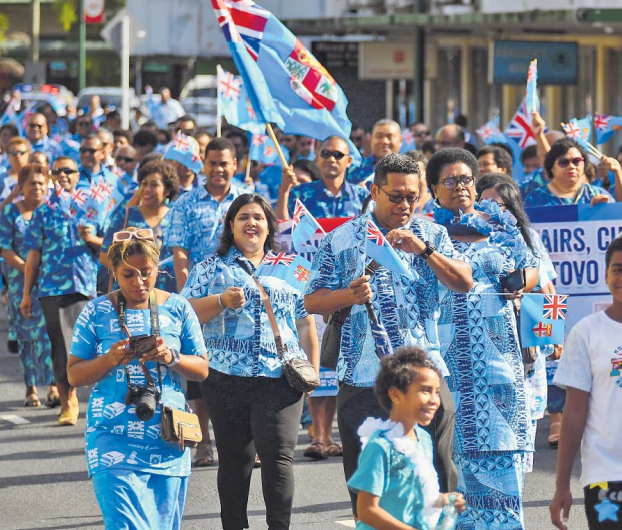
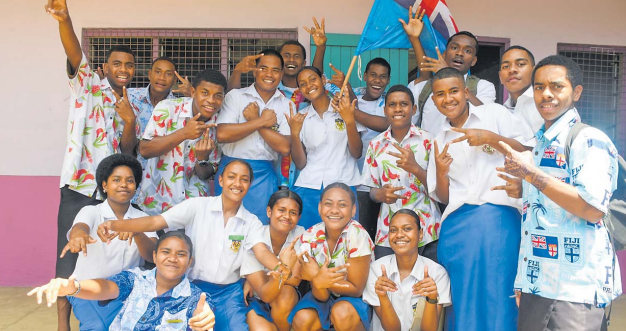
My vision of a better tomorrow is an inclusive Fiji where difference is not a reason for exclusion.
I say this as the daughter of immigrant parents, as a Fijian from a minority ethnic community, as someone who has experienced discrimination, and as someone who continues to contribute to nation-building.
My parents came to Fiji with little money, limited English and a dream of a better future. What helped them find their place was not only the opportunity to build a life, but the kindness of ordinary people who made them feel welcome.
That is the Fiji I want to help preserve and strengthen — a Fiji where every person, regardless of ethnicity, age, gender, culture, religion or background, feels that they belong.
That, to me, is the vision of an inclusive Fiji and a better tomorrow.
IRENE YUEN Delainavesi
Cashless payments
SUPERMARKETS really need to introduce designated checkout counters for M-PAiSA and MyCash transactions, especially during peak hours. These transactions can slow down queues, causing unnecessary delays for other customers. Sobo!
WISE MUAVONO Balawa, Lautoka
Doctor recruitment
HOW can the Ministry of Health recruit foreign health workers when 39 local graduate doctors are still waiting to be employed, having served 2 years of internship and 6 years of hardwork studying for their MBBS degrees. Don’t we give our own people the first preference when it comes to employment?
They will eventually become seniors in their work. Give them time to gain experience. Shame on you MoH, for by passing locals in favour of foreign employees.
SAM YOUNG Nadi
Human civilisation
IN his 1954 novel Lord of the Flies, William Golding tells the story of a group of boys stranded on an uninhabited island who attempt to govern themselves, only to descend rapidly into savagery.
The novel illustrates how thin the veneer of human civilisation can be.
The reported threat by a leader of a professional teachers’ association to roast in an earth oven those who criticise the role of chiefs in modern-day Fiji’s Parliament captures this phenomenon quite succinctly.
Look at the various theatres of war and conflict around the world, and we see the same descent into savagery.
Is this how civilised human beings are meant to conduct themselves?
RAJEND NAIDU Sydney, Australia
Duterte fit to stand trial
WHEN Rodrigo Duterte was president of the Philippines and waging his “war on drugs”, he struck a figure of terror, instilling fear among the people.
Now, as he faces crimes against humanity charges at the International Criminal Court (ICC) arising from his brutal “war on drugs”, Duterte cuts a pathetic figure: a subdued and seemingly powerless old man (Reuters/FT, 10/10/26, p. 48).
It is good the ICC has determined he is fit to stand trial.
He must face justice for his crimes. The same should be true for any leader who uses his position of power to commit atrocities and crimes against humanity.
RAJEND NAIDU Sydney, Australia
American hypocrisy
US Vice-President JD Vance described H-1B visa holders, many of whom are Indian nationals, as “foreign indentured servants”.
India’s Ministry of External Affairs (MEA) strongly condemned the description, calling it “deeply offensive” and “unwarranted”.
The United States frequently lectures other countries on the values of democracy, human rights and equality yet fails to uphold them.
RAKESH CHAND SHARMA Nadi
Public holiday notice
THE public holiday for Fiji Day was announced only on Friday, at the eleventh hour.
The late announcement left businesses, workers and families with virtually no time to adjust work rosters, reschedule appointments, organise travel or make family arrangements.
The issue is not the significance of Fiji Day, which deserves proper recognition, but the manner in which the decision was made and communicated.
Changes that affect the entire country should be announced through a transparent and predictable process, with reasonable notice for those required to comply.
Freedom does not mean that rules may be altered without warning. It depends on legal certainty, responsible administration and respect for the practical consequences of government decisions.
If a public holiday is important enough to declare, it is important enough to plan for properly.
The Government should explain why the announcement came so late and commit to declaring future public holidays well in advance.
The people of Fiji deserve not only to celebrate their national day with pride, but also to have confidence in a competent, transparent and accountable government.
JAN NISSAR Sydney, Australia
Defence recruitment
THE Australian Government has reportedly announced a plan to open Australian Defence Force (ADF) recruitment to permanent residents from four countries, and they are, (drumroll, drumroll) New Zealand, United Kingdom, USA and Canada. Vuvale of the elite.
DONALD SINGH Nausori
Dr Sahukhan’s appointment
I WARMLY congratulate Dr Aalisha Sahukhan on her appointment as Permanent Secretary for Health and Medical Services.
Dr Sahukhan was the face of the Ministry of Health during the COVID-19 pandemic alongside the then PS, Dr James Fong.
The two played a critical role in steering Fiji out of the pandemic. They became central public figures in Fiji during televised press briefings and provided calm guidance throughout the pandemic lockdown and recovery efforts.
Dr Sahukhan brings a wealth of extensive experience in the health sector. What she went through during the pandemic made her a role model for girls and young women. Having represented Fiji in international health negotiations, Dr Sahukhan will be an asset in her position as PS for Health and Medical Services.
She has a lot on her plate, but she is capable of carrying out her duties efficiently, effectively and with due diligence. I wish he all the best! Go on, Doc!
RAJNESH ISHAR LINGAM Nadawa, Nasinu