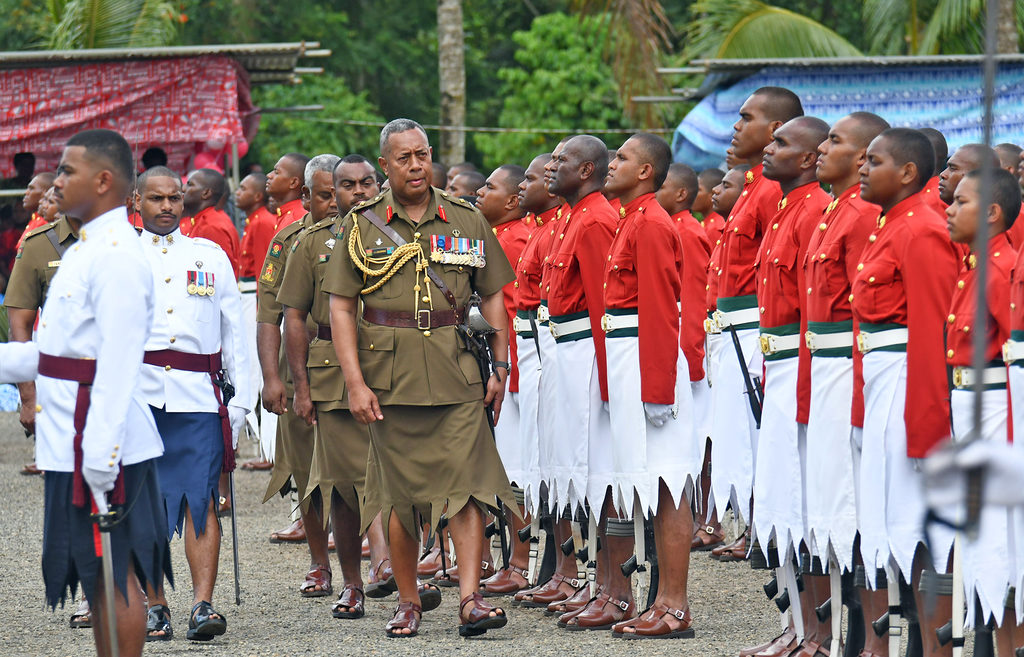
A lot has been said about the constitutional role of the military, so it is interesting to read what Republic of Fiji Military Forces (RFMF) Commander Major General Ro Jone Kalouniwai has to say.
The military has been involved in critical episodes in our country’s political history. From the coups of 1987 through to 2000 and 2006, its role helped determine the direction our nation took.
It effectively meant one thing. Different people had different views of the role of the military. They used it to their advantage.
They exploited our Constitution, played on emotions, and relied on their own interpretations to push their agendas. The coups changed the course of our nation. They pushed us to the brink of disaster and forever changed our national dynamics.
Their impact on our economy, our psyche as a nation, development, international perception and investor confidence was profound.
Now, in the face of all that, we see the military welcoming recommendations to strictly define its constitutional role, refocusing its core mandate on external defence while firmly subjecting the institution to democratic civilian authority.
Public submissions to the Constitutional Review Commission (CRC), detailed in Chapter 11 of its report, sought clarification of the RFMF’s constitutional role, ensuring that the military assists civil power only with explicit parliamentary approval or under strictly defined statutory conditions.
Maj-Gen Kalouniwai agreed that tight legal guardrails are necessary to prevent the military from exceeding its mandate in an increasingly complex domestic environment. He said clear legislative boundaries were important because, without them, there remained a risk of institutional drift into political affairs.
The commander acknowledged that the environment was changing rapidly and warned that the military must be careful as circumstances became increasingly fluid. The commander stressed that clear procedures also act as a protective hedge for the force itself, shielding it from internal instability and political manipulation. He said clearly defined roles would help prevent the military from crossing institutional lines during periods of civil tension. He warned that blurred lines could make it easier for the RFMF to cross over into areas beyond its proper role, stressing the need for restrictions and procedures to prevent that from happening.
The commander emphasised that placing the armed forces under civilian governance ensures that operational deployments remain legitimate, lawful and accountable to Parliament.
He said clearly defined rules would guide the RFMF under civilian leadership and allow it to carry out its responsibilities as it should.
For whatever it is worth, we agree the military’s role must be clearly defined. We cannot afford to forget the lessons of our past. Our coups left deep scars. They affected our economy, our institutions, our standing in the world and, perhaps most importantly, our confidence in the stability of our democracy. The way forward must therefore be clear. Strong institutions need clear boundaries. Civilian authority must remain paramount. The RFMF must know its role, and the nation must know where that role begins and ends.
We owe it to future generations to ensure that the mistakes of our past are not repeated. That is why this conversation matters.
So, let us learn from history, strengthen our institutions and put in place the safeguards necessary to allay fears of future upheaval. We have been there before. We should never have to go there again.