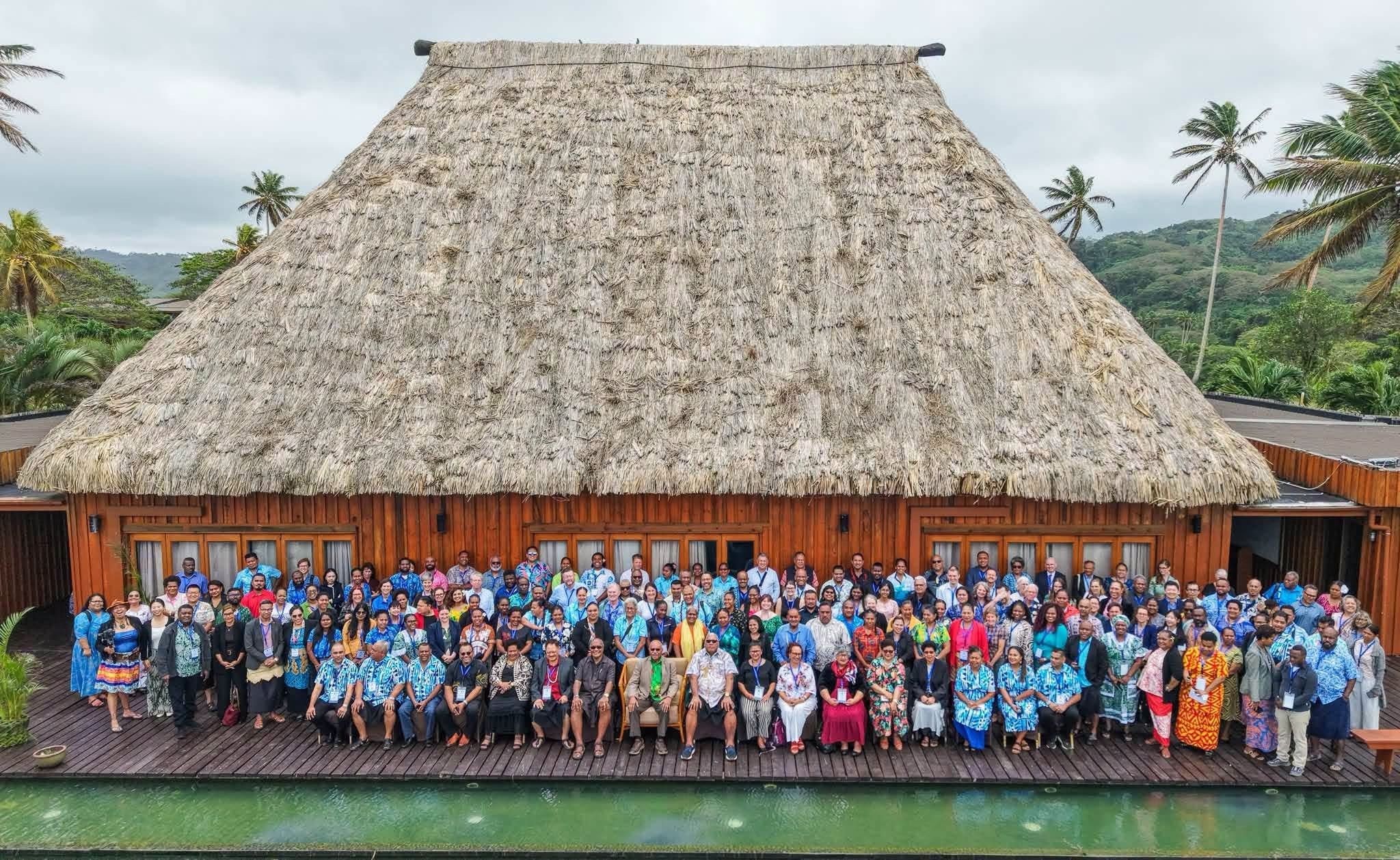
PRIME Minister Sitiveni Rabuka yesterday put journalists on the spot at the 8th Pacific Islands News Association Summit in Savusavu.
He urged journalists to check and verify information before it was disseminated to the public. The rise of artificial intelligence, synthetic content and digital manipulation had added to the challenges facing journalists.
Headlines, he said, could reach thousands of people before facts were properly checked and verified.
Now, what he said made sense. In fact, it is something every journalist and mainstream media organisation has to be aware of anyway. He did not mince his words either.
The challenge is now on journalists to carry that message and put in place measures to ensure there is adherence to the fundamentals of journalism.
We know what is expected. We know what must be done every day.
There is a high expectation that every rule of the game, so to speak, must be embraced by media organisations.
In a world of misinformation and disinformation, the role of journalism and mainstream media is important.
And as we anticipate important events on the domestic and international front, this becomes critically important.
The obligation to uphold the values that the masses associate with the media is quite important in the greater scheme of things.
That was driven through yesterday.
He stressed professional standards mattered more than ever. He made it clear that his call for caution was not a call for journalists to remain silent. It was a call for responsible journalism.
He called for greater caution, especially when reporting issues that could inflame social tensions or contribute to conflict, particularly as information spreads rapidly online.
Information, he said, could travel across the world almost instantaneously.
He said digital innovation should strengthen public understanding and regional co-operation rather than become a tool for misinformation, disinformation or sensationalism that divided communities.
Mr Rabuka called for greater media literacy, saying citizens needed to question what they saw and heard, while journalists needed to verify information.
His message was also clear on the relationship between freedom and responsibility.
A free, independent and professional media, he said, remained important to a healthy democracy.
And that is the point.
The media has a responsibility to get it right. We cannot afford to allow speed, technology or the pressure to be first to undermine accuracy.
The fundamentals remain the fundamentals. Check the facts. Verify the information. Ask the difficult questions. Give people the truth as best as it can be established. That is what responsible journalism demands.
And in an age when misinformation can travel faster than the truth, there has never been a greater need for credible, professional and independent journalism.
That is the challenge before us. It is one we must embrace!