While it is great to know that established media organisations are trusted more than social media during times of crisis, work must go on to maintain that trust.
It is the way to go for mainstream media. This is it. This is what we have to contend with and maintain.
In fact, processes and systems in mainstream media are designed to maintain that level of trust. From the rules of the game, so to speak, to the laws of the country, they provide the guidelines for mainstream media to operate.
They serve as a sort of leveler for media organisations. There has to be accountability at every level, from the journalist in the field to the copy editors, sub-editors and editors.
Then there is the dissemination of information, the quality of that information, verification and the right of response. Throw in defamation laws and you have the base from which mainstream media operates.
This guards against intentional misconduct. It also goes some way towards alleviating laxity and putting those who lack common sense or disregard the laws of our nation on notice.
So trust, in the face of the growing use of digital platforms as a daily source of information across the Pacific, is quite a great tick for the media.
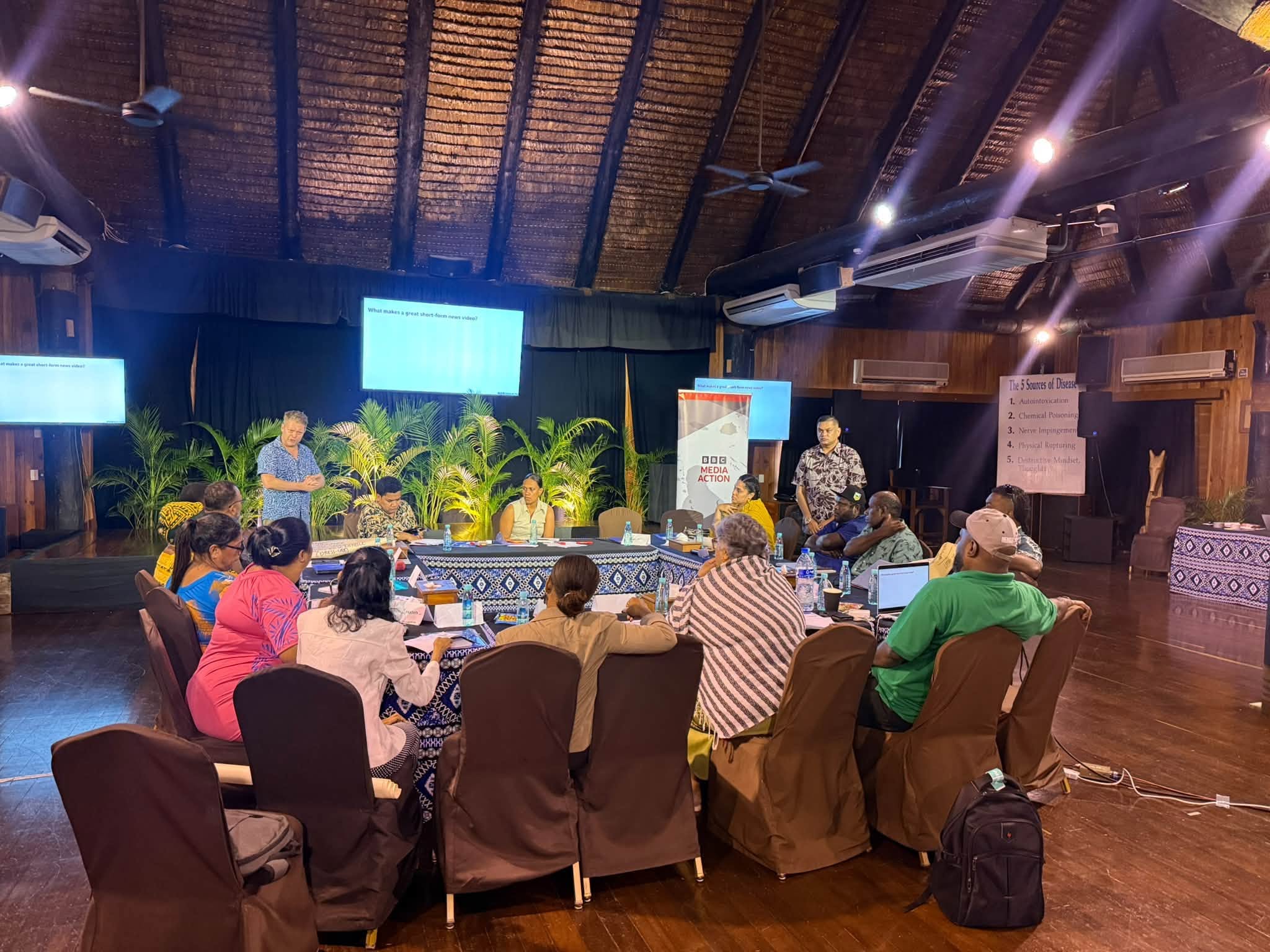
BBC Media Action Pacific Programme Project director Dipak Bhattarai said trust was one of the key findings of a comparative audience survey conducted in Fiji, Tonga, Vanuatu, Samoa and Papua New Guinea, with a similar survey carried out in Solomon Islands in 2022.
The research examined how people accessed information, which sources they trusted, information gaps, and how audiences responded to misinformation and disinformation.
Mr Bhattarai said one clear pattern was the increasing use of social media platforms as a source of information. However, he stressed that this had not translated into social media overtaking established media in terms of trust. Trust levels, he said, remained higher for established media organisations.
During major crises, including natural disasters, other emergencies and political events, audiences continued to turn to radio, television and newspapers.
At the same time, social media was increasingly being used for everyday information, particularly through visual content and influencers.
Mr Bhattarai said the survey findings could help Pacific media organisations better understand changing audience habits and develop strategies to reach and serve audiences effectively.
This is where we agree that a lot of work needs to be done to build on this trust factor.
And that responsibility rests with all of us in the media.
To that effect, we turn the accolades to you, the loyal reader and follower, for your continued support. We are honoured to serve you.
Trust is earned, not demanded. It is built story by story, fact by fact, and day by day. In an age where information can travel around the world in seconds, that trust remains one of the most valuable things mainstream media can have.
And that is something worth protecting!