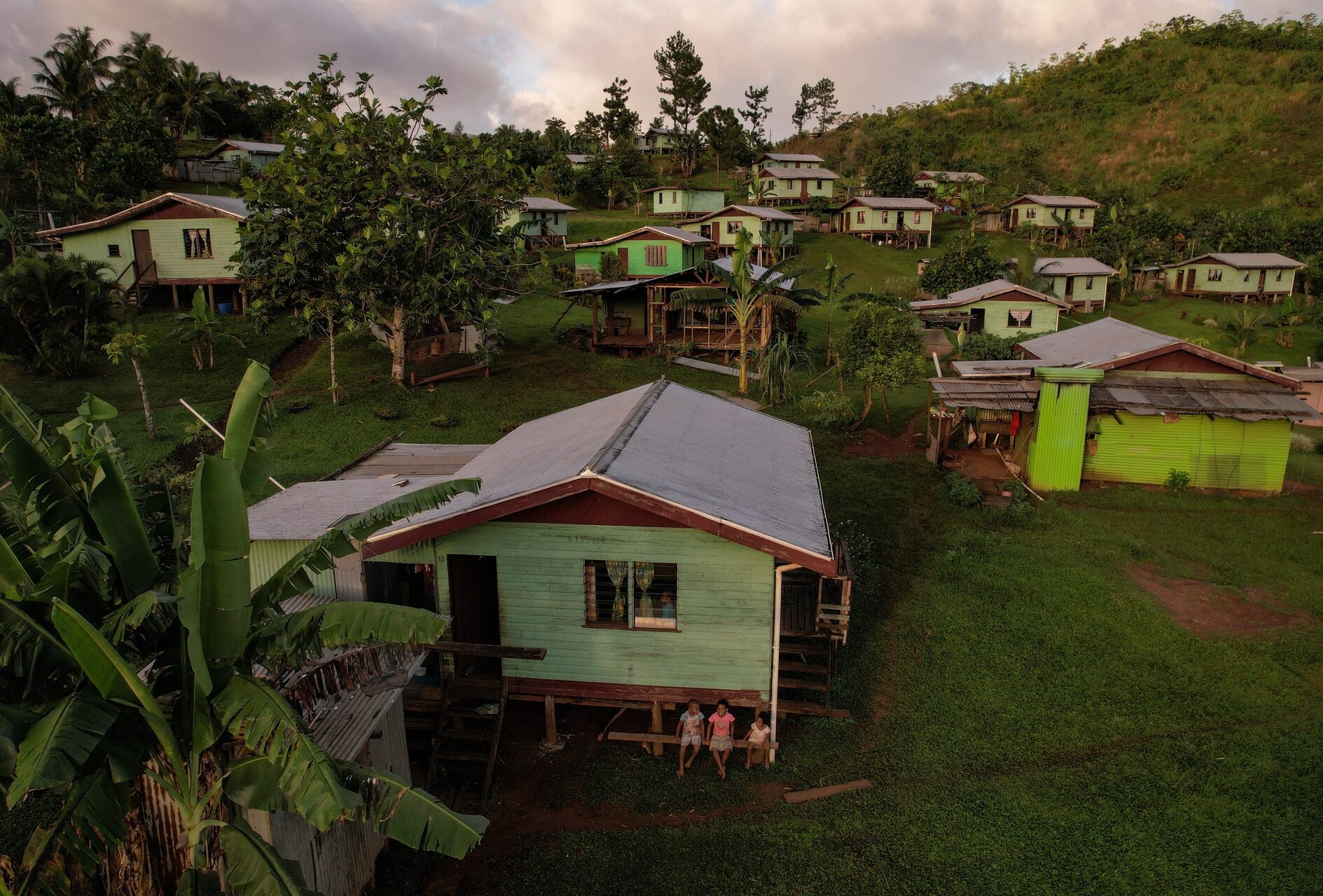
FIJI has a national plan for adapting to climate change, but an audit of its implementation has exposed a troubling gap between policy on paper and the reality facing communities already being forced to move because of rising seas, flooding and coastal erosion.
A performance audit by the Office of the Auditor General, undertaken as part of a global cooperative audit involving 48 Supreme Audit Institutions, found that while Fiji’s National Adaptation Plan (NAP) was developed in line with international guidelines, critical systems needed to measure whether it was actually working were missing or incomplete.
The audit covered the financial years 2018-19 to 2023-24 and focused on the Climate Change Department within the Ministry of Environment and Climate Change.
Its findings raise fundamental questions about how Fiji is tracking billions of dollars of climate needs, deciding which communities require urgent intervention and measuring whether adaptation projects are delivering lasting protection.
The NAP, published in 2018, provides Fiji’s strategic framework for climate adaptation. It was developed with support from the NAP Global Network and financing from the Government of Canada.
But the audit found that there were no specific indicators or measures of success for adaptation actions.
A monitoring and evaluation framework was launched in 2020, yet the audit found that a fully operational monitoring and evaluation system was not in place.
The result was fragmented and incomplete reporting.
Without reliable monitoring, the audit said, it was difficult to track progress, measure outcomes or ensure that decisions were being made using reliable evidence.
The problem becomes more tangible when viewed through the experience of communities visited by Parliament’s Public Accounts Committee. Committee members travelled to Vunidogoloa in Cakaudrove, Cogea Village in Wainunu, Bua, and Nabavatu Village in Dreketi, Macuata, examining relocation projects and the effects of climate change on vulnerable communities.
At Vunidogoloa, relocation has brought improved accessibility, communication and opportunities for development. But residents continue to face poor roads, unreliable electricity, drainage problems and incomplete development works.
The move has also changed the community’s relationship with the sea and traditional livelihoods.
Villagers raised concerns about unfulfilled Government commitments and increasing construction costs, while continuing to pursue farming, tourism and other economic opportunities.
At Cogea, however, the committee encountered a far more serious situation.
The village remains vulnerable to flooding, landslides and isolation, while its relocation project has been severely delayed by funding shortages, disputes, coordination problems and questions over the suitability of the proposed site.
The committee described the situation as a “ticking time bomb”, warning that a major disruption could destroy access routes and place lives at risk.
The numbers tell a particularly stark story.
In 2020, $2.7million was allocated to a Fiji-based NGO for the relocation project. Yet the committee found that only two houses had been completed, with other houses still at stages such as framing and groundwork.
The original plan was to construct 30 houses, but that target has since been reduced to approximately 16 because of funding constraints, rising construction costs and implementation difficulties.
The audit also found that a 70 per cent advance payment to the contractor early in the project had restricted cash flow for subsequent work.
Government support expected in areas including timber milling, surveys and technical services was also not formalised, according to the Committee.
A geotechnical assessment further found that the selected relocation site was not the most suitable, creating the need for costly civil works.
For people waiting to leave a climate-vulnerable settlement, such delays are more than an administrative problem.
They mean continued exposure to the very hazards the relocation project was intended to address.
The committee said the prolonged delay in Cogea had caused suffering and called on Government to “step in to address the relocation issues once and for all.”
Nabavatu presented a different picture.
The relocation project was progressing positively, with cyclone-resilient houses under construction and efforts to preserve access to fishing and farming areas.
The committee commended the quality of construction and project management, but noted that infrastructure, long-term maintenance, housing allocation and funding for remaining households still needed attention.
Of the 85 houses identified for relocation at Nabavatu, 37 households were under construction and nearing completion, while 48 households remained pending relocation, subject to geotechnical assessment by the Ministry of Lands.
Across the three sites, however, the committee identified common problems: inadequate infrastructure, funding gaps, delays, weak coordination, disrupted livelihoods, incomplete Government commitments and insufficient communication about timelines and funding.
The audit also exposed weaknesses in the governance of Fiji’s adaptation strategy itself.
Although the NAP was aligned with international guidelines, documentation confirming stakeholder acceptance was missing.
The audit could not confirm whether the NAP had undergone the required quality review because a quality assurance report was not provided.
Roles and responsibilities among Government actors were also not clearly defined, while leadership of sectoral actions and coordination across ministries were described as weak.
These findings raised a wider question: who is ultimately accountable when a climate adaptation project falls behind?
The committee has recommended a series of reforms, including comprehensive documentation of stakeholder consultations, publication of quality assurance reports, a fully operational monitoring and evaluation system and clear indicators for measuring success.
It has also proposed stronger coordination, potentially through a Cabinet sub-committee or multi-agency taskforce, clearer responsibilities among Government agencies and an oversight framework for adaptation projects.
The committee further recommended sustainable financing, detailed implementation plans for relocations and seawalls, and greater attention to community needs and accessibility.
The findings come as Fiji continues to position itself as a strong advocate for climate action internationally.
The audit formed part of the global Cooperative Audit on Climate Change Adaptation Actions coordinated by the INTOSAI Development Initiative and the INTOSAI Working Group on Environmental Auditing.
Its findings contributed to a Pacific regional overview and a global report presented at COP30 in November 2025.
But international leadership means little to communities still waiting for roads, houses, electricity and safe relocation.
Fiji’s climate adaptation challenge is therefore no longer simply about having the right policies.
It is about whether those policies can be translated into functioning projects, whether money reaches the people and places most at risk, and whether Government can demonstrate with evidence that adaptation investments are reducing vulnerability.
The audit’s central warning is clear: without stronger financing, coordination, monitoring and accountability, Fiji may have a credible adaptation framework on paper while vulnerable communities continue to face the consequences on the ground.