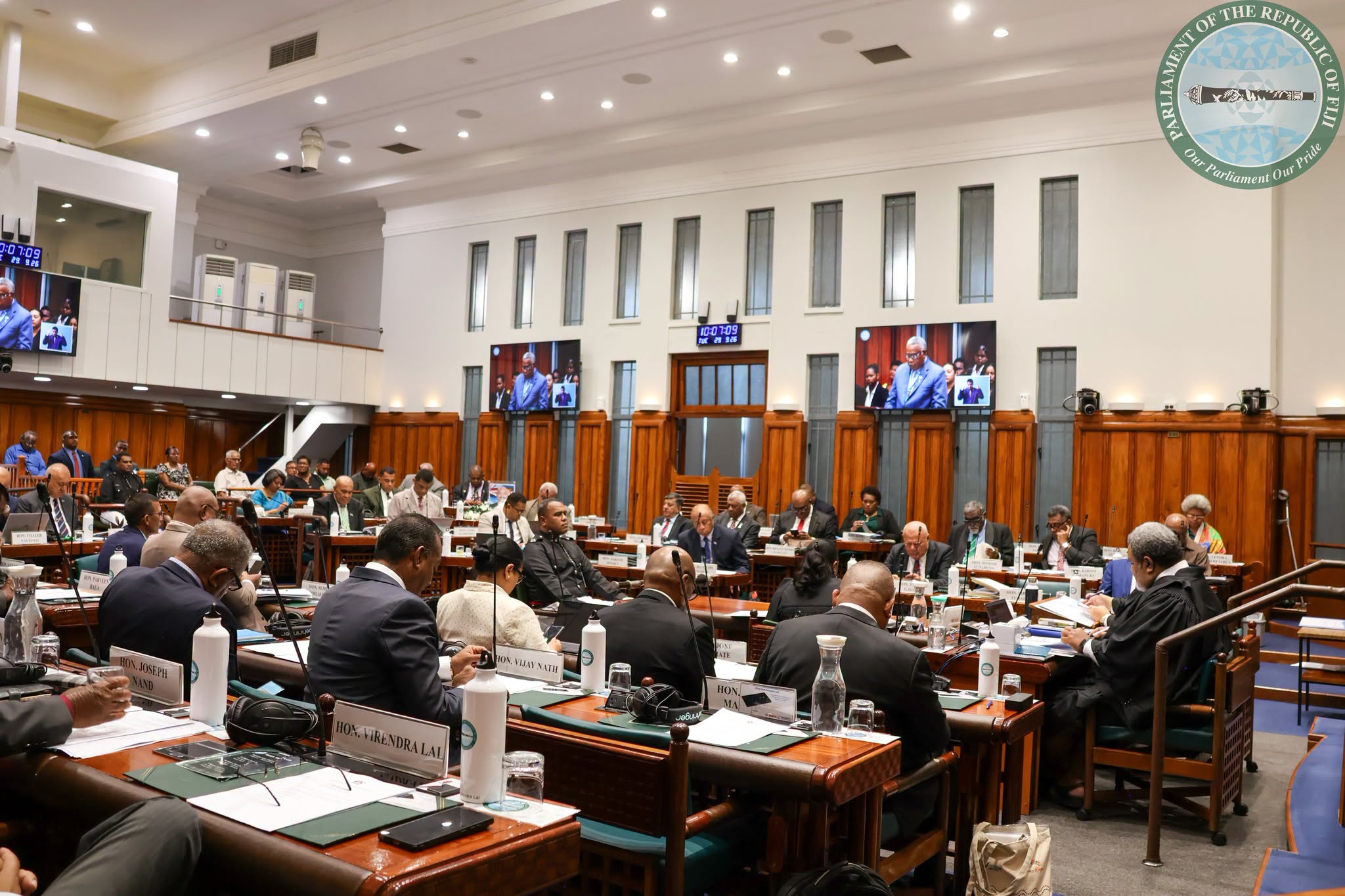
FIJIANS would have between 30 and 45 days to prepare for a national referendum once a writ is issued, under proposed changes contained in the National Referendum Bill that was re-introduced in Parliament yesterday.
The Bill provides a legal framework for holding a referendum, including one required for amendments to Fiji’s Constitution.
Under the proposed law, once the President is notified by the Speaker that a constitutional amendment Bill has passed in accordance with section 160 of the Constitution, the President must issue a writ to the Electoral Commission within seven days.
The writ must specify the polling date, the referendum question or questions, the closing of the National Register of Voters and the date for the return of the writ.
Importantly, the Bill states that referendum voting must take place not less than 30 days and not more than 45 days after the writ is issued.
Voters would be asked to indicate their choice by ticking, crossing or circling either “Yes” or “No” on the ballot paper.
The proposed legislation also requires referendum polling day to be declared a public holiday.
The draft Bill also allows Fijians potentially to go to the polls to choose their next government and decide the future of the Constitution on the same day.
The proposed legislation specifically provides for a referendum and general election to be conducted simultaneously — creating the possibility of voters receiving separate ballots for two major national decisions.
Under the Bill, if referendum voting falls on the same day as an election, electoral officials appointed for the election would also oversee the referendum.
The same polling stations, voter lists and even ballot boxes could be used.
However, if the same ballot boxes are used, referendum ballot papers must be a different colour from election ballot papers.
There would also be a clear order for counting.
The general election votes and declaration of election results must be completed before counting of referendum votes can begin.
The Bill also deals with what happens if the two votes are held on different dates.
In that situation, the Electoral Commission could suspend campaigning for the later event during all or part of the campaign period for the earlier vote.