He was known to our ancestors by a Fijian version of his Swedish name, Jale Seveti.
However, Charles Savage, born Kalle Svenson, would leave a mark on these islands far greater than any chief or priest before him.
The colourful story of his exploits tells us not just about his drive for power and influence but also, more importantly, how his skill with firearms recalibrated the centuries-old political order in Fiji.
Savage arrived in these islands not by design but by disaster.
His vessel, the 135-tonne American brig Eliza, had foundered on the reef at Nairai at the opening of the nineteenth century.
Marooned and resourceful, the red-haired Swede did not despair.
He had already spent time in Tonga, where he had absorbed knowledge of Fijian society from the mataisau, or carpenters, of Kabara, and he wasted little of it.
At Nairai, he was taught the Fijian language by a local chief named Tui Lawaki, and through him began to acquire the cultural intelligence that would eventually make him indispensable to one of the most powerful rulers in the archipelago.
It was at Nairai, too, that Savage encountered the network of chiefly politics that would determine his fate.
Chiefs associated with Levuka and Bau were passing through, travelling from Lakeba and Koro to attend ceremonies confirming the Vunivalu of Bau as Tui Levuka.
Drawn to this world rather than repelled by it, Savage chose to join the party. Accompanied by a Chinese cook named Lui, they journeyed to Bau under the leadership of Daulakeba, hereditary chief of the Levuka people of Lakeba who trace their lineage back to Bau.
The warlord of Bau
Ratu Naulivou Radomodomo, Vunivalu of Bau, was a man of fierce and calculating intelligence.
His island chieftaincy sat at the edge of a vast river delta, its canoes commanding the waters that connected the interior of Viti Levu to the open sea.
Bau was powerful, but its ambitions were perpetually frustrated by rivals, among them being Nakelo, a fortified settlement commanding a stretch of river that Bau’s canoes could not legally use.
The prohibition had been imposed by a bete, or priest, of Nakelo, and it had held for years.
When the newcomer Savage was brought before him, Naulivou’s first question was regarding firearms.
Savage explained that weapons of this kind could sometimes be salvaged from wrecks.
Daulakeba confirmed that a vessel carrying such arms lay wrecked in the Lau group.
The Vunivalu immediately ordered both men to sail there at once and return with whatever could be recovered, and this they did.
Beckoned on by favourable winds, they reached Oneata, where Savage boarded the wreck himself and recovered muskets, gunpowder and ammunition.
The firearms were brought back to Bau, where Savage gave a demonstration of the musket’s effect and the Vunivalu, greatly impressed, resolved at once to use the new weapon in battle.
The battle of Nakelo
The target he chose was Nakelo.
Bau’s war party set out, and when the two sides faced each other across the fortifications, Savage was positioned on an elevated platform above the battlefield — a marksman with a commanding view of the field below.
What followed altered the course of Fijian history in a matter of seconds.
Savage raised his musket and fired.
At once, the leading warrior of Nakelo collapsed, dead before he hit the ground. No spear had touched him. No club had found him. He had simply fallen.
The warriors of Nakelo could not comprehend what they were witnessing. Their trenches were unbreached. Their sharpened defensive stakes still stood. Yet men were dying inside their own fortifications. To those defending the settlement, the only explanation was one of dread, for it seemed that Bau had brought with it a new and terrible god.
Panic spread with extraordinary speed. Warriors abandoned their positions and fled in all directions. When they broke from the outer defences, they ran straight into Bau’s reserve forces, who had been waiting precisely for such a moment. The confusion became total. The defenders fought while consumed by terror of an unseen power; the attackers advanced in the full knowledge of what that power was.
As the two sides became entangled in close combat, Savage ceased firing. He could no longer distinguish friend from enemy and feared killing Bau’s own men. The warriors of Bau poured into the village, preventing women and children from escaping. Then they set it alight. The houses stood close together and the flames consumed them rapidly.
Offering of i soro
When the fighting ended, Savage climbed down from his platform and took in the aftermath. Preparations for cannibal feasting were already under way, and it was the first such scene he had witnessed with his own eyes.
Deeply disturbed, he resolved to speak to the Vunivalu directly. But as he approached, something stopped him.
A small procession was emerging from the direction of Nakelo and moving slowly along the riverbank. It was unlike any ordinary ceremony. The men who led it carried baskets filled with soil. Bau’s warriors parted to let them pass. The noise of victory fell away into silence.
The delegation halted at a respectful distance from Ratu Naulivou.
One chief stepped forward alone, knelt before the Vunivalu, and presented his basket of earth.
The gesture required no explanation, for it was the formal surrender of Nakelo’s land to Bau.
Nakelo’s warriors then laid down their clubs and spears upon the baskets.
Everything was conducted with quiet dignity while both victor and vanquished waited for the judgment that would follow.
The canal as a living monument
In Fijian warfare, there was a well-understood grammar of defeat.
The victors could be expected to seize captives, destroy plantations, uproot food crops and cut down fruit trees.
Harsh, but familiar; yet what Ratu Naulivou said next was neither.
The Vunivalu first ordered, as expected, that all plantations be looted and destroyed.
Then he turned to the kneeling chiefs of Nakelo and delivered a command that silenced everyone on the field.
“For many years this river has been closed to the canoes of Bau,” he said.
“The prohibition was imposed by your priest. But your priest is dead. Your chief is dead as well, along with his son, and many of your warriors have fallen. Yet I know the people of Rewa well. You are quick to forget and quick to grow proud again.
“Therefore, you must remember this surrender and the power of Bau. Every person in Nakelo — old and young, male and female — will dig a i kelimusu (canal) linking these waters to the mouth of the river at Nasilai, so that the canoes of Bau may pass freely to the sea without hindrance or danger.
“I want future generations to know and remember that this canal was dug by the ancient enemies of Bau so that Bau’s canoes might sail unhindered.”
The order was unprecedented.
Instead of suffering one violent act of retribution and then beginning the slow work of recovery, the people of Nakelo would be required to spend months on a vast engineering project, which would become a permanent, physical monument to their defeat.
Their homes could not be rebuilt. Their gardens could not be replanted. Not until the canal was dug.
The chiefs of Nakelo could barely conceal their shock. But they had no means of resistance.
Slowly, the defeated warriors rose from their knees and looked upon the man who had just reshaped their world and upon the red-haired stranger seated near him, the figure many still believed to possess supernatural powers.
The transformation of Fiji
While the campaign against Nakelo may framed as a decisive military victory, it was also the catalyst of a major power shift.
Arguably, it was a bloody demonstration on the field of battle of the destructive nature of firearms, both as a tool of physical and psychological warfare, most especially in a society where such weapons had not existed before.
The musket had breached fortifications that years of conventional warfare had failed to crack. It had turned experienced warriors into a fleeing mob. It had, in an afternoon, shifted the balance of power in Bau’s favour.
Charles Savage to Bau became something more than an ally; he was a strategic asset of the first order.
To Bau’s rivals, he became a symbol of a new and terrifying dispensation.
The partnership between the Vunivalu and the shipwrecked Swede would shape the political landscape of Fiji for years to come, accelerating Bau’s rise towards pre-eminence and laying the foundations for the dominance later exercised by chiefs such as Cakobau.
Thus ended the fall of Nakelo, a moment in history that is remembered not merely as one victory among many, but as the moment a stranger’s weapon, and a warlord’s ingenuity, had set Fiji on the path of transformation.
The historical insights above were compiled with information from series of articles written by Viliame Ravai, senior reporter for the Nai Lalakai publication.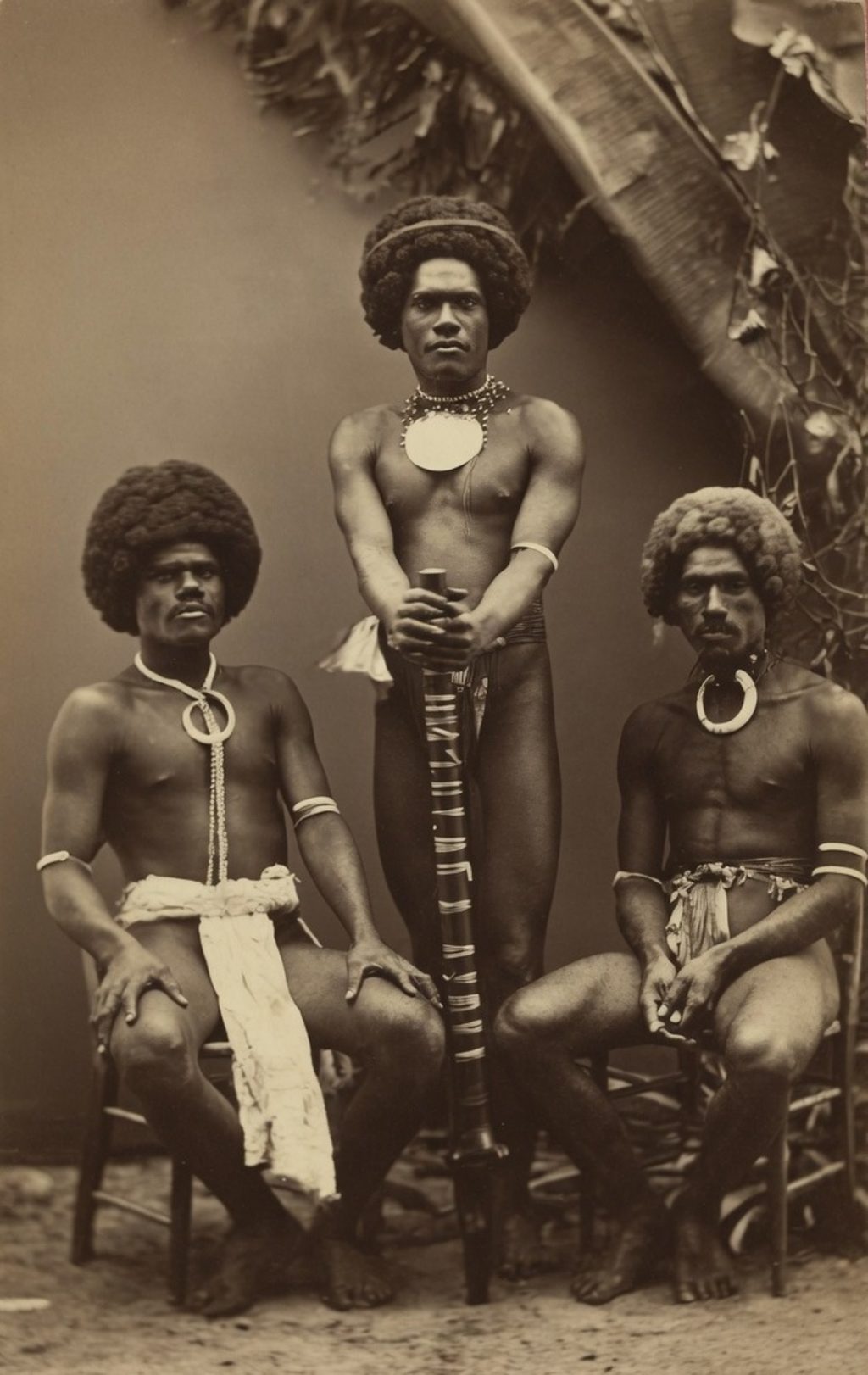
Three Fijian men photographed in the late 19th century, displaying traditional hairstyles, body adornments, and chiefly regalia. Their dignified presence reflects the warrior and chiefly culture that Charles Savage navigated upon his shipwreck. Picture: enwikipedia.com
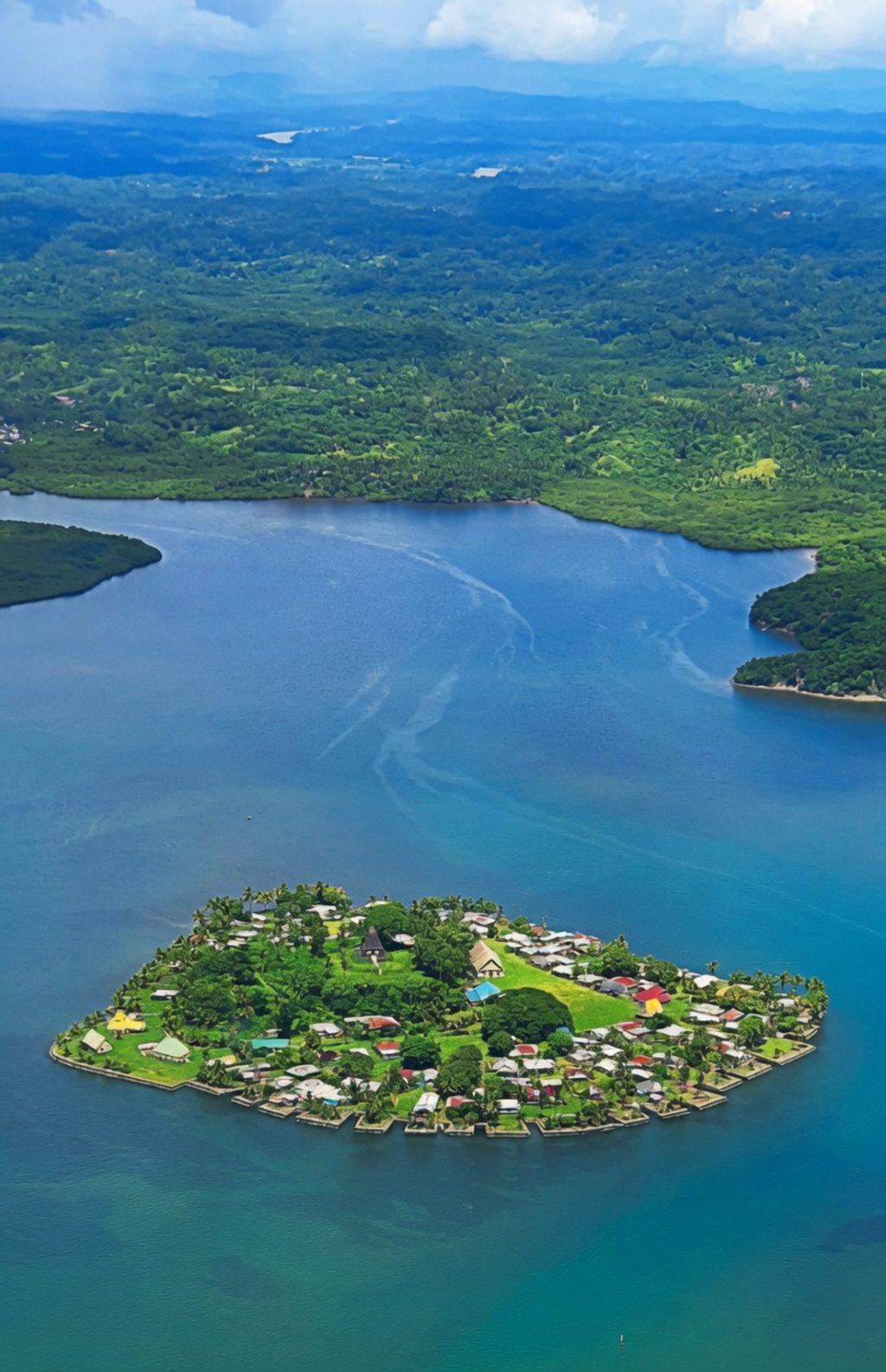
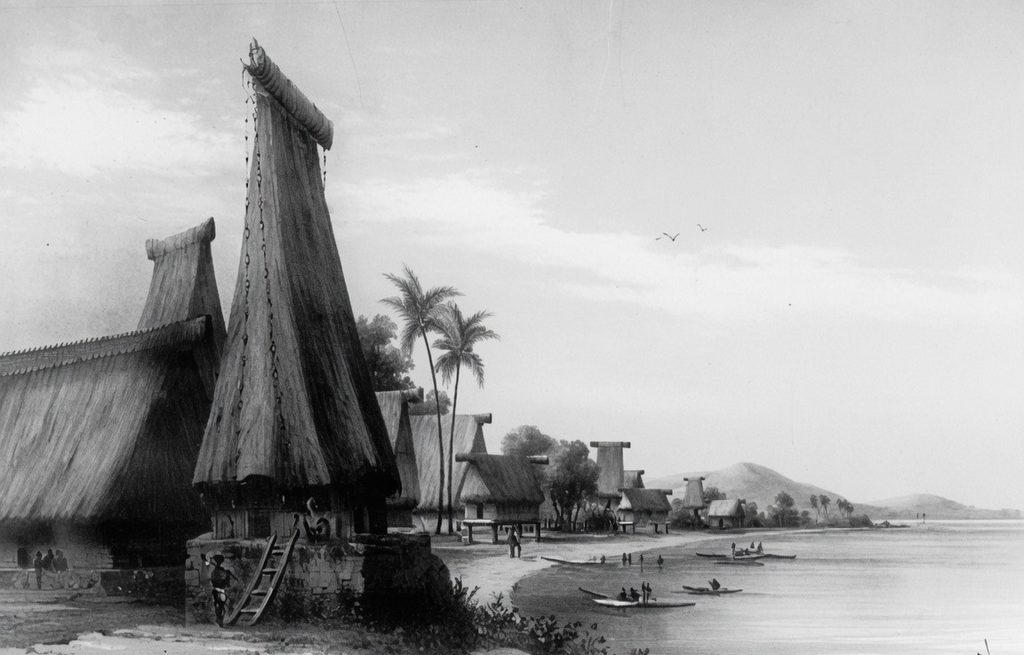
An aerial perspective of the chiefly island of Bau, illustrating the intimate relationship between land, sea, and community that defined polities like Bau. Situated in river deltas and coastal waters, islands such as Bau served as strategic strongholds from which canoes projected power. Charles Savage’s alliance with the Vunivalu of Bau transformed such landscapes: the victory at Nakelo and the subsequent forced construction of the i kelimusu canal physically reshaped waterways, ensuring Bau’s canoes could sail unhindered and cementing a new political geography in Fiji.
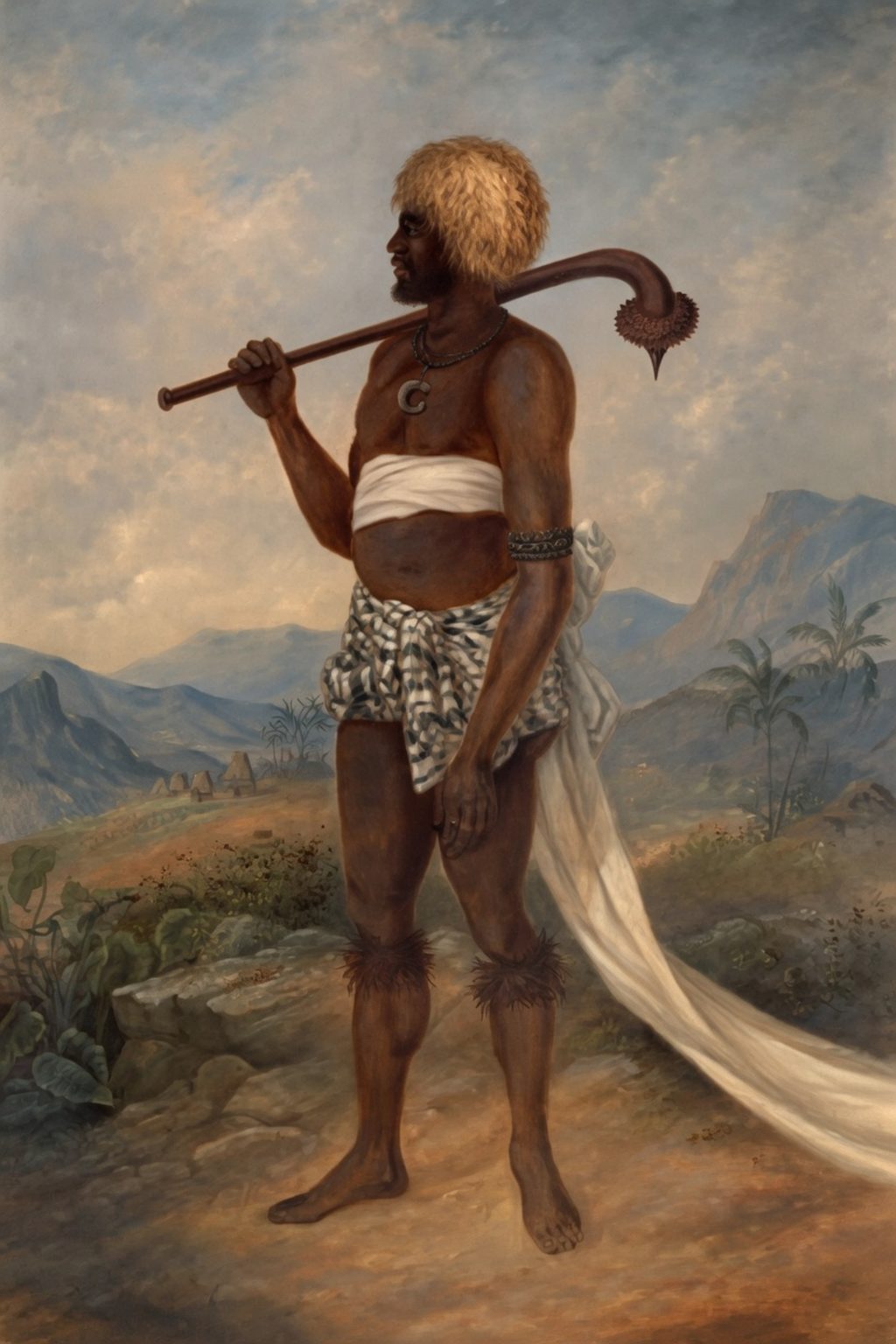
A Fijian warrior of the early 19th century, bearing traditional regalia including a club (probably a totokia or similar), barkcloth, and distinctive hairstyle. This image evokes the formidable fighters Charles Savage encountered upon his arrival in Fiji. Warriors like these formed the core of Bau’s armies under Ratu Naulivou, whose strategic use of Savage’s muskets at the Battle of Nakelo shattered centuries of conventional warfare tactics and psychological expectations of combat.