At 26, Manasa Daunakamakama was pursuing a promising rugby league career overseas when news of a serious liver condition forced him to reconsider his future.
He recalled being told by doctors that his condition was severe and that he might not live beyond the age of 40.
For a young athlete whose sporting ambitions were beginning to take shape, the diagnosis brought uncertainty at a time when his future had appeared full of promise.
“I was only 27 when I had to come back to Fiji after I made the decision to look for a remedy here to cure me,” he said.
The decision meant walking away from a sport he loved and even his coach, who remains a close friend, continued to encourage him to return overseas as the 2000 Rugby League World Cup approached.
But Manasa had made up his mind.
“I told myself that the next decision I was going to make would determine the next years of my life, to choose life or death,” he said.
“When I look back now, I am thankful that I made that sacrifice.”
Now 56, Manasa looks back on that turning point as the beginning of a journey that would eventually lead him into business and deepen his interest in traditional Fijian herbal preparations, particularly warusi.
His experience also shaped his conviction that people should take greater responsibility for their health before illness forces them to reconsider their lifestyles.
Today, he runs Wild Boar Health Fiji, a business specialising in traditional herbal supplement drinks from a stall at Nausori Market.
Assisted by his brother, Autiko Daunakamakama, he hopes to make traditional Fijian herbal preparations more accessible while building a brand with ambitions beyond the local market.
The enterprise, however, is not simply about selling drinks.
It is an attempt to reconnect people with traditional knowledge he believes has gradually lost its place in everyday iTaukei life.
Rebuilding his life
Returning to Fiji marked the beginning of a personal effort to understand his condition and improve his health.
Manasa began reading books and gathering information, eventually making significant changes to his lifestyle.
He gave up alcohol and yaqona and strengthened his commitment to his faith and church.
“I successfully turned 40, which was the age the doctors told me was my final stage on Earth, and here I am now surpassing 50,” he said.
He attributes his improved wellbeing to the changes he made, including his dietary choices and his subsequent interest in warusi.
After leaving his full-time job at Goodman Fielder, Manasa joined his brother, Panapasa, in establishing Juice Fiji.
It was during this period that he became increasingly interested in traditional herbal drinks and their place in everyday diets.
“Upon my constant taking of warusi as a supplement to my diet, I felt not only vitality and strength physically, but the liver disease that I had disappeared completely,” he said.
His experience became a central inspiration for Wild Boar Health Fiji.
However, his account of recovery is a personal one and should not be taken as an endorsement of warusi as a treatment or cure for liver disease.
Hepatitis B is a viral infection that can cause chronic liver disease, including cirrhosis and liver cancer.
Anyone diagnosed with the infection should seek appropriate medical care and monitoring.
Herbal preparations should not replace prescribed treatment, and some may interact with medicines or pose risks to people with liver conditions.
Manasa highlighted that the broader message is that people should pay closer attention to their bodies, reconsider harmful habits and make informed decisions about their health.
“The body has its way of communicating to us when we have been taking certain things in excess — cigarettes, yaqona, alcohol, sugar, salt, fats and so on,” he said.
“Yet for some reason we tend to turn a blind eye and wait until the final stage, when treatment and recovery becomes extremely difficult or leads to major sickness and even death.”
Rediscovering wai vaka Viti
Manasa hails from the chiefly island of Bau, with maternal links to Viria in Naitasiri. His interest in wai vaka Viti is rooted partly in memories of growing up when traditional herbal preparations were a familiar feature of household life.
He believes that knowledge has gradually faded as lifestyles have changed and younger generations have become less familiar with practices followed by their elders.
“This is a practice that we have forgotten as Indigenous Fijians,” he said.
“When we were little, this was part and parcel of our lives, not so much now among the younger generation.”
He recalls village homes where a vulo wai — a vessel or filter associated with the preparation or keeping of herbal drinks — was a familiar sight in the kitchen.
That fond memory represents a way of life in which knowledge of plants and their uses was passed from one generation to the next.
He also points to expressions preserved in traditional iTaukei songs, including “iko mequ vulo wai”, which he interprets as a reference to someone who brings a positive influence into another person’s life.
But Manasa believes the modern understanding of wai vaka Viti needs to be broadened.
Although the term is commonly translated as traditional Fijian medicine, he argued that people should not think of these preparations only as something to consume when they are unwell.
“We should not get mixed up in thinking about wai vaka Viti — warusi being one — as medicines. You only take medicine when you are sick, whereas wai vaka Viti is something that needs to be taken daily as it is a supplement to the body,” he said.
His philosophy is that traditional herbal drinks should be considered alongside food, exercise and other everyday health practices, rather than being associated exclusively with illness.
He wants to encourage people to learn more about traditional preparations and their uses while understanding that their safety and effectiveness depend on their ingredients, preparation and dosage.
Traditional use does not, by itself, establish that a herbal drink improves immunity, prevents disease or treats an existing medical condition.
Manasa’s emphasis on healthier living also extends to yaqona consumption.
While acknowledging its cultural significance and place in Fijian society, he believes people should be more mindful of excessive consumption and its possible effects on their wellbeing.
Through Wild Boar Health Fiji, he hopes to encourage customers from Rewa, Naitasiri and Tailevu to take an interest in traditional herbal beverages while making informed choices about their health.
From Nausori Market to the sports drinks industry
For about two years, Manasa has been developing Wild Boar Health Fiji, sourcing warusi from different parts of Fiji, particularly Naitasiri and Ovalau.
Obtaining supplies from Ovalau presents logistical challenges.
Nevertheless, he prefers to purchase the raw green plants and prepare them himself, allowing him to oversee the process and maintain consistency in the products he sells. His current range comprises four preparations.
Warusi Original is warusi in its purest form, while Warusi Bula combines it with 13 other herbal plants and fruits. Warusi Kaukauwa is a more potent blend, and his Iced Tea combines warusi with honey, ginger and lemongrass, also known as coboi.
These products form the foundation of his plans for expansion.
“When it comes to expansion, of course, no one begins a business and wants it to stay in the shape and form he started it off. We have to grow. If it stays stagnant, it shows there is no vision,” he said.
Quoting Scripture, he added: “Where there is no vision, people perish.”
His most ambitious idea is to develop a locally sourced sports or energy drink that could compete in a market occupied by established brands such as Powerade.
He is considering names such as Warade, drawing on the word warusi, or Warriors-ade. The proposals remain at an early stage, but his intention is to explore whether a product built around a traditional Fijian ingredient could appeal to athletes and other consumers.
For a former rugby league player, the idea brings together his sporting background, personal experience and entrepreneurial ambitions.Yet turning warusi into a commercially viable sports drink would require more than adapting a traditional recipe.
Its nutritional composition, safety, taste, shelf life and suitability for physical activity would need to be established through appropriate testing.
Food safety requirements and relevant regulatory standards would also need to be met before the product could be marketed with specific performance or health claims.
Manasa understands that expansion must begin with a product he knows well.
“In order for you to expand, you need to work with one product that you have mastered. That one product will carry your name and brand,” he said.
For now, the sports drink remains a concept he hopes to develop as the business grows.
His immediate focus is on building Wild Boar Health Fiji’s presence and maintaining the quality of the drinks he currently produces. Some customers, he says, stop at his stall early in the morning for a glass before heading to work. Others come to explore the different preparations he offers.
He hopes to build on that interest and establish a recognisable local brand, eventually reaching consumers beyond the Nausori Market.
A vision beyond business
Despite his ambitions, Manasa maintains that the purpose behind Wild Boar Health Fiji extends beyond commercial success.
His health scare remains the experience that informs his approach to business and his conversations with customers.
He wants people to recognise the importance of healthier habits and to take an active interest in their wellbeing and wants traditional knowledge to remain relevant, rather than becoming something remembered only through stories about the past.
Wai vaka Viti offers an opportunity to reconnect with that heritage while exploring how traditional ingredients might be developed responsibly for modern consumers.
His vision includes expanding the range of products available to customers and, eventually, testing whether warusi can find a place in the sports drinks industry.
“If it is God’s will, I will abide by it,” he said.
The proposed sports drink remains a work in progress, but the thinking behind it reaches back to the decision he made as a young athlete to leave his career and return home.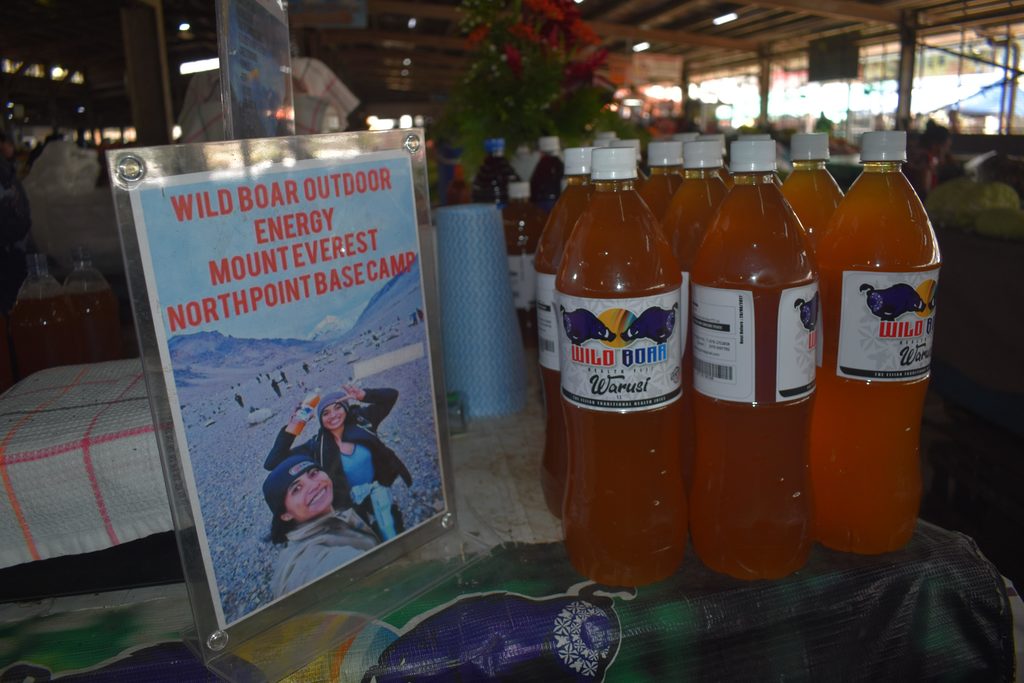
Manasa’s warusi products have made their way to Mount Everest. Picture: ALIFERETI SAKIASI
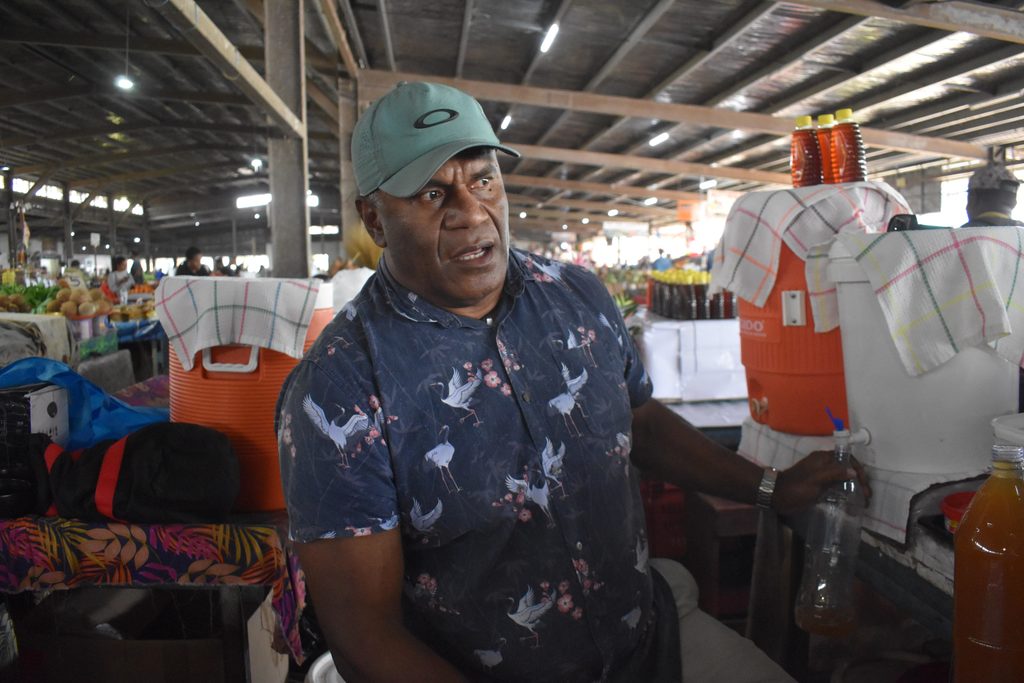
Manasa who is now 56 is an advocate for healthy lifestyles and wai vaka Viti as a supplement drink. Picture: ALIFERETI SAKIASI
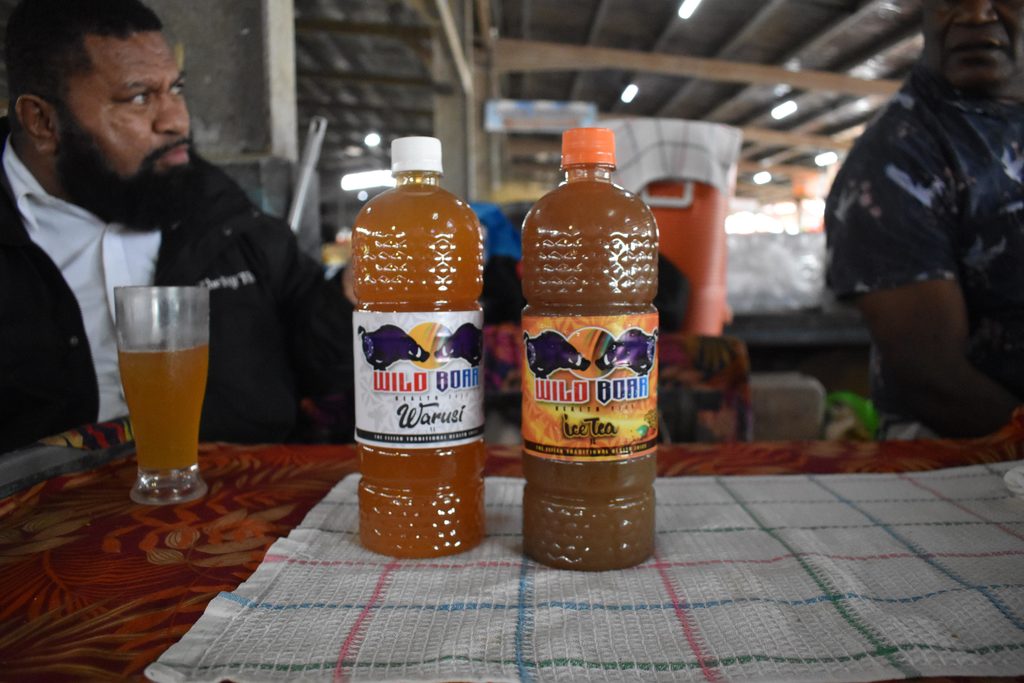
Two of the four popular warusi blends that Manasa produces and sells. Picture: ALIFERETI SAKIASI
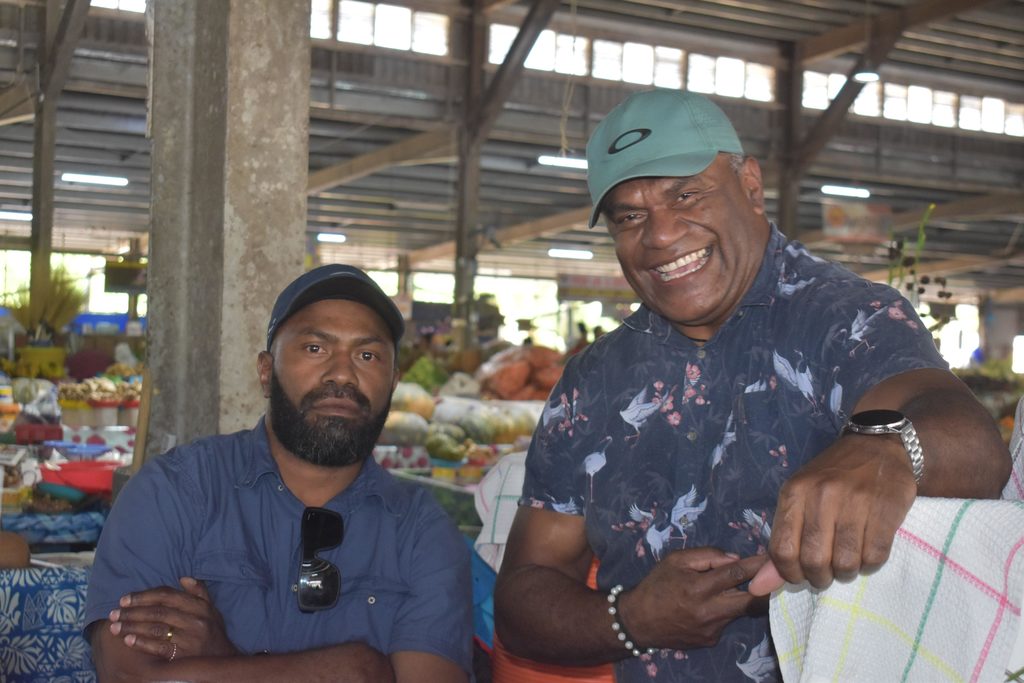
Manasa and brother,
Autiko at the
Nausori Market.
Picture: ALIFERETI SAKIASI