WHEN the Sigatoka River falls low (low tide), the muddy riverbed begins to reveal what women and men from Naroro Village have come to collect.
Armed with snorkellers and small knives, sometimes no more than a butter knife, they enter the water and search the mud sediments for kai (freshwater mussels) known as tave in the Nadroga dialect.
Among those who make the journey is Anaseini Sisitabua Wasenuku, a woman from Naqumu Village in Macuata who has maternal links to Naroro Village in Nadroga.
For Anaseini, collecting kai is more than gathering food. It is a familiar activity of village life and a source of income.
“Some people use snorkellers and a knife, usually a buttering knife, to dig out the kai that’s stuck on to the mud sediments on the bottom of the river,” she said.
But before anyone steps into the water, they must wait for the river to reach low tide.
Waiting for the River
Kai cannot be collected when the tide is high.
The women and men watch the river and go out when the water is low enough to reach the mussels. The work can continue for hours, with collectors moving in and out of the water as they search the riverbed.
Anaseini said a good three-hour collection can fill a 25-kg sack.
“It’s always easy to collect,” she said.
The women of the district of Conua are particularly known for collecting and selling kai throughout the province. For many, it is an important source of income.
In Naroro, the river has also become known for producing kai that people consider among the softest and tastiest in the country. Anaseini said the difference comes from the river itself.
“When it’s high tide, the water that comes in is mixed (saltwater and freshwater) so it gives a different taste and texture to the mussels,” she said.
Into the Water
The collection itself is physical work.
Collectors search the bottom of the river, using the knife to loosen mussels attached to the muddy sediments. They spend time in the water before coming out to warm themselves. Unlike some collectors in other places, the women of Naroro do not apply mud to their bodies or faces.
Instead, Anaseini said, they sometimes apply body oil before entering the water.
“We apply body oil because that keeps us warm in the water for a long time,” she said.
The three-hour collection is not necessarily three continuous hours underwater.
The women go in and out of the river.
Sometimes they come ashore to cook what they have gathered and have a quick meal. Once they are warm again, they return to the water.
By the end of the collection, the sacks are heavy with kai.
From River to Kitchen
The work does not end when the mussels are brought home.
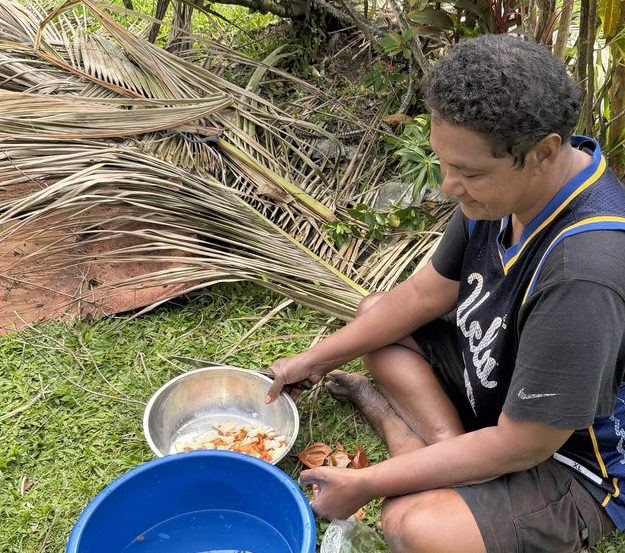
The kai is first soaked in water for a day. This helps clean it before it is prepared for eating or sale.
From there, the possibilities are many.
The mussels can be boiled or cooked using the traditional tavu method. They can also be prepared as chop suey, with miti or in curry. Anaseini said they can even be used to make a kai pizza.
“We can prepare it in different ways,” she said.
For Anaseini and the women who collect kai, preparation is also part of making the product ready for customers. The mussels can be sold cooked or uncooked at the market, or directly from the village.
Some customers come straight to Naroro to buy them. Many villagers who work in hotels also buy the kai because it is already cooked and ready to eat.
The Tavu Method
One of the traditional ways Anaseini describes is tavu.
The kai is placed upright on soil or on a tin sheet, with the bottom of the shell facing upwards and the kai facing downwards. Small pieces of firewood are then placed over the mussels and set alight.
As the wood burns, the charcoal cooks the kai from above. It takes about 20 minutes. The mussels reveal when they are ready.
“You can tell when the kai is cooked when you see the shell colour change,” Anaseini said.
The method is simple: firewood and heat.
A Living Source of Income
Once cooked and shelled, the kai can become an important source of cash.
A two-litre container of cooked and deshelled kai can sell for $50 at the market.
The women also sell kai within the village, allowing customers to buy directly from the collectors.
For Anaseini, the journey from river to market is a complete cycle where she watches the tide, enters the water, digs for mussels from the mud, soak and cook them and finally sells them.
For women of Naroro the river provides the beginning, the kitchen then transforms the catch, then the market provides them the income.
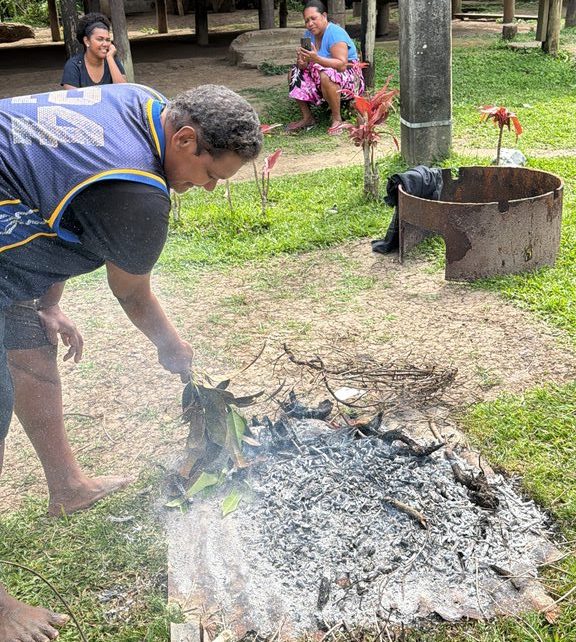
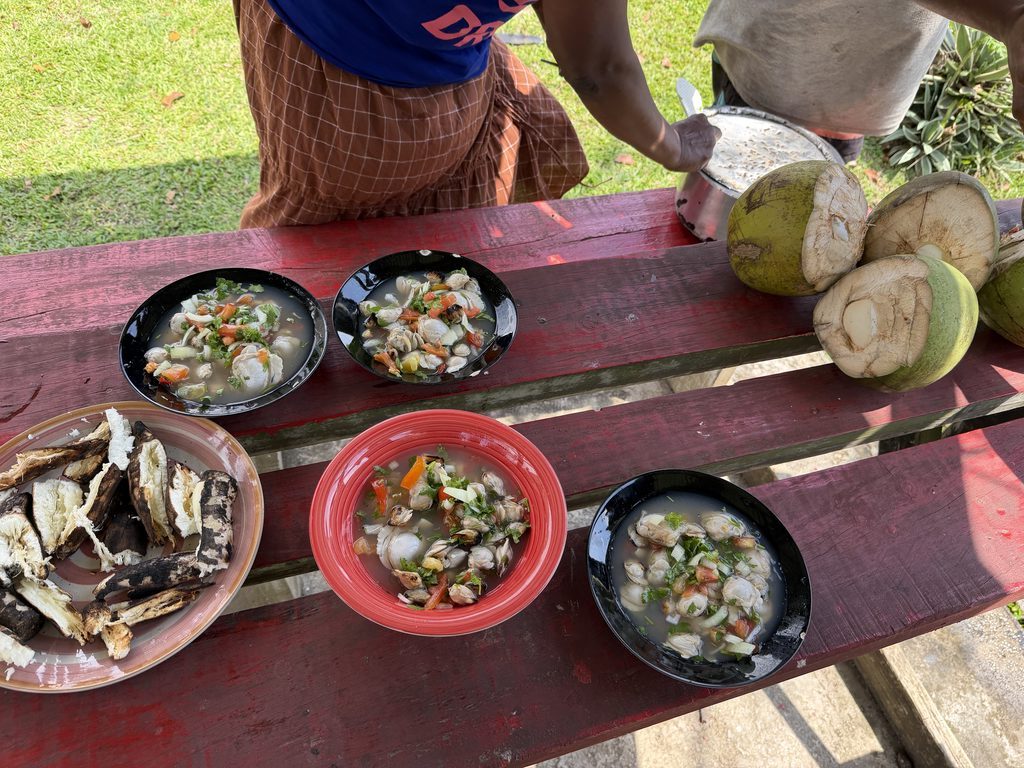
The tavioka tavu and kai lunch prepared by the villagers of Naroro. Picture: ANA MADIGIBULI
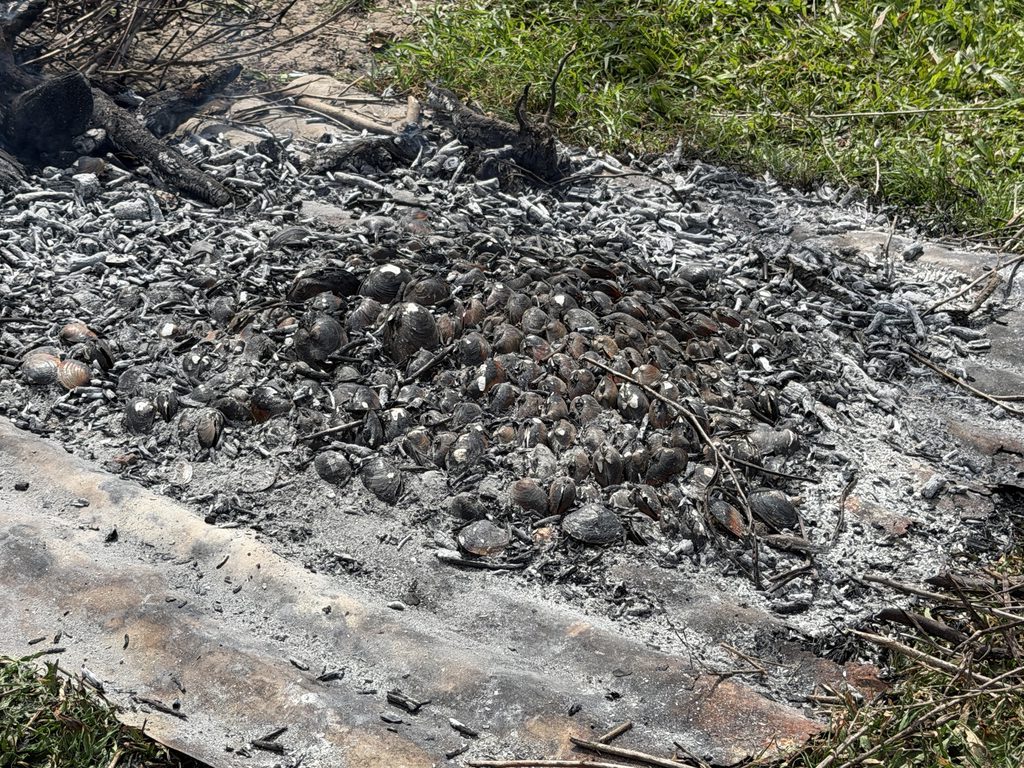
Cooked kai on burning hot charcoals.
Picture: ANA MADIGIBULI
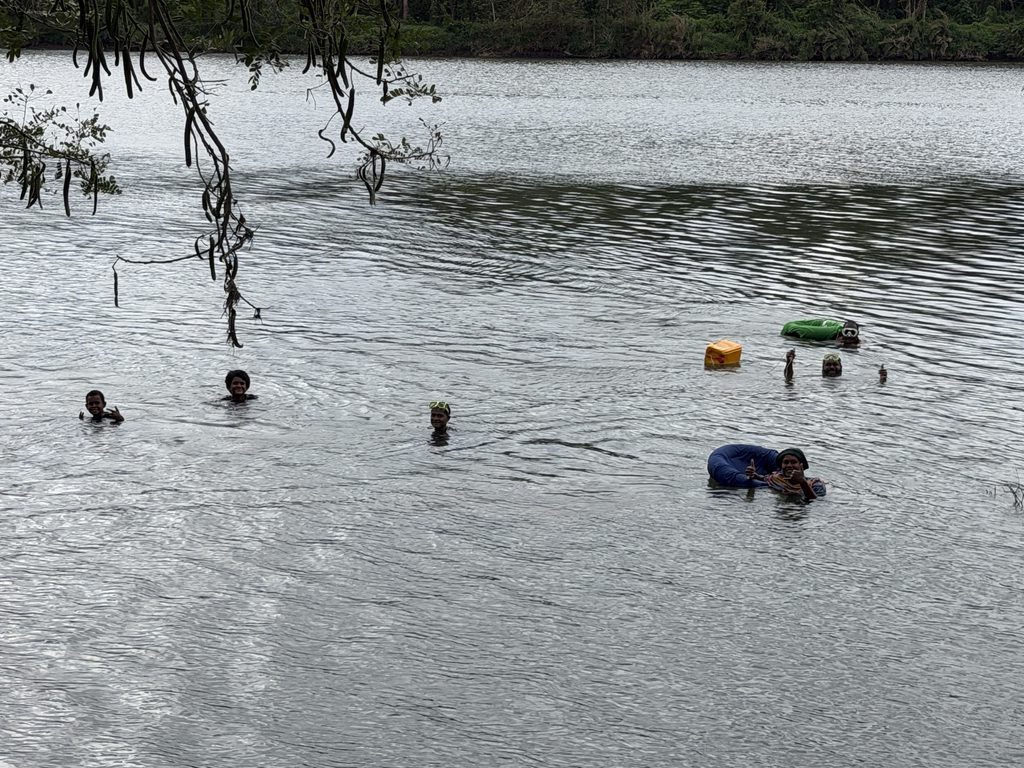
Many from Conua district collect freshwater mussels along the Sigatoka River. Picture: ANA MADIGIBULI
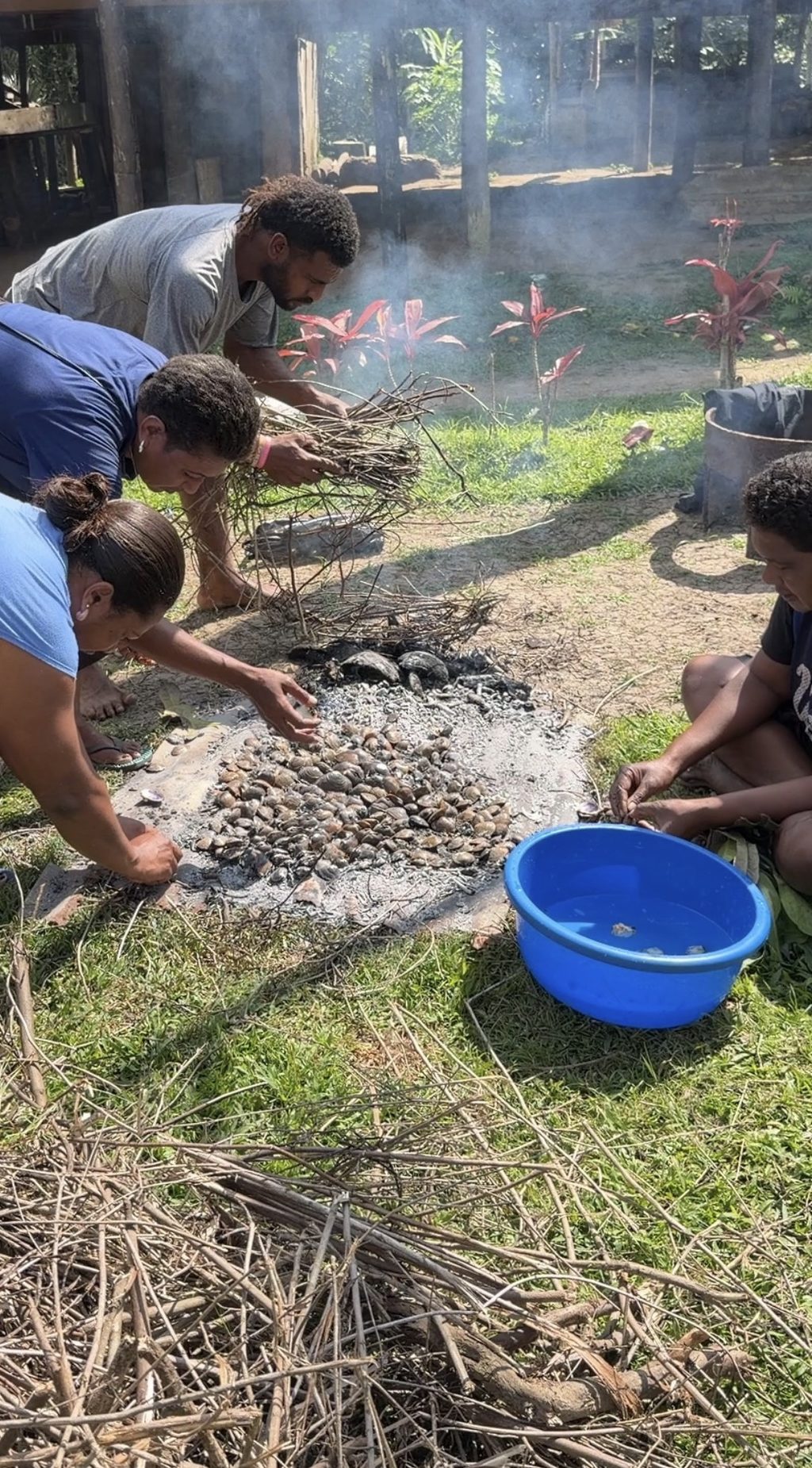
The kai is placed upright on soil or on a tin sheet, with the bottom of the shell facing upwards and the kai facing downwards when it’s cooked. Picture: ANA MADIGIBULI