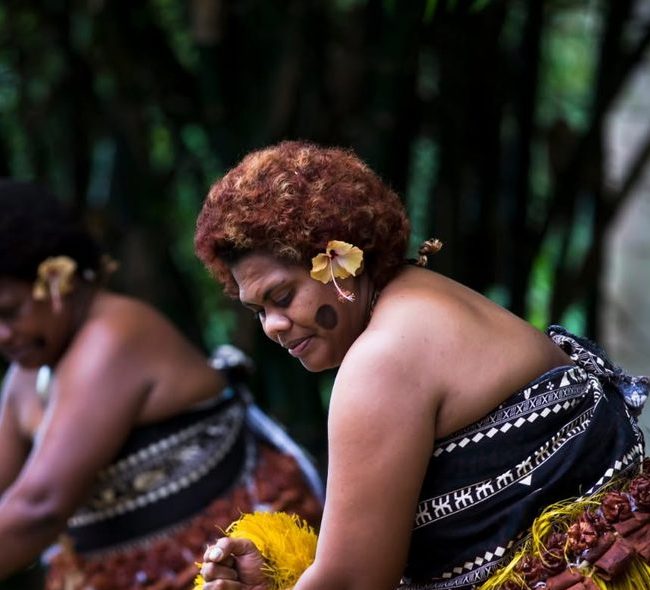
FOR generations, indigenous women and girls have carried more than traditions.
They have carried languages, stories, knowledge and customs from one generation to the next. They have nurtured families, strengthened communities and helped safeguard the lands, territories and natural resources on which their Peoples depend.
Often working quietly behind the scenes, they have also been leaders, decision-makers, caregivers, advocates and defenders of their communities.
Yet, despite the importance of their contributions, their voices and experiences have too often remained unheard.
Indigenous women and girls stand at the intersection of two identities that can expose them to deep and persistent inequalities — as women and as Indigenous persons. Across many communities, they continue to face barriers that affect almost every aspect of their lives, from education and healthcare to land rights, justice and participation in decision-making.
Poverty, illiteracy, limited or insecure access to lands and resources, inadequate healthcare and barriers to justice continue to affect many Indigenous women and girls. They are also disproportionately vulnerable to trafficking, gender-based violence and other forms of discrimination.
These challenges, however, do not tell the whole story.
Behind the statistics are women who continue to lead, girls who are learning and carrying forward ancestral knowledge, and communities that continue to draw strength from their resilience.
Indigenous women are knowledge keepers. They are guardians of languages and traditions and stewards of biodiversity. Through their roles within families and communities, they help ensure that knowledge survives — not simply as something remembered from the past, but as something lived and passed forward.
Their leadership is also increasingly visible in efforts to protect Indigenous rights, strengthen communities and influence decisions affecting their Peoples and their territories.
Recognising that leadership is more than an act of acknowledgment. It means creating opportunities for Indigenous women and girls to participate fully in decisions that affect their lives, supporting their rights and investing in their education, health, livelihoods and leadership.
Because when Indigenous women and girls are supported, communities are strengthened.
When their voices are heard, decisions can better reflect the realities and aspirations of Indigenous Peoples.
And when their knowledge is valued, an important part of the world’s cultural and environmental heritage is protected for generations to come.
A day to amplify their voices
That recognition will gain a new global platform this year.
On November 26, 2025, the United Nations General Assembly adopted resolution A/RES/80/10, establishing the International Day of the World’s Indigenous Women and Girls, to be observed annually on September 5.
The day represents more than a date on the international calendar. It is an opportunity to turn attention towards the lives, rights, achievements and challenges of Indigenous women and girls — and to recognise the leadership they have long demonstrated within their communities.
It also serves as a reminder that visibility must be matched by action.
By bringing Indigenous women and girls into the centre of global conversations, the International Day can help raise public awareness, strengthen advocacy and encourage governments, organisations and communities to commit long-term attention and resources to advancing their rights and well-being.
For Indigenous women and girls, whose contributions have too often gone unrecognised, the day offers an opportunity for their stories to be heard.
But their stories should not be heard only on one day.
Their knowledge, leadership and resilience are part of the continuing story of indigenous peoples — and their voices are essential to shaping a future that is more just, inclusive, sustainable and resilient for people and the planet.
The numbers behind the struggle
Behind the global conversation about indigenous women and girls are numbers that reveal the scale of the challenges they continue to face.
An estimated 238.4 million Indigenous women live around the world, yet many experience deep inequalities in income, education and employment.
Nearly one in five — 18.3 per cent — live on less than US$1.90 a day, compared with 6.8 per cent of non-Indigenous people.
Education remains another major barrier. More than half — 53.5 per cent — of employed Indigenous women have no formal education, a figure that rises dramatically to 89.9 per cent in Africa.
In Latin America and the Caribbean, 82.6 per cent of Indigenous people work in the informal sector, 31.5 percentage points higher than the non-Indigenous population.
But behind every percentage is a woman or girl navigating barriers to education, healthcare, decent work and a voice in decisions that shape her life and community.
For advocates, international recognition is an important step. But the real measure of progress will be whether recognition leads to policies, resources and opportunities that reach Indigenous women and their communities.
Turning leadership into opportunity
As part of the first official observance of the International Day of Indigenous Women and Girls, the International Indigenous Women’s Forum (FIMI) is presenting its 14th Indigenous Women’s Leadership Award.
The award celebrates Indigenous women-led initiatives that are creating change from within their own communities and strengthening collective action.
This year, four initiatives from Fiji, India, Kenya and Ecuador are being recognised for using sport and traditional games as powerful tools for opportunity, well-being, environmental protection, education and cultural preservation.
The Fijian initiative showcases how a hockey field can become much more than a place to play.
When hockey helps protect the environment
In Fiji, the iTaukei Women in Conservation Youth Club is using hockey to open doors for iTaukei girls and young women.
Between 2024 and 2025, the number of girls’ teams participating in the national school competition grew from nine to 15.
For some young women, the opportunity extends beyond playing. They are beginning to find pathways to become coaches, referees and role models for the next generation.
The initiative connects participation in sport with something even bigger — engagement with their communities and the protection of the ecosystems around them.
Taking the field can mean gaining confidence, skills and a stronger voice in caring for the places they call home.
“FHF also recognises that women’s leadership must grow alongside participation. Training young women as coaches, referees, and officials will help build a stronger and more sustainable pathway for hockey,” says Rosyln Delaivoni, Monitoring and Evaluation Officer at the iTaukei Women in Conservation Youth Club.
The four recognised initiatives tell a powerful story: Indigenous women are not waiting for solutions to arrive from elsewhere. They are already creating them within their own communities.
The challenge now is to ensure they have the resources, opportunities and decision-making power to sustain those solutions, strengthen them and take them further.
Because in many communities, the solutions already exist.
What is needed is for the women creating them to have an equal say in where they go next.