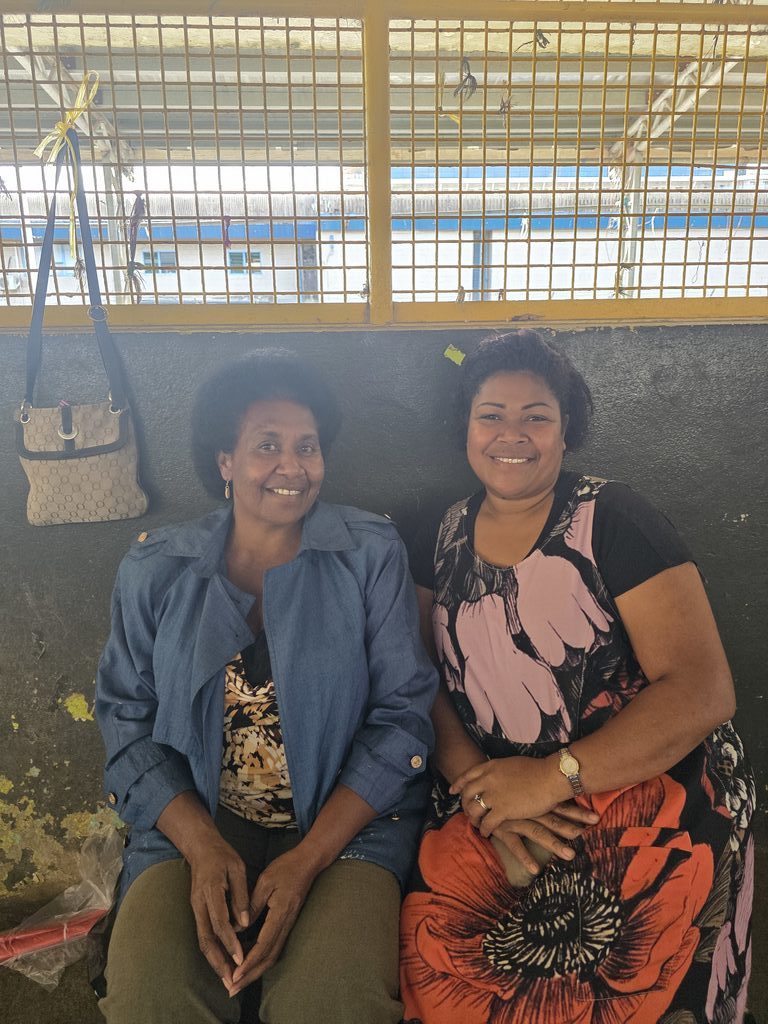
Rural women have always played a vital role in strengthening families, supporting local economies and sustaining communities across our villages. From farming and fishing to small businesses and community leadership, their contributions drive development and improve livelihoods even though they are often unnoticed.
The International Day of Rural Women, observed on October 15, therefore recognises their hard work, resilience and the important role they play in building stronger and more sustainable futures for our rural communities.
For the women of Nacokaika, Naitasiri the river has been more than a source of fresh water. It has been their source of income, independence and hope.
For Merelita Vudinibola, and other women in the village collecting and selling freshwater mussels, known as kai, has become a meaningful way to support her household.
Originally from Navilaca, Noco, Rewa, Merelita, 47, has three children.
She is married into Nacokaika Village, where she quickly learned the traditional practice of collecting freshwater mussels from the river.
Although she followed the village women and collected kai occasionally while being employed, she has since left her job.
“Since I have left work it has been two months since I’ve been collecting and selling freshwater mussels in the market,” she said.
What makes the work rewarding for Merelita is the opportunity to earn money through her own efforts and make decisions about her time.
“I love and enjoy what I do, because when I used to work the employer would boss me around and I get paid at the end of the week, but for this I can collect kai today, sell it today and still get money I want today compared to working for others.”
She also engages in farming activities and sells fresh crops at the Nausori Market.
Collecting kai depends largely on the river’s conditions, with low tide providing the best opportunity to gather it.
“The freshwater mussels are just there in the river. When it is low tide, it is the best time to go harvest it because you can get a lot by picking them up from the sand, or you can use your feet to feel and pick the mussels up. We usually use goggles to see it.” For the women of Nacokaika, collecting kai is more than an individual activity. It is an important source of income that has encouraged them to work together.
The village women have their own carrier to transport their harvest to markets in Nausori and Suva, making it easier for them to sell their produce.
“This is the main source of income for us in the village, that’s why we were able to buy one carrier to transport the freshwater mussels.
“In Nacokaika, women are strong. Everything that happens in the village, the women are always there in the front line taking responsibilities.”
Her determination is guided by a clear goal: providing for her family and ensuring their needs are met.
“I always have a target, that is to collect freshwater mussels so I can sell and afford what my family needs for our daily food rations and to buy things our family needs.”
The income they make from the kai also helps families prepare for village obligations, school expenses, household bills and university tuition fees.
Merelita like the other women understands that earning a living from the river comes with a responsibility to protect it at all times.
She said the women avoid collecting kai during floods or heavy rain because the conditions can be dangerous.
“What we get from the river is our source of income, so we keep our rivers clean and ask people not to pollute it,” she said. “God has provided the river to sustain us.”
As the International Day of Rural Women is observed, today on October 15, Merelita hopes her experience will encourage younger women to recognise the opportunities available within their own communities. Her message is one of hope, courage, hard work and self-belief.
“To the young women in the villages, depending on their husbands for a living, I want to encourage you that there is resources out there you can make use of to help provide for your households.
“You can make a difference, to help your families.
Everything is provided, we have resources and we can utilise it, so be strong and always believe in yourself.”
“If other women can do it, so can you.”
For Merelita and the women of Nacokaika Village, the river continues to provide more than kai. It offers them an opportunity to earn an honest living, care for their families and demonstrate the strength of rural women.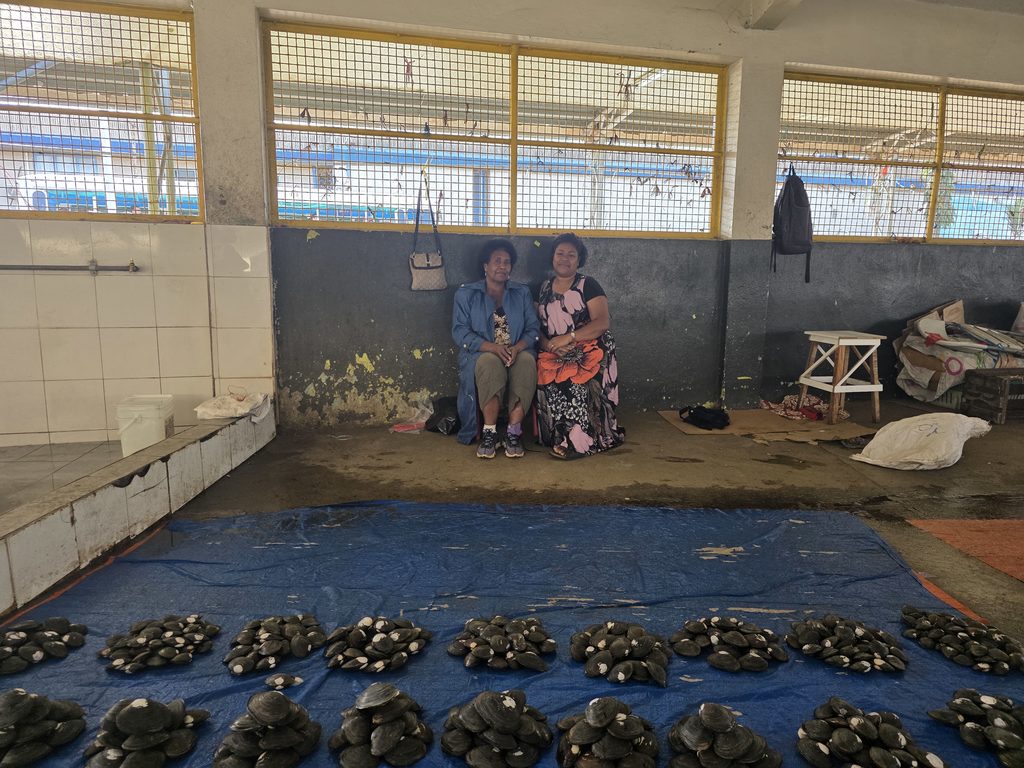
Merelita Vudinibola sells freshwater mussels beside Elenoa Daveta at the Suva Municipal Market. Picture: ELISABETA NAIVELI