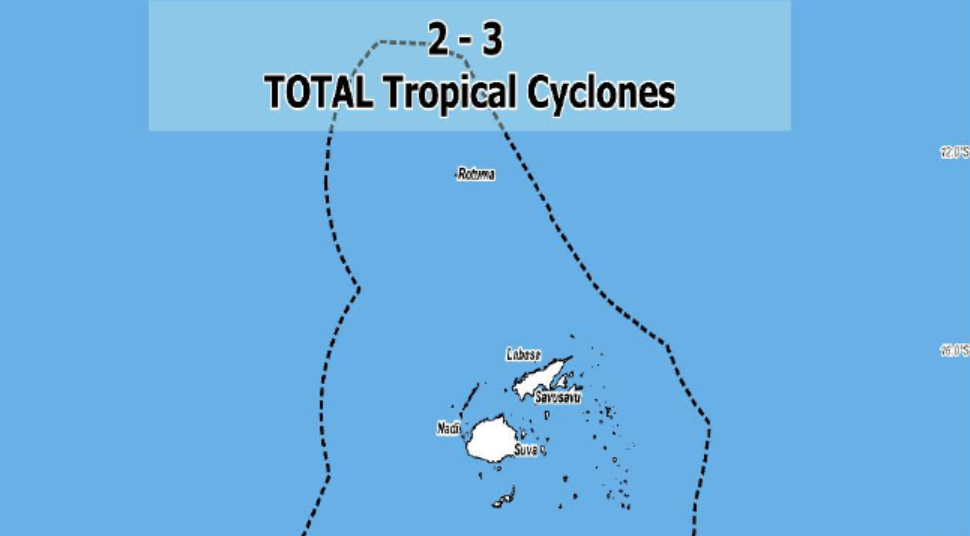
Two to three tropical cyclones are expected to pass through Fiji’s Exclusive Economic Zone (EEZ) during the upcoming 2026–2027 cyclone season, with one to two potentially reaching severe Category 3 to 5 strength.
The Fiji Meteorological Service issued the warning in its Tropical Cyclone Season Outlook released today, highlighting an increased risk to the Northern and Eastern Divisions.
The outlook indicates that a strong El Niño event, expected to peak between November and December this year, could influence the development and movement of tropical cyclones across the region.
According to the Fiji Meteorological Service, historical cyclone patterns during strong El Niño events show that cyclones have generally approached Fiji from the north and east.
“Most of the past cyclones that developed during the past strong El Niño tropical cyclone seasons have approached the Fiji Group from the North and the East,” the statement said.
“Therefore, there is an elevated risk for the Northern and Eastern Divisions this season.”
The official cyclone season begins on November 1, 2026, and runs until April 30, 2027, with January and February traditionally recording the highest cyclone activity.
However, the department has cautioned that tropical cyclones can also form outside the official season, including in October and May.
Across the Regional Specialised Meteorological Centre in Nadi’s area of responsibility, between 11 and 15 named tropical cyclones are forecast.
Of these, five to six are expected west of the International Date Line, representing a near-average to above-average risk, while eight to ten are forecast east of the Date Line, indicating an above-average risk.
The department has also warned that weather systems do not necessarily have to develop into tropical cyclones to cause significant damage.
“Tropical disturbances or depressions that do not intensify into cyclones or low-pressure systems that are a result of decaying cyclones, can still cause widespread rainfall and potential flooding.”
The Fiji Meteorological Service stressed that the projected cyclone numbers are indicative and should not be interpreted as exact predictions.
It has urged communities to remain prepared throughout the season and take all official weather alerts, warnings and advisories seriously to minimise risks to lives and property.
The department says early preparation and continued vigilance will be essential, particularly for communities in the Northern and Eastern Divisions, where cyclone exposure is expected to be higher this season.