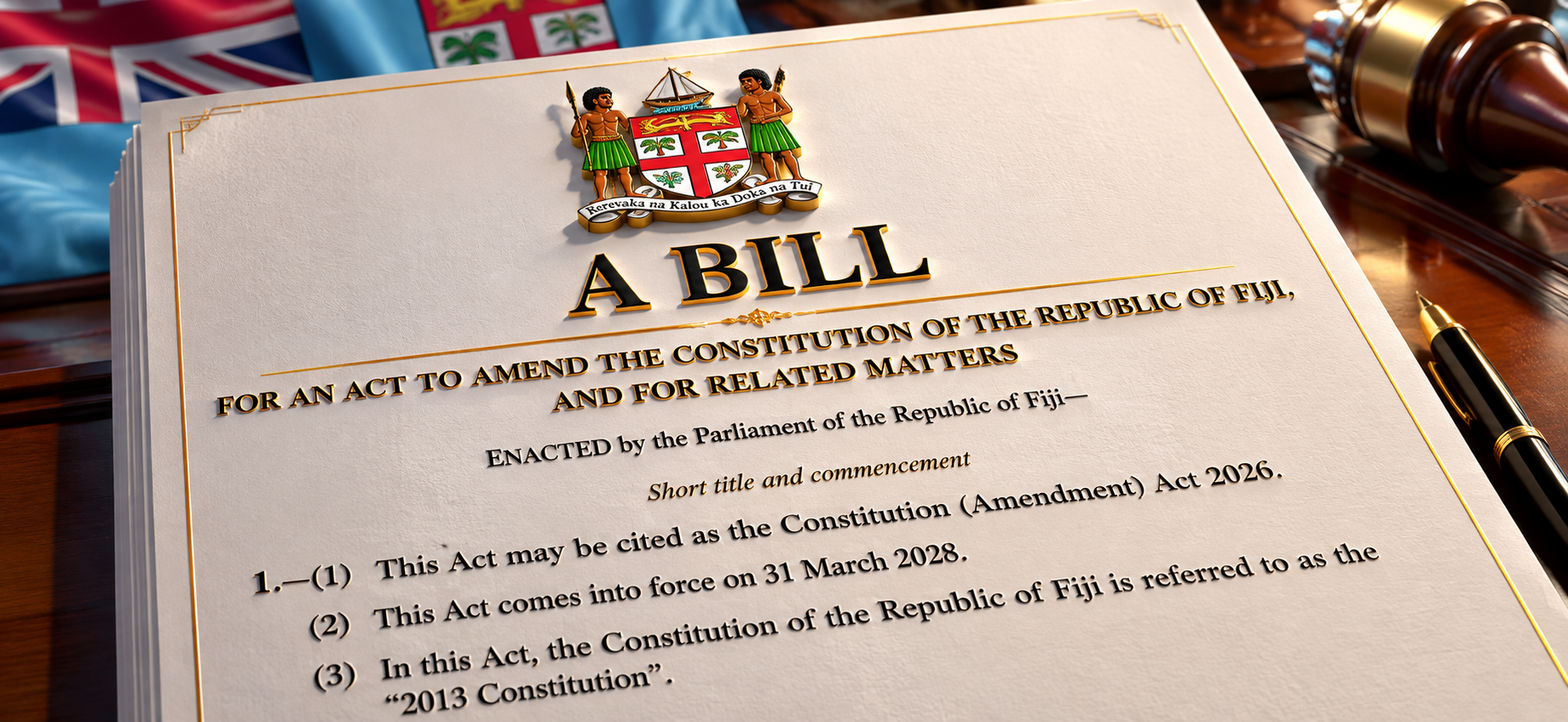
The proposed Senate would be able to reject legislation passed by the House of Representatives only once under the Constitution (Amendment) Bill 2026.
The provision is part of the proposed return to a bicameral Parliament, consisting of the President, House of Representatives and Senate.
Under section 56, a Bill passed by the House and sent to the Senate could initially be rejected.
However, if the House passes and resubmits the Bill, the proposed Constitution states that “the Senate must approve the Bill.”
The provision effectively gives the Senate the power to delay and reconsider ordinary legislation, but not permanently block it.
The Bill also provides a special process for urgent legislation.
If the Prime Minister certifies in writing that a Bill passed by the House is an urgent measure, and it is sent to the Senate at least seven sitting days before the end of a parliamentary session, the legislation could proceed if the Senate fails to pass it within seven sitting days.
The same provision would apply if the Senate approves the urgent Bill with amendments that the House does not agree to within that period.
Section 55 states that Fiji’s legislative power would be vested in Parliament comprising three components — the President, House of Representatives and Senate.
Any member of the House would be permitted to introduce legislation, although Money Bills could only be introduced by the Finance Minister or another Minister authorised by Cabinet.