SUVA receives almost three metres of rain every year.
At Laucala Bay, the long-term annual rainfall average is 2,991.7 millimetres, with rain recorded on an average of about 188 days a year. Even during the relatively drier months, rainfall remains significant.
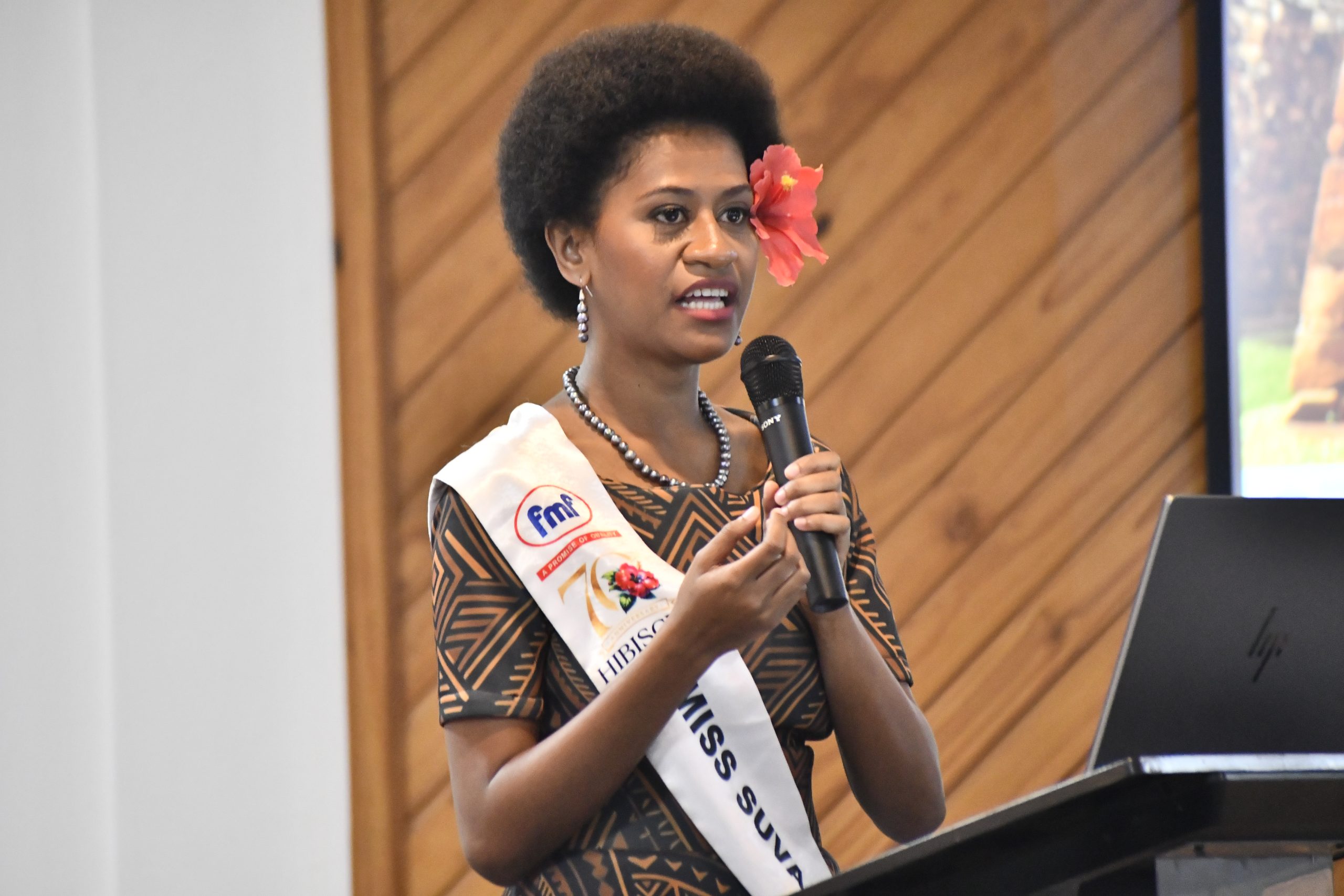
For Miss Suva City Council, Salanieta Sekiseki, 23, that is not simply a climate statistic. It is an opportunity.
“If given $5000 for a community project, I would use it to start making our rain work for us,” is the thinking behind her proposal.
During her project presentation at this week’s private judging, Salanieta chose Delainavesi as the starting point for a community rainwater harvesting pilot project, aimed at helping households cope with recurring water disruptions.
Her long-term vision is straightforward: every house should have a water tank.
The idea is to capture rainfall from household roofs, channel it through gutters and a first-flush system, and store it in covered tanks for use when the municipal supply is interrupted.
“We have an abundance of rain in Suva, so why are we not using it to help solve our water problems?” she asked.
The contrast is particularly striking during heavy rainfall. While families may watch rain pour from their roofs, municipal water supplies can still become unreliable during severe weather.
For Salanieta, household storage offers a way to turn that paradox into resilience.
The potential volume is substantial. An 80-square-metre roof exposed to Suva’s average annual rainfall could receive roughly 239,000 litres of rainwater a year before accounting for collection losses, first-flush diversion and overflow.
“Rainwater is falling on our houses anyway.
We should be able to capture some of it and keep it for the days when there is no water coming through the pipes.”
The proposed systems would not necessarily replace municipal water. Instead, they would provide households with a reserve for essential needs such as washing, cleaning, sanitation and other domestic uses during outages.
A $5,000 grant would not be enough to put a tank on every Delainavesi home, her proposal instead sees the money as seed funding for a demonstration project.
The first stage could involve identifying suitable homes, assessing roof areas, demonstrating simple systems and organising bulk purchases of tanks, gutters and fittings to bring down costs.
From there, the model could be expanded household by household and eventually replicated in other communities experiencing water insecurity.
“This is not about waiting for someone else to fix everything,.
“It is about communities doing what they can with the resources we already have.”
There are challenges. Tanks need proper foundations, regular cleaning and mosquito-proof screens, while stored water intended for drinking requires appropriate treatment.
But Sekiseki believes those challenges are manageable compared with the cost of being left without water.
Her proposal is ultimately built around one powerful idea: Suva does not need to look far for another source of water.
It is already falling from the sky.