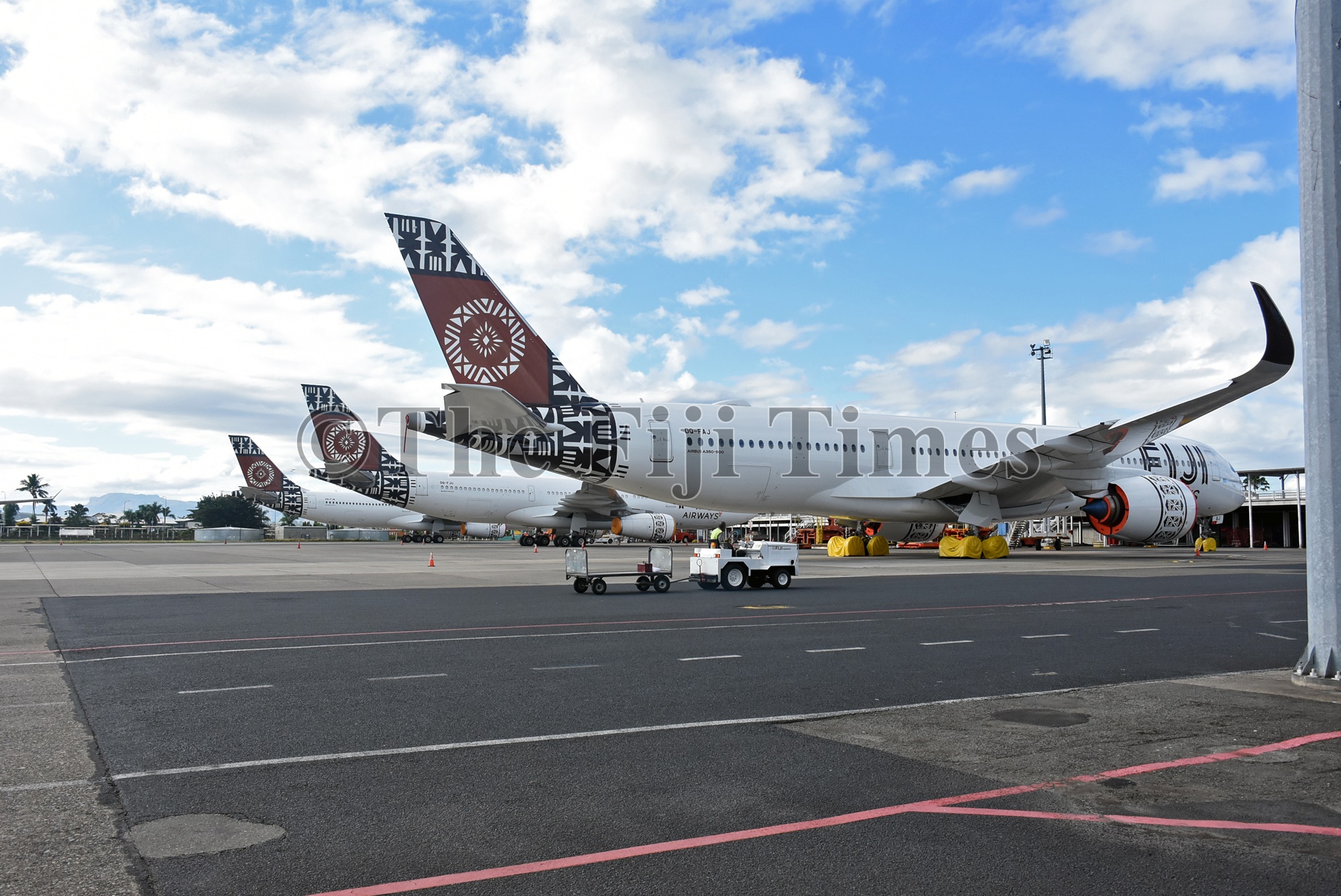
FIJI Airways has the capacity to bring more visitors into the country, but a shortage of hotel rooms is limiting its ability to convert available airline seats into tourist arrivals.
Fiji Airways board chairperson Nalin Patel highlighted the challenge while presenting the airline’s 2024 annual report to the Standing Committee on Social Affairs, saying the national carrier had enough seats to connect Fiji to the world but accommodation remained a major constraint.
“We’ve got 23 aircrafts. Most of them are very modern aircraft in that sense, the A350, the 73 maxes,” Mr Patel said.
He said the fleet provided approximately three million seats, creating opportunities for Fiji to attract more international visitors.
“From tourism and from Fiji’s point of view, we are connecting to the world. We’ve got enough seats.
“The challenge is to convert that into people coming into the country and staying here rather than through traffic, and the reason for the through traffic are because we don’t have enough rooms when it is required.”
Mr Patel said Fiji Airways carried about 2.3m passengers in 2024, including transit passengers travelling through Fiji to other destinations.
He said the airline continued to connect Fiji with international markets and Pacific island nations, while transit traffic helped sustain operations until more hotel developments were completed.
The situation, he said, presented a “chicken and egg” dilemma for the tourism industry: whether accommodation capacity should expand first or airline capacity should lead the way.
“Fortunately for us in Fiji, we’ve got the seats that makes investment proposal for the tourism sector quite attractive.”
He said the availability of airline seats should provide confidence to investors considering new hotel developments, as improved accommodation capacity would allow Fiji to accommodate more visitors who currently travel through the country.
Mr Patel said in the meantime, transit passengers helped Fiji Airways maintain competitive fares by filling seats that would otherwise be difficult to sell.
“Until the hotel developments are done, we are using the through traffic to cushion the price of the ticket in that sense, and it’s done at marginal cost.”
He said the airline attracted passengers from other carriers by offering savings, even when their journeys involved a stopover in Nadi.
For families travelling together, he said, those savings could make a significant difference.
Beyond the immediate financial benefits, Mr Patel said transit passengers could become future tourists if they had a positive experience in Fiji.
“If they like the experience of the airline and the airport experience and the people, then they might say well this is not a bad place to spend a couple of days here.”
Mr Patel said Fiji Airways serves 36 international destinations, giving the country access to a broad network of overseas markets.