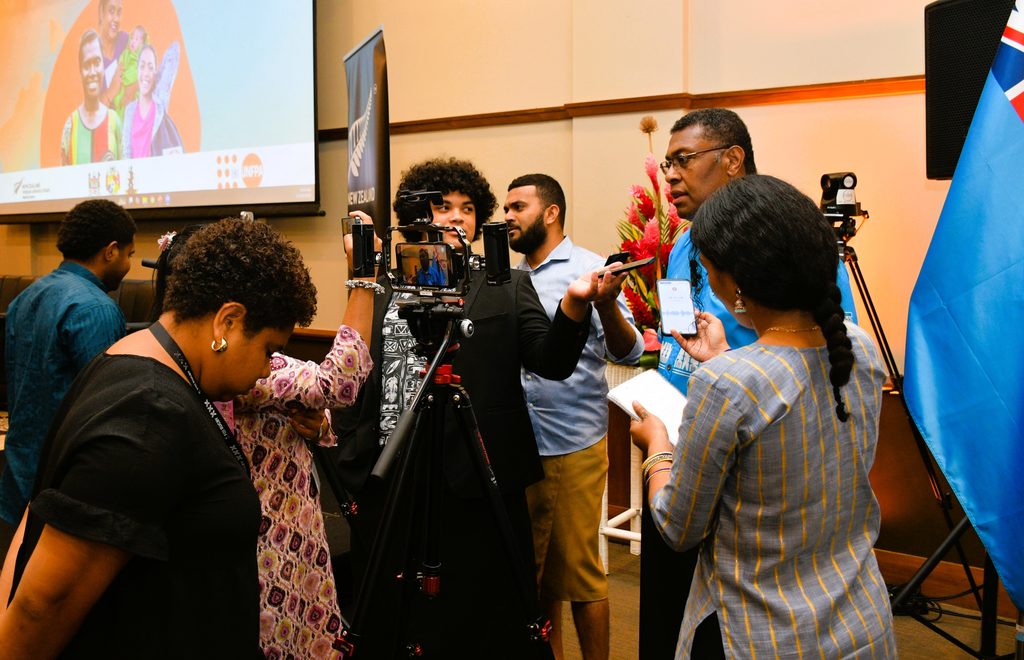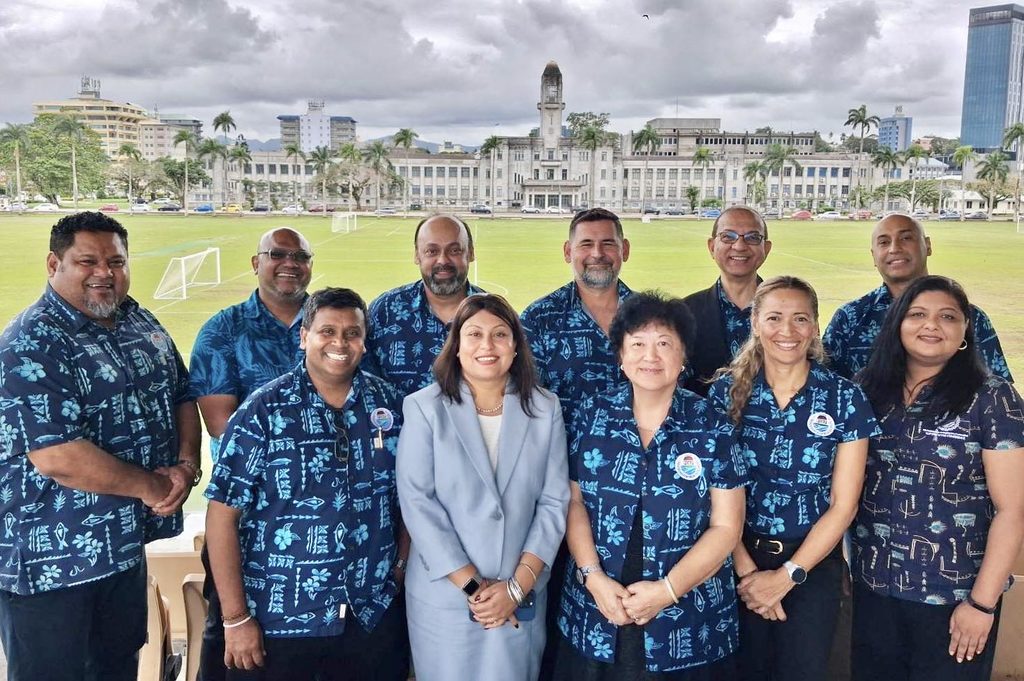
MORE than 70 members gathered at Albert Park, Hall One, on Friday, September 25, for the Fiji Commerce & Employers Federation’s 66th Annual General Meeting.
Marking one of FCEF’s largest AGM attendances to date and reflected growing interest among members in the direction of the Federation and reinforcing our role as the Voice of the Private Sector.
A year of progress
The AGM provided an opportunity to review FCEF’s work during the 2025–2026 financial year and the progress made in strengthening the private sector.
FCEF advocated for additional time to consult on proposed employment legislation, ensuring that businesses had an opportunity to consider its implications and contribute towards fair and balanced outcomes.
The Federation also pushed for the deferment of the proposed 34.7 per cent increase in EFL tariffs and successfully advocated for the restoration of 40 per cent of the one per cent Employers Training Levy.
This returned approximately $15 million for employers to use towards workforce training, development and retention.
FCEF raised concerns about the fuel crisis and called for a clearly communicated crisis-management plan.
It also continued engaging on work-permit processes, contributing to the suspension of five requirements that were creating additional costs and delays for employers.
Proposed wage-setting changes, the skills crisis, rising business costs and policies affecting business sustainability also remained central to FCEF’s advocacy.
These outcomes were possible because members provided information, shared their experiences and contributed to consultations.
Strengthening the Federation
The past financial year also included important reforms within FCEF.
The Board approved a revised organisational structure for the Secretariat to strengthen capability, accountability and service delivery.
Roles and responsibilities were reviewed, human-resource policies strengthened and greater emphasis placed on aligning the Secretariat with the needs of members.
FCEF’s Councils were also restructured to reduce duplication, strengthen coordination and create more focused platforms for members to raise industry and cross-sector issues.
Representation on the 10 Wages Councils and the National Occupational Safety and Health Advisory Board was strengthened to ensure that private-sector priorities are effectively represented in national discussions.
The Federation also diversified its revenue sources, strengthened financial oversight and continued investing its returns in services and initiatives that benefit members.
Strengthening member participation
The AGM reflected the progress made in creating more opportunities for members to participate in FCEF’s work.
The introduction of online membership registration and the Members Hub has begun changing how members receive information and contribute to consultations.
Members can access resources, participate in discussions and provide feedback on policies and proposed legislation without having to attend every meeting in person.
Face-to-face engagement, however, remains equally important. Council meetings, consultations, networking events, training programs and the AGM allow members to discuss common challenges and identify practical solutions.
Growth in FCEF’s membership and subscriptions during the past financial year provides a further indication of the confidence businesses place in the Federation’s value and direction.
The next step is to build on this momentum by encouraging greater participation across the full membership, including businesses outside Suva and micro, small and medium enterprises.
FCEF is also exploring opportunities to expand its presence and support for members in the Western Division.
This would bring the Federation closer to businesses in the West and create more accessible platforms for member services, training and advocacy.
Leadership renewal and continuity
Members elected five Board Directors during the AGM.
Jeetender Rai of NCI Packaging and Poonam Kritika of Oceanic Communications were re-elected. They were joined by three newly-elected Directors: Krishika Narayan of FijiCare Insurance Ltd, Gavin Whiteside of Aspen Medical and Ilyaz Koya of Insurance Holdings (Pacific) Pte Ltd.
Ryan Mahoney of Coca-Cola Europacific Partners was also endorsed to complete the remaining term following the resignation of Mike Spencer.
The remaining Directors will continue serving under the leadership of FCEF President Eldon Eastgate. They are: Vice President Rowena Taito, Immediate Past President Vinay Narsey, and Directors Sandeep Chauhan, Himen Chandra, Karunesh Rao, and Arvind Maharaj.
Trustees remain Jenny Seeto and Viliame Leqa
Returning Directors carry an understanding of FCEF’s work, its governance responsibilities and the issues already being progressed. New Directors bring additional industry knowledge, professional experience and ideas that can strengthen the Federation’s future direction.
Recognising outgoing Directors
FCEF acknowledges the service of the four Directors who are no longer serving on the Board: Harvie Probert, Watesoni Nata Jnr, Fantasha Lockington and Mike Spencer.
Board service requires time, preparation, active participation, and a willingness to represent interests beyond an individual organisation or industry.
Each outgoing Director contributed to FCEF’s governance, member representation and wider advocacy.
Their contribution forms part of the progress on which the incoming Board will continue to build.
FCEF extends its appreciation to them for their time and service to the Federation and Fiji’s private sector.
The work ahead
The AGM marked the close of one financial year, but it also set the direction for the work ahead.
Businesses continue to operate in an environment shaped by rising costs, labour and skills shortages, low productivity, regulatory delays and uncertainty in international markets.
Major discussions on PACER Plus, minimum and living wages, employment legislation and other policies affecting employers will require informed and constructive private-sector participation.
These challenges require FCEF to remain independent, evidence-based and constructive in its engagement with Government, trade unions, regulators and development partners.
They also require stronger collaboration within the private sector.
No single business can provide a complete picture of the operating environment.
The experiences of large employers, MSMEs, exporters, manufacturers, service providers and businesses across different regions must all inform FCEF’s advocacy.
FCEF will also continue developing international partnerships that provide access to knowledge, technical expertise and networks.
Engagement with the International Labour Organization, International Organisation of Employers, International Trade Centre, Pacific Trade Invest Europe and employer organisations in Australia and New Zealand can strengthen FCEF’s capacity as an influential Employers’ Hub nationally and across the Pacific.
Protect, Promote, Preserve
FCEF welcomes its newly elected and re-elected Directors and looks forward to working with the full Board under the continued presidency of Eldon Eastgate.
The Federation remains guided by its three pillars: Protect, Promote and Preserve.
This means protecting the conditions businesses need to operate and employ people with confidence; promoting enterprise, innovation, dialogue and opportunity; and preserving a credible and independent organisation capable of representing Fiji’s private sector for generations to come.
The responsibility now is to turn the confidence demonstrated at the AGM into stronger representation, meaningful policy outcomes and greater value for members.
A stronger FCEF supports a stronger private sector — and a stronger private sector is essential to Fiji.