A recent Supreme Court defamation ruling offers Fiji’s news media a useful reminder that accuracy in journalism is not confined to the words of a story.
Often, what causes the greatest harm is not what a journalist explicitly writes, but what the publication as a whole leads the audience to believe.
The case involved an article about an alleged “fake doctor”. Although the person at the centre of the story was not named in the online article, a photograph of a legitimate doctor was used alongside the headline and story.
Taken together, the Supreme Court found that the publication conveyed the impression that the doctor pictured was the person being accused.
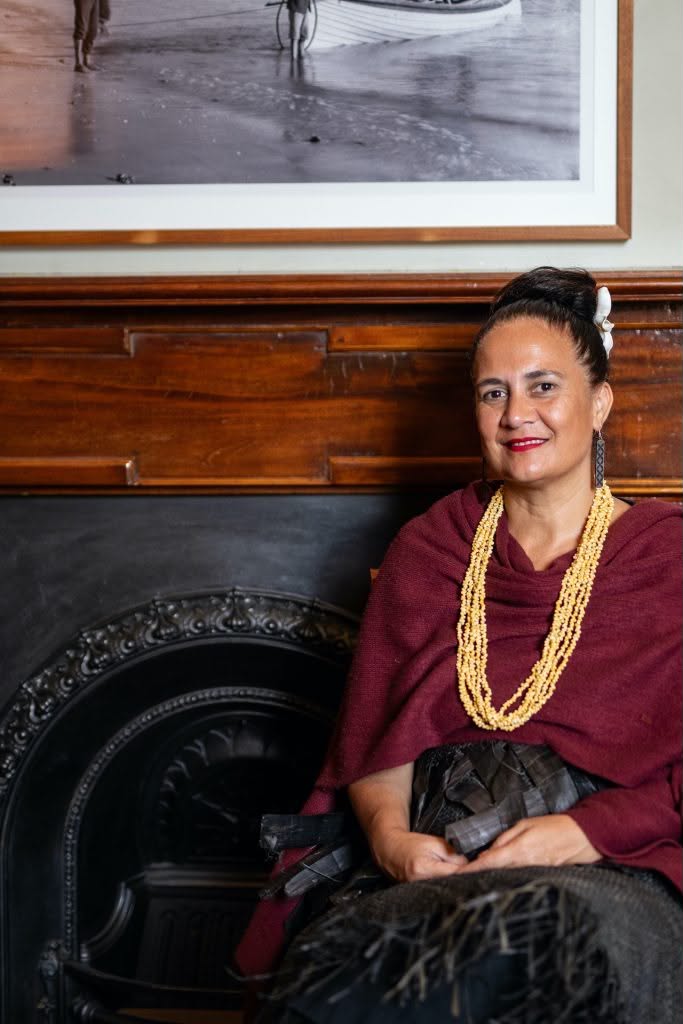
Dr Shailendra Singh, Associate Professor of Pacific Journalism and Head of Journalism at the University of the South Pacific, believes the central issue was mistaken identity.
“My assessment is based on my working knowledge of defamation as a journalist, and in my view, this was clearly a case of mistaken identity,” he said.
He noted that the defamation was unintentional and not malicious. But intent, he stressed, does not erase the potential harm.
“An honest mistake is not necessarily a watertight defence to defamation,” he said.
Dr Singh further added that journalists must always strive for truth and accuracy, a vital guiding principle for newsrooms, especially in the digital media era.
Journalists understandably work under pressure. Breaking news, tight deadlines, online competition and the demand to publish quickly can create an environment in which decisions are made in minutes.
But speed cannot replace verification.
The photograph is part of the story
One of the clearest lessons from the case is that photographs, captions and headlines must be treated as editorial content, not decoration.
A photograph can identify a person, create an association or completely change how a reader understands a story. The same applies to captions and headlines.
Dr Singh highlighted that every component of a publication can potentially become defamatory if it is inaccurate and damages someone’s reputation without due cause.
“All these elements of the story should be carefully scrutinised before publication or broadcast,” he said.
That means an editor cannot simply establish that the written copy is accurate and assume the job is finished.
The entire package needs to be considered.
A useful newsroom test is as follows: If a reader saw only the headline and photograph, what would they reasonably conclude?
If that conclusion is different from what the story actually establishes, something needs to change.
The danger of archive material
The case also highlights the risks associated with archival photographs.
News organisations hold extensive libraries of old photographs and video footage. Their availability can make them an attractive option when journalists are working against the clock.
But an image that was perfectly appropriate for one story years ago can become seriously misleading when removed from its original context.
Before an archive image is reused, journalists should establish who is pictured, when the photograph was taken, what its original context was and, most importantly, whether the person has any connection to the current story.
Dr Singh described the use of the photograph in this case as a clear mistake. He said the risks and implications are that such mistakes had grown in the social media era.
Newsrooms could find themselves operating in a “pressure-cooker environment” where there is little time to stop and reflect.
“Sometimes we just react,” he said.
That is precisely when ethical safeguards become most important.
Allegations demand greater care
Not every error carries the same potential consequences.
Allegations involving criminality, dishonesty, fraud or professional misconduct can seriously affect a person’s reputation and livelihood. Such claims therefore require particularly careful verification.
Dr Singh’s advice to reporters and journalists is to ensure that every allegation is checked.
“We must double check, especially if we are making allegations that will damage reputations,” he said.
“By and large, every single allegation has to be verified.”
That principle should extend beyond the reporter to the entire editorial chain.
The reporter needs to verify the facts. The photographer or archive desk needs to verify the image. The sub-editor needs to consider the headline and caption. Digital editors need to consider how the material will appear when shared online.
Ultimately, responsibility rests with the publication.
Accountability is part of press freedom
There is also a broader lesson for Fiji’s media industry.
Strong journalism depends on the freedom to investigate people and institutions, including those in positions of influence. But press freedom and accountability are not opposing principles.
A credible media industry must be able to defend its journalism while also accepting responsibility when it gets something wrong.
The objective of ethical journalism is not simply to avoid lawsuits. It is to minimise unnecessary harm and maintain public trust.
That requires newsrooms to build systems that make mistakes less likely, rather than relying entirely on individual journalists to catch every error.
A simple pre-publication check could ask five questions: What exactly are we alleging? What evidence supports it? Have we identified the correct person? Has the relevant person been given an opportunity to respond where appropriate? And do the headline, photograph, caption and social-media presentation accurately reflect the story?
If there is uncertainty, the publication should pause.
Dr Singh stressed therefore that the ultimate lesson is to ensure that ethics and accuracy come first before anything else.
In an industry increasingly driven by speed, clicks and immediacy, that may sound obvious. But the recent Supreme Court ruling demonstrates why they remain one of the most important and core principles in journalism.
The journalist’s intention is only one part of the equation.
What matters ultimately is what the audience is led to understand and when someone’s reputation is at stake. That difference can be costly.
Dr Shailendra Singh,
Picture:
SUPPLIED