Pacific Forum island Economic Ministers have raised the need for urgent talks between Forum Island countries, creditors and development partners to seek proactive and realistic responses to the “unprecedented” levels of public debt in the Pacific.
The ministers made this known at the hybrid Pacific Regional Debt Conference held earlier this month, and was convened by the governments of Fiji and Tuvalu.
The conference – co-hosted by the Pacific Islands Forum Secretariat (PIFS) and the Economic and Social Commission for Asia and the Pacific (ESCAP) – themed ‘Addressing Debt Sustainability in the Pacific in the Aftermath of COVID-19’, was set against the backdrop of recent Debt Sustainability Assessments of the International Monetary Fund (IMF).
These placed most Pacific Countries at a high level of debt distress; the impact of COVID-19 on government revenues has elevated fiscal deficits and increased pressure on borrowing capacity constraints.
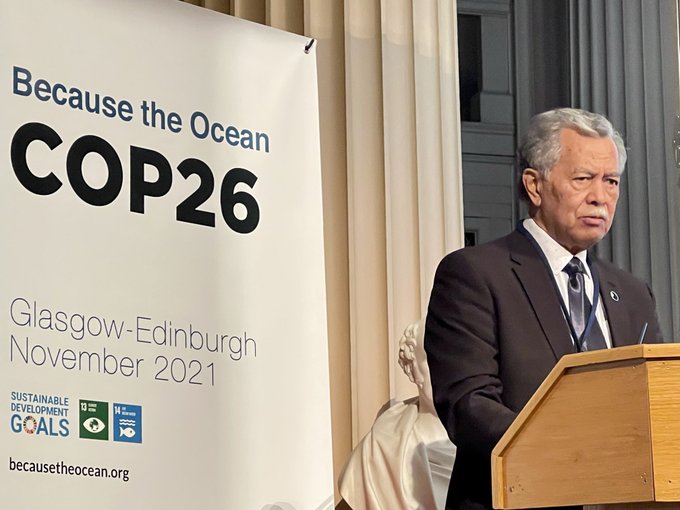
In his opening address at the conference, PIFS secretary general Henry Puna said the financial and social impacts of the pandemic required global solutions.
“We are all in this together, we are in the same canoe,” Mr Puna said.
“I hope we can work together and support each other because the ability of our small members to repay their debt obligations is also good for our lenders.”
Mr Puna said debt levels had also been exacerbated by the prevalence of natural disasters and climate-related events that would deepen government budget deficits and worsen the debt distress across the region.
“Innovation for more agile, smarter, adaptative and transformative development is the key to thriving in this new normal induced by COVID-19.”
A statement from PIFS quoted Tuvalu’s Minister for Finance Seve Paeniu saying: “‘As Ministers of Finance presiding over this unprecedented time in our history, we have a duty and a responsibility to our people, to address this threat, and to build up our savings for a rainy day.”
In the same statement, ESCAP executive secretary Armida Salsiah Alisjahbana said one of the key areas for consideration was debt relief and the need to strengthen the global debt architecture.
She said that would facilitate expedient, fair, and effective debt workouts when needed, as well as integrating debtor countries’ vulnerability to shocks into concessional loan decisions and debt risk assessments.
The hybrid conference was attended by Pacific Forum Member Countries Ministers of Finance, the Minister of Finance for Indonesia, Sri Mulyani Indrawati, major multi-lateral and bi-lateral development partners, key partners in development financing such as the Green Climate Fund, the Pacific Catastrophe Risk Insurance Company and Professor Jeffrey Sachs – a world-renowned advocate for sustainable development solutions.
Civil society and youth voices were also represented as well as the private sector.
The conference also featured members of the Alliance of Small Island States, with Barbados, Antigua, and Barbuda, Seychelles, and Belize.
According to PIFS, the outcomes of the conference will be tabled to the COVID-19 Economic Recovery Taskforce for endorsement, then tabled at the next Forum Economic Ministers Meeting in Vanuatu later this year.