Sometimes, an opportunity is found in the most unexpected places.
The sight of overgrown cocoa farms scattered across Fiji presented Arif Khan with his.
Where others might have seen neglected land and an industry that had lost its momentum, he saw something different: potential.
He saw an opportunity to breathe life into an agricultural industry, give rural farmers a reliable source of income and introduce a distinctly Fijian product to the world.
It was an ambition that would bring together two important parts of his life – the business experience he had acquired overseas and his desire to contribute to the country he called home.
Mr Khan had spent 20 years building a successful real estate brokerage and investment business in the United States after moving there in 1997.
But his attention eventually turned towards Fiji, particularly its agricultural sector and the opportunities that existed in developing industries with international potential.
Cocoa caught his attention.
His interest was not simply driven by the prospect of establishing another business. It was about recognising a market opportunity that Fiji was not yet fully equipped to take advantage of.
There was growing international demand for fine-flavour cacao, particularly produce with a distinct origin and character.
Fiji had the potential to supply it, but the challenge was producing enough to meet that demand.
That gap between what the market wanted and what Fiji could supply was an opportunity worth pursuing.
Finding purpose in leadershipHis return to Fiji also brought him closer to the country’s social and economic realities.
In 2017, he joined Leadership Fiji, a programme he had hoped would introduce him to different sectors of the economy and give him the opportunity to engage with people from different professional backgrounds.
Having spent much of his working life overseas, he wanted to better understand the challenges facing Fiji and hear directly from those involved in shaping its future.
The program provided that platform. One particular experience has stayed with him.
During a panel discussion in 2017 involving Sitiveni Rabuka, Biman Prasad and Lynda Tabuya, Mr Khan raised the question of whether Fiji’s minimum wage should take geographical differences into account.
He believed the economic realities of running a business in rural Rakiraki could be considerably different from those in central Suva.
A national approach, he argued, needed to recognise those differences to ensure businesses could continue employing people and growing. It was the kind of conversation he had hoped to be part of when he joined Leadership Fiji – an opportunity to question, listen and exchange ideas with people from different walks of life.
But for Mr Khan, some of the most rewarding lessons from Leadership Fiji did not happen in a classroom or during a panel discussion.
They happened through community service.
As one of the project leaders of the 2017 cohort, he helped initiate the first KoroiPita Home in Lautoka. The group raised more than $20,000 and spent an entire weekend working together to build the home. It was a hands-on experience that brought the group together for something much bigger than their individual professional pursuits.
Looking back, he is particularly proud of what the initiative has grown into, with Leadership Fiji alumni subsequently building several homes to help address housing shortages. There is something meaningful about seeing an idea develop into a lasting contribution, particularly when it involves people coming together to improve the lives of others.
That remains one of the highlights of his Leadership Fiji experience for Mr Khan.
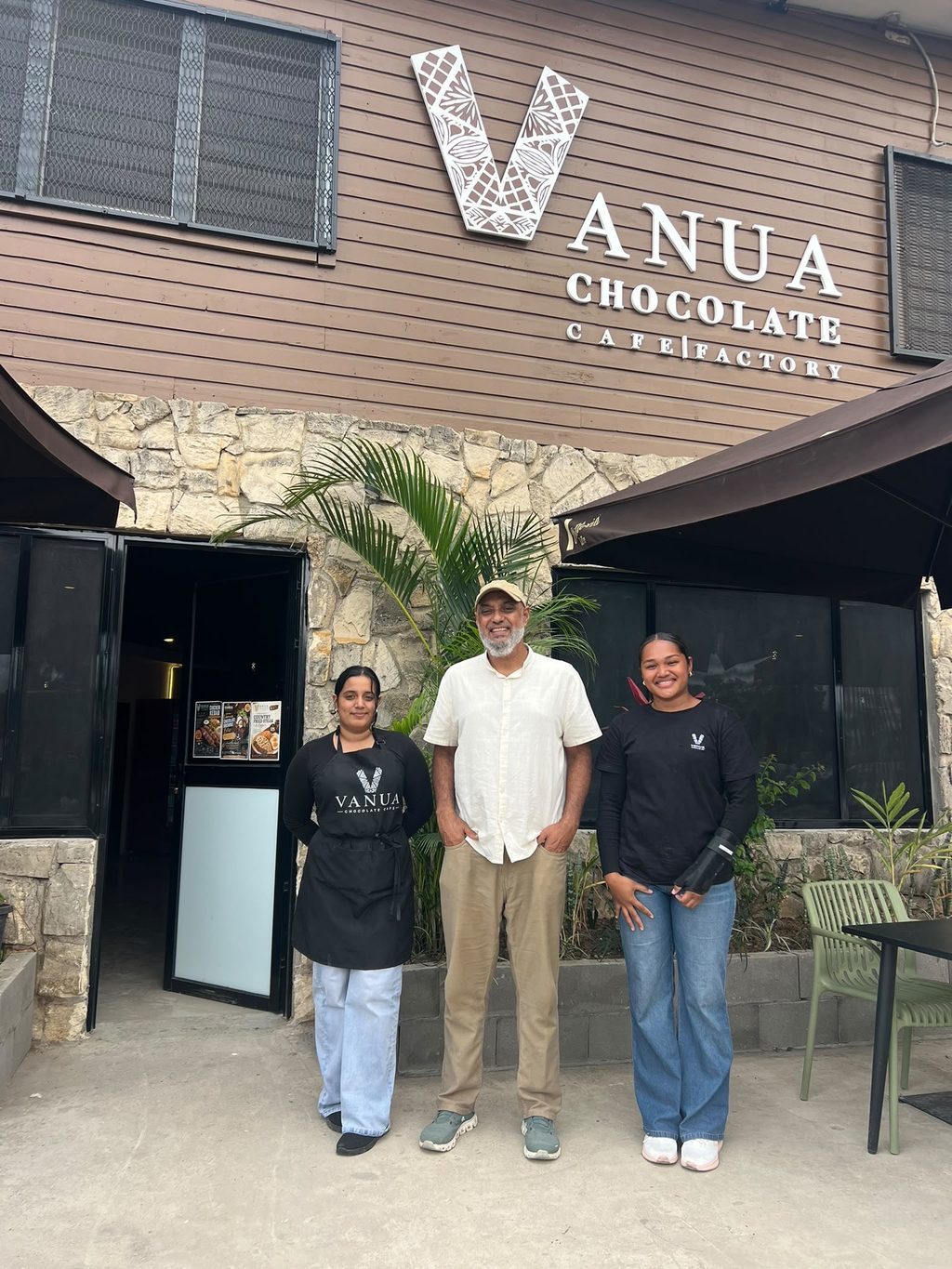
Giving cocoa another chanceToday, his work through Cacao Fiji and Vanua Chocolate is helping turn his interest in the cocoa industry into something tangible.
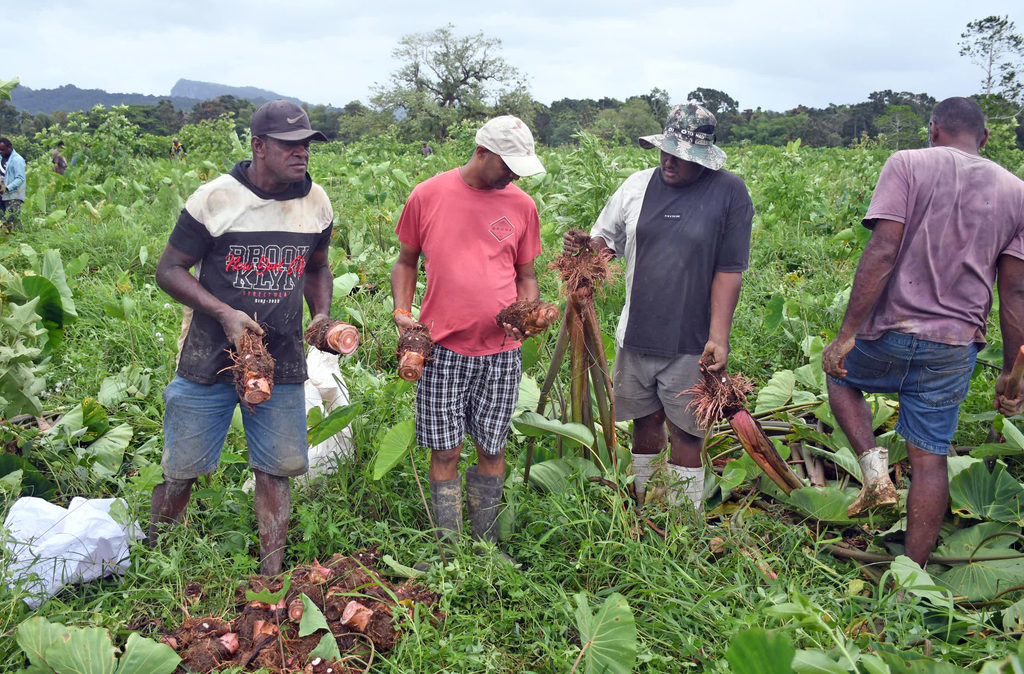
He operates cocoa farms in Dreketi and Rakiraki and works with rural farmers, recognising that the future of the industry depends on the people who grow the crop. But he is also aware that reviving an industry is not as simple as planting more trees.
Farmers need consistent training, ongoing development and access to better-yielding planting material.
More importantly, they need the assurance that there will be someone willing to buy what they produce. This is where he believes Cacao Fiji can make a difference by providing farmers with guaranteed market access.
He also believes Fiji needs a dedicated cocoa board to strategically guide the development of the industry. The bigger picture is about creating an environment where farmers can see cocoa as a viable long-term investment rather than simply another crop with uncertain returns.
It is a commitment that requires patience, particularly when working with rural communities where agricultural development takes time.
He understands that the success of his businesses cannot be measured entirely by production figures or international sales. It must also be reflected in the opportunities created for the farmers who form the foundation of the industry.
More than a bar of chocolateOne of the most important decisions in his cocoa journey was to move beyond producing and selling raw beans.Through Vanua Chocolate, the business has ventured into value-added production, transforming Fijian cacao into chocolate that can be introduced to international markets.This was an important step in ensuring more of the economic benefits remained in Fiji.
He explains that developing a local chocolate industry creates domestic demand for cocoa, helping protect farmers and producers against fluctuations in international commodity markets. It also contributes to import substitution while allowing Fiji to earn more from products that are processed and manufactured locally. There is also a sense of pride in seeing something grown in Fiji transformed into a finished product that can compete overseas.
The international recognition received by Cacao Fiji has reinforced that belief.
In 2015, the company received a place among the world’s top 50 cacao producers, according to Mr Khan, generating unprecedented demand for Fijian cocoa in the years that followed. He sees the recognition as confirmation of the unique qualities of Fiji’s cacao, particularly its distinctive growing environment and flavour characteristics.
For him, it demonstrates that Fiji does not always have to compete on volume. Sometimes, its greatest advantage lies in the uniqueness of what it can offer.
That philosophy extends beyond cocoa to his wider business interests, which include agriculture, manufacturing, hospitality and real estate. As the founder of Bayshore Fiji Real Estate, he has also experienced the challenges facing micro, small and medium enterprises.
He believes access to financing, business development support and the right guidance remain significant obstacles for entrepreneurs.
While there has been greater attention on SME development over the past decade, he believes more can be done to help businesses move from an idea to a sustainable operation. His own experience has taught him that every business needs a vision, but that vision must be supported by a practical purpose.
The most successful businesses, he believes, are those that solve a problem.
A future worth investing inHaving lived and worked overseas, Mr Khan understands the value of the experience, exposure and networks that come with building a career abroad. But he also believes those experiences can be put to good use back home.
He wants to see more members of the Fijian diaspora return with innovative ideas, diversify their investments and explore opportunities in industries that can contribute to the country’s development.
Mr Khan sees this as a mutually beneficial arrangement – one in which investors can build successful businesses while creating employment and opportunities for local communities.
He is particularly passionate about the role established business leaders can play in encouraging young people to pursue entrepreneurship and leadership.
For him, inspiration matters.
Young people need to see that it is possible to identify an opportunity, take a risk and build something meaningful in their own country.
Fiji, he believes, has no shortage of products and resources that could find a place in international markets under the Fiji brand.
What is needed is the willingness to invest, innovate and develop those opportunities.
His own journey from the United States back to Fiji reflects that belief. After two decades spent building a career abroad, he could have continued pursuing opportunities elsewhere. Instead, he chose to bring his experience home and invest in an industry he believes can make a difference. From the cocoa farms of Dreketi and Rakiraki to the development of locally manufactured chocolate, his work is part of a wider effort to show what Fiji can achieve when its resources are matched with investment and vision.
Perhaps that is what returning home ultimately means to him – not simply coming back to where one started, but finding new ways to contribute to the place that helped shape one’s beginnings.
And for Mr Khan, there is still plenty of potential waiting to be discovered.