I speak as a son of this land, and as a chief who carries the weight of his people’s hopes. Fiji stands at a crossroads. The challenges before us are not abstract and not distant — they are knocking on our doors, sleeping in our homes and burying our children. Yet our national conversation drifts too often toward the performative rather than the purposeful.
The HIV emergency consuming our young
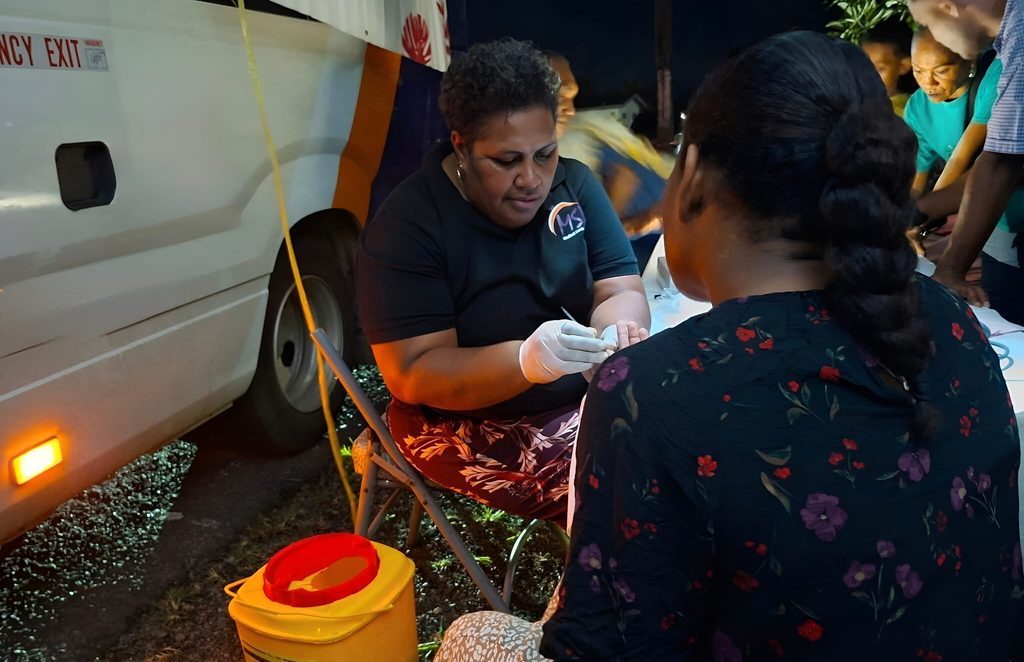
At the Pacific HIV Symposium in Nadi this week, His Excellency the President confirmed 2016 HIV diagnoses in 2025 — a 27 per cent rise on the previous year, and the highest total since surveillance began in 1989. Diagnoses among children and teenagers aged 10 to 19 rose by 45 per cent. Roughly one in every 60 adults is now affected. And approximately 90 per cent of new diagnoses are among iTaukei. Let that last figure sink in: this is not a crisis in the abstract, it is ours, and it is consuming our own.
The Fiji Medical Association has correctly identified outdated legislation as a barrier to early detection, treatment access and contact tracing. I call on Government and Parliament to act with urgency. Legal reform here is not a moral compromise; it is a moral imperative, and bureaucratic inertia must not cost us another generation.
And let us be honest: HIV is not only a health crisis. It is a symptom of something deeper — the fracturing of our social fabric and the loss of the protective embrace of our traditional structures. When our families are broken and our tokatoka, mataqali and yavusa weakened, our young are left exposed to the forces that destroy them.
A question of proportion
Australia has been generous, and that deserves saying plainly. On August 6, Senator Penny Wong announced $F23.5million for our HIV response, taking Australia’s total support past $F40million. That is real help, gratefully received.
It is because we are friends that I can ask what comes next without causing offence. Australia has reportedly committed close to $A20million — about $F31million — on the Pre-COP31 meetings it brings to Nadi from October 5 to 8. Four days will cost more than the largest single HIV commitment Australia has made to us. Is that the right proportion?
Fiji has too often hosted grand conferences that consume resources without measurable outcomes for ordinary Fijians. Climate change, meanwhile, is already moving our villages — six have relocated and dozens more are earmarked — and I do not diminish that for a moment. But HIV, drugs and unemployment are burying our people this year. Neither crisis cancels the other, yet only one can be slowed within the life of a single government. Our priorities must reflect that.
The iTaukei must now walk the talk
I say this not as a critic standing outside but as a chief standing within: it is time for the iTaukei to walk the talk. We have professed Christianity for generations, yet iTaukei make up 74 per cent of our prison population. We speak of community and vanua, yet our young men are falling to drugs and violence. The murders, the robberies, the HIV crisis, the methamphetamine epidemic — who bears the heaviest burden? It is us. And that is a severe indictment upon our collective leadership.
Much of this followed a decade and more of deliberately dismantling our social structures rather than strengthening them, of silencing our chiefs rather than empowering them. The vuvale, tokatoka, mataqali, yavusa and vanua were never relics to be discarded; they remain the architecture of our resilience. The present Government is far from perfect, but it is incomparably better than the regime that preceded it. We breathe freer today. The media speaks without fear. People can gather and dissent without intimidation. Yet I caution all Fijians to remain vigilant: remnants of the previous order still move within our political space.
Getting the foundation right
This Government restored the Great Council of Chiefs in 2023, and that was right — but it did so by ordinary legislation. What an Act of Parliament gives, an Act of Parliament can take back, and a decree can take faster. That is not hypothetical; it is what happened in 2012. I declare my interest openly: I serve as one of the council’s deputy chairmen. If the GCC is to carry real, mandated responsibility for iTaukei welfare and advancement, its mandate must be entrenched in the Constitution, not left to a simple majority. Village by-laws granting chiefs appropriate authority in their communities also remain unintroduced; that absence weakens traditional governance where it matters most, and must be urgently addressed.
We were reminded in the courts this past week that an institution is only as strong as the mandate it is given and the process it keeps. When a body drifts beyond either, its work does not survive scrutiny, and those it was meant to serve are left with nothing to show for the time spent. An appeal has now been signalled, and it is not for me to add to that; I point no finger and prejudge nothing. But the law must apply the same way to everyone, whoever they are, or it means very little. Get the foundation right and renewal is possible; get it wrong and nothing built upon it will stand.
A call to reflection and renewal
We have one of the most enduring and tested social structures in human history. At its best, nobody inside it falls through, and a quarrel is settled long before it ever reaches a weapon. The old are looked after, the young guided, the vulnerable sheltered. No consultant designed that for us: our ancestors built it over centuries, and we have let it weaken on our watch.
So we cannot keep pointing at government alone. Government must be held to account — absolutely. But accountability flows in all directions: to our chiefs, our faith leaders, our parents, our youth.
To my fellow iTaukei: I speak with love, not accusation, and as one of you, not above you. The way forward is not found in waiting for a government to rescue us, nor in surrendering our identity to modernity, but in the disciplined and dignified strengthening of who we are. That work begins within each of us. Fiji is for all of us, or it is for none of us.
Ratu Tevita Lutunauga Kapaiwai Uluilakeba Mara is the Gone Turaga Bale na Tui Nayau, Sau ni Vanua o Lau, Tui Lau. The views expressed in this article are his and do not necessarily reflect the views of this newspaper.