Fiji sits at the intersection of ocean currents. Plastic arrives at our beaches from economies far beyond our borders, alongside the waste we generate ourselves. Fiji comprises over 330 islands, over 100 of which are inhabited, and each involves distinct waste management challenges and costs.
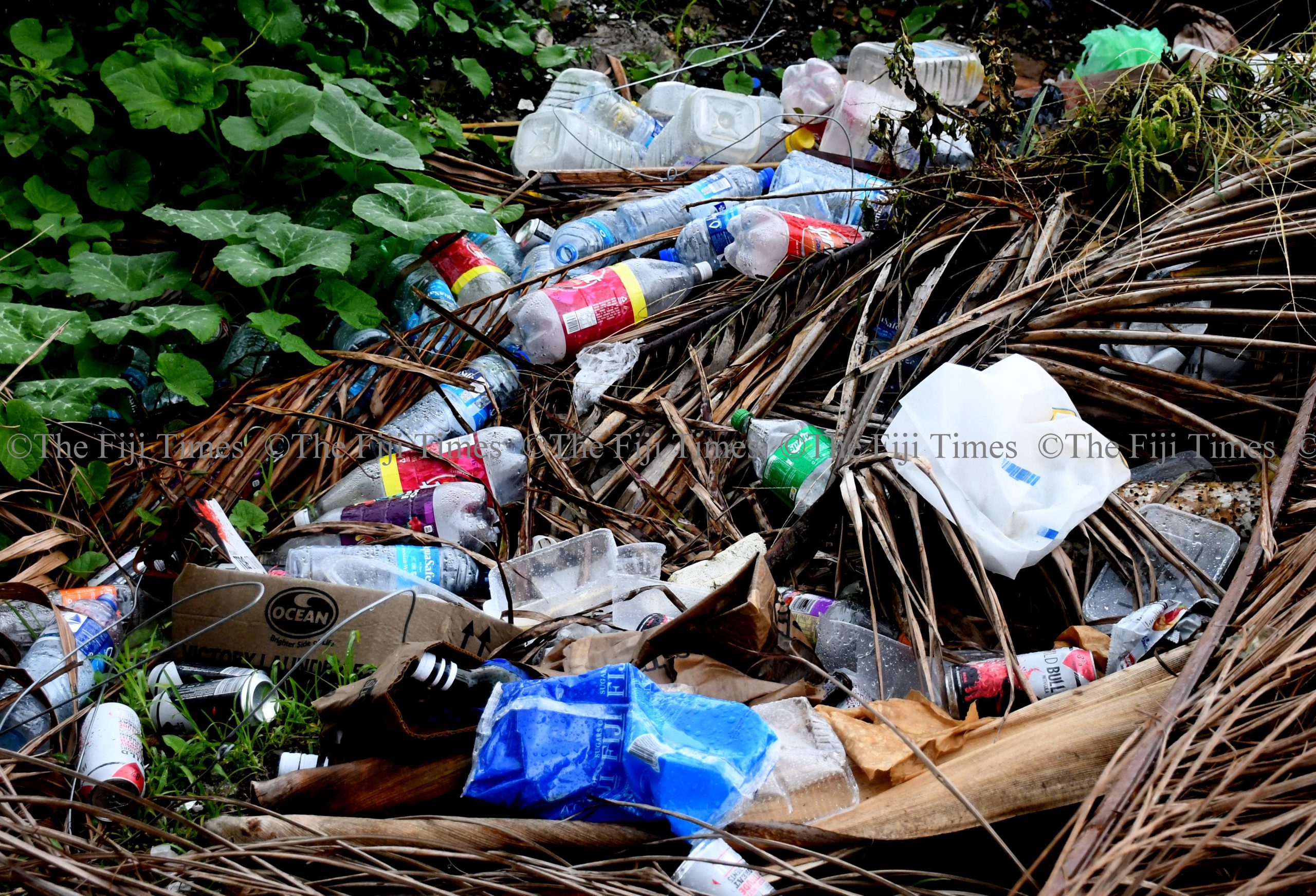
Plastic pollution is a major and increasing threat to import-dependent island nations that must grapple with remoteness, inter-island logistics, and limited land availability for disposal. The challenges Fiji faces are increasingly evident. We can see the build-up of plastic on our shorelines, beaches, and riverbeds but have struggled to quantify the scale of the challenge and its true origin.
A 2019 national material flow analysis put the plastic disposed of in Fiji that year at 14,875 tonnes. It was a number we could quote but could not easily disaggregate and trace through the system.
Enjoying this article? Make sure you always catch our coverage by subscribing to our SDG Update newsletter.
Recognising that you cannot manage what you cannot measure, we took action in October 2025 and began building a national plastics data inventory. The first baseline for this inventory is now complete.
Where the global plastics negotiations stand
The Intergovernmental Negotiating Committee on Plastic Pollution (INC) closed the second part of its fifth session in Geneva, Switzerland, on August 14, 2025 without agreement. Despite a year of informal negotiations, key questions remain: whether the agreement addresses plastic production or concentrates on waste and recycling; whether it covers the full lifecycle, including the chemicals used in plastics and the way products are designed; how binding the obligations should be; and how developing countries and small island developing States (SIDS) will be supported to meet them.
Pacific island countries have been among the most direct about what a weak agreement would mean for us. Pacific small island states contribute less than 1.3 per cent of global plastic pollution, yet carry a disproportionate share of its costs. They have insisted that the treaty must include obligations to clean up existing ocean plastic.
The need for both transparency in plastics treaty reporting and support for Pacific nations to fulfil these obligations has been made clear.
An international agreement on plastics pollution must be based on evidence, not assumption.
Every multilateral environmental agreement (MEA) that has changed behaviour runs on reporting and transparency. The Basel Convention on the Control of Transboundary Movements of Hazardous Wastes and their Disposal, the Minamata Convention on Mercury, the Stockholm Convention on Persistent Organic Pollutants (POPs), and the Paris Agreement on climate change all oblige governments to collect national data and put it on the record. That is how a promise becomes a commitment others can check.
The Global Plastics Data Tracker maps government plastics data across 193 countries. About 40 per cent of countries publish any figure for the plastic waste they generate. Only about 26 per cent publish it often enough to show a trend. The tonnages governments actually report add up to 21.4 million tonnes, which the Tracker puts at roughly 6 per cent of the Organisation for Economic Co-operation and Development’s (OECD) total global estimate.
One figure in the same dataset is encouraging. The number of countries reporting plastic waste tonnages has risen 56 per cent since 2010. The direction is right while the pace is too slow, but pace is something a treaty can set.
Until global reporting improves, negotiators are debating production limits and product design against an evidence base covering a fraction of the material.
Fiji’s leadership on plastics inventory
Fiji is not waiting for the new agreement to start improving its own evidence base. Its national plastics inventory drew from and compiled data from various sources to stitch together a full picture of the sources and lifecycle of plastics in Fiji.
This process began in October 2025 when data holders from ministries, non-governmental organisations (NGOs), community-led initiatives, regional bodies, industry, and academia spent three days in one room. We found the data were not so much missing as scattered, sitting in donor project reports, ministry spreadsheets, and community audits that had never been compiled together. By January 2026, we had assessed that available material and drawn it into a first preliminary inventory. In July 2026, we ran waste audits at dumpsites and communal disposal sites, filling the gaps we had identified rather than the gaps we had assumed. The inventory is now going through verification, and we are embedding it in the routine processes of the Ministry of Environment and Climate Change so that it outlasts the project that created it.
Two design decisions matter more than the numbers currently in it.
Every figure carries its source, its method, and its assumptions, which means the inventory shows its own weaknesses. An estimate with a stated method can be corrected and improved. A confident number with no traceable origin cannot be corrected and will eventually be used to justify a decision it does not support.
The ministry owns and maintains the inventory. Our partners (Centre for Sustainable Development Reform (CSDR) at the University of New South Wales (UNSW), the Global Ocean Accounts Partnership (GOAP), the Pew Charitable Trusts, and the UK Blue Planet Fund facilitated the process and built capacity in our teams, but Fiji holds the data. It is a national asset in the same sense as our fisheries: it generates value when it is managed well.
There was no template to follow. Fiji developed its method with support from GOAP, working in parallel with Sri Lanka on the same problem. The lessons from both countries are now in the Handbook for Developing National Plastics Data Systems, published in August 2026 by GOAP, CSDR, and GRID-Arendal.
It sets out the approach as seven steps: identify your data and map who holds it; assess its quality; compile a first inventory, analyze the gaps and set priorities, work with stakeholders to close the ones that matter, verify and consolidate and institutionalize the system.
The handbook is tiered, so a country can begin by improving a single category of data and work towards full plastics accounts over several years. Whatever the state of a government’s data or its capacity to collect more, there is a place to start. That is the lesson Fiji would offer other countries, and it is now written down for anyone to use.
Why Fiji built the plastics data inventory
Fiji did not build its plastic data system to satisfy a treaty. We built it to ensure the decisions we will make on levies, bans, infrastructure, and enforcement are based on a national evidence base. That evidence is now also informing the development of Fiji’s National Plastics Transition Roadmap and Action Plan, alongside the ministry’s wider reforms, including a review of the Litter Act, proposed container deposit refunds, tougher litter penalties, and the launch of our National Integrated Waste Management and Pollution Control Strategy for 2026-2035. These efforts have helped us identify where action is most needed and where limited resources can have the greatest impact.
One dataset now serves multiple purposes from informing national policy and planning to supporting reporting under our National Ocean Policy, our Climate Change Act and, in time, contributing to our obligations under a global plastics agreement. It will also let us model container deposit refund and extended producer responsibility (EPR) schemes before we commit to them. Treaty reporting for Fiji, in this context, is a by-product of a system that already earns its keep domestically. Data obligations should not be treated as a burden. For a small state with limited budgets, a data inventory is what tells us where money will do the most good.
What Fiji will bring to INC-5.4 in March next year
The plastic on our shoreline was produced elsewhere, under rules we did not write, and no national inventory will change that. Measurement will not solve a problem that arrives on a current. What it does is make Fiji a credible party to an agreement that can solve it.
Fiji will arrive at INC-5.4 with a national inventory, its gaps documented, and a method any country can use. We will argue for an agreement that requires national data systems and reporting from all parties – and that funds those who need support. A year ago, we could not have made that argument from experience. Counting will not stop the tide. But a country that can show its numbers, and admit its gaps, is one that negotiators have to take seriously.