The Northern and Western divisions have been placed in the Crisis Response category as Fiji prepares to activate national coordination and response measures to deal with worsening drought conditions.
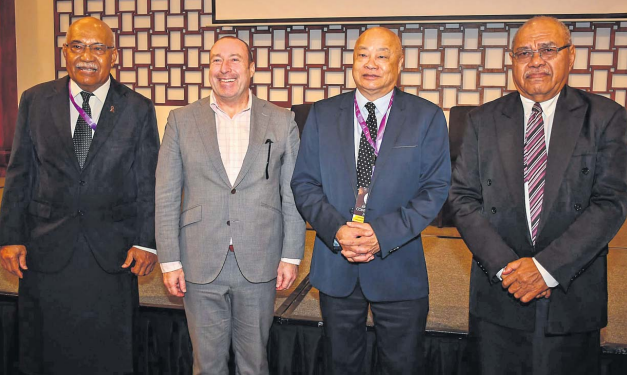
Minister for Infrastructure Ro Filipe Tuisawau told Parliament this morning that the Water Authority of Fiji had sought the announcement of national response efforts following an assessment of water sources and supply systems across the country.
Under the national drought plan, the Northern Region scored 77.78 per cent and the Western Region 76.67 per cent, placing both in the Crisis Response band.
The Central Eastern Region scored 42.96 per cent, placing it in the Early Action category.
Mr Tuisawau said the Water Authority had updated the National Disaster Risk Management Office on the status of all its water systems, including source flows, water production, affected customers and water carting requirements.
He said drought was a slow-onset disaster that required careful monitoring and early escalation.
“Drought is a slow-onset disaster. It does not arrive overnight like a cyclone, and that is precisely why it must be measured carefully and escalated early,” he said.
He said the Water Authority had recommended activation of national coordination and response measures for the Northern and Western divisions.
For the Central Eastern Region, the authority had recommended the release of pre-agreed early actions under its Contingency Plan, together with a public appeal for water conservation.
Mr Tuisawau said he was updating Cabinet and would subsequently update the NDRMO to ensure the announcement was secured without delay.
He said the response would involve a whole-of-Government effort, with different agencies assigned specific responsibilities.
The Ministry of Rural and Maritime Development, NDRMO and Commissioners’ Offices would coordinate the overall response with the relevant ministry, Water Authority and Government Shipping Services.
Commissioners’ Offices would assess needs on the ground and arrange and fund barge hire, water tanks and other related items.
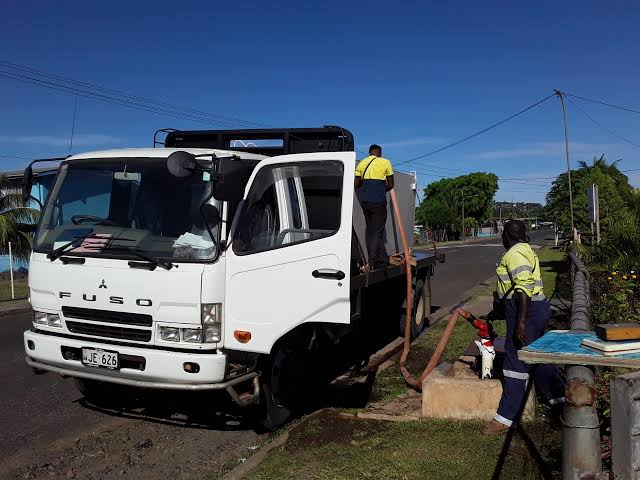
The Water Authority would provide water, carting and filling equipment, pumps, hoses and personnel, while Government Shipping Services would assist in transporting water to the islands.
The Rural Water Unit, which covers 14 provinces, would support rural water schemes and had already reported affected areas in the Western, Northern and Eastern divisions.
Mr Tuisawau said reporting would be conducted weekly, with any school or health facility at risk escalated urgently.
Water carting arrangements would also remain on standby as the Government monitored the worsening situation.