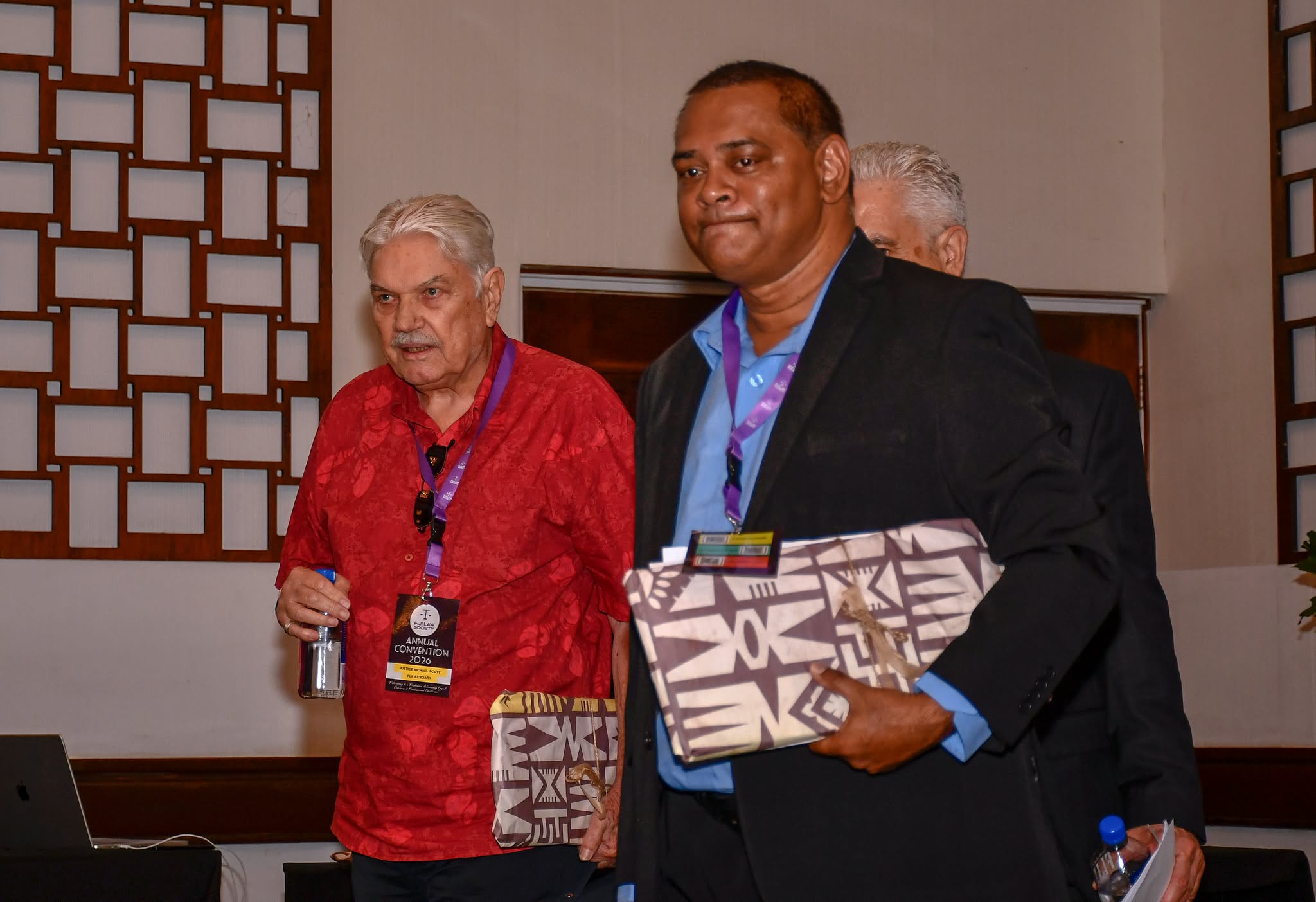
CHRONIC case backlogs in Fiji represent a systematic breach of constitutional guarantees and international human rights treaties protecting the right to a timely trial, says former chief justice of Tonga and High Court and Court of Appeal Fiji judge Michael Scott.
He told the Fiji Law Society convention that excessive court delays were not merely administrative inconveniences, but direct violations of fundamental human rights enshrined in Fiji’s Constitution and the International Covenant on Civil and Political Rights (ICCPR).
Mr Scott stressed that access to justice was rendered meaningless if court decisions take decades to deliver.
He called on legal authorities to recognise that institutional slowness violates basic constitutional protections guaranteed to every citizen appearing before the bench.
“What needs to be stressed is that, unlike the grubby theft of drugs from the courthouse exhibit room, these chronic delays in the administration of justice do amount to a systematic, almost endemic breach of the fundamental human right to access, to be tried without unreasonable delay,” he said.
Mr Scott said that the failure of successive administrations to implement the 262 recommendations of the 1994 Beatty Commission of Inquiry directly caused the current crisis in Fiji’s courts.
He reminded convention delegates that the Beatty Commission was established following the judicial disruptions of the late 1980s to restore a court system once considered the finest in the Pacific region.
Despite the extensive research and clear roadmap provided by the Beatty report, only a handful of its recommendations were ever put into practice.
Mr Scott said that discarding comprehensive inquiry findings onto government shelves guarantees that the underlying structural failures will compound over time.