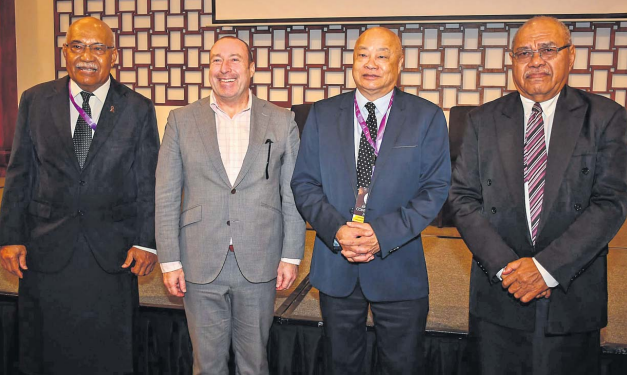
THE law and justice sector can be at the centre of driving better outcomes for Fiji, says Australian High Commissioner Peter Roberts.
Speaking at the 2026 Fiji Law Society Convention in Nadi, Mr Roberts highlighted the important roles legal professionals played in shaping Fiji’s policy frameworks.
“I think the law and justice sector can be at the centre of driving better outcomes for Fiji,” he said.
“Now it’s part of this centrality of the law and justice sector that Australia, through our new treaty with Fiji, the Vuvale Union, which is currently passing through our respective partnerships, will be doing more cooperation in the law and justice sector. I’ll speak about this a bit more later.”
He said the two new key areas of work for Fiji and Australia was now moving to expanding areas of work with new resources and the reinstatement of the Law and Justice Cooperation Program.
“Expanded areas of work with new resources is a big cooperative program on cyber and digitalisation which I think will have great opportunities in the law and justice sector.
“And also Australia will be reinstating a Law and Justice Cooperation program here in Fiji and I know the President has been an advocate of this.”
He said the law and justice sector program would ensure the protection of rights and freedoms.
“It is certainly for citizens and businesses and allows disputes to be resolved peacefully.
“And of course it underpins confidence in government and fundamentally ensures that the power of the State remains subject to law.
“And at heart it should facilitate better outcomes and help resolve disputes.”
He added courts and justice agencies are under pressure to manage growing workloads.
“Improve efficiency and provide services more quickly but at the same time the nature of the matters coming before them is changing.
“Their new legal questions are emerging around cyber crime, data protection, artificial intelligence, climate change and transnational problems and overlaying all of this is perhaps the most profound transformation of our working lives.”