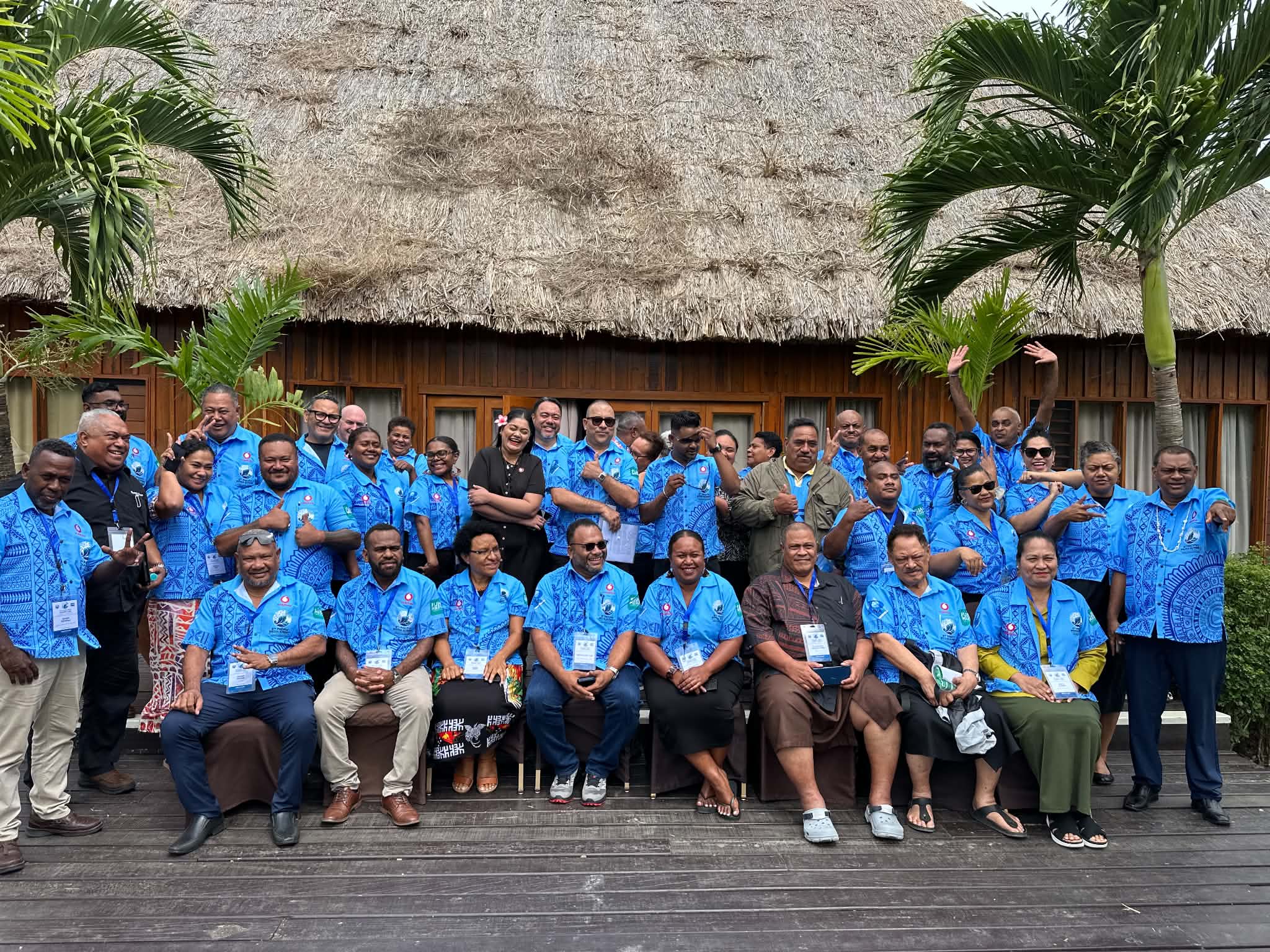
Fijiana XV creates history!
I warmly congratulate the Vodafone Fijiana XV for creating history as the girls lifted the WXV Global Series Challenger trophy for the first time. The Fijiana outclassed the Netherlands 20-17 in a pulsating and closely contested tough battle. Merewairita Neivosa, Ivamere Nabura Rokowati and Selai Naliva scored three sizzling tries. As fans waited with bated breath because scores were levelled 17-all, star player Varanisese Qoro stepped up and converted a golden opportunity presented to the Fijiana to gift the Fijiana the historic victory. I also congratulate Neivosa who walked away with the best player award. The Fijiana showed the Fijian flair, fighting spirit and character to win the breathtaking match. Vinaka vakalevu, girls! RAJNESH ISHWAR LINGAM
NADAWA, NASINU
UN delegates walk out
As usual, almost all of the Islamic state’s delegates walked out when Israel’s PM took the stand in NY. To the world, it was the symbol of segregation or abandonment or discrimination or “gang-up” against. I believe, it was simply the direct “effect” of upholding and protecting one’s own sovereignty, against a “world organisation”, that breeds “stupid” compromise. On that note, Mr Netanyahu then announced, “If there are still any moral cowards left, please, do so”. Did Israel choose safety and bury its capable instinct beneath polite compliance? No, it declared and demonstrated its “crown” and realm as sovereign, in my opinion. And I am convinced, Israel didn’t comply with its mutual accommodation because truth becomes negotiable, freedom becomes inconvenient and politeness replaces honesty. It is a more dangerous enemy of goodness, than evil, in my view. Even the Slovenian and Argentinian PMs, strongly commented on the UN’s unfairly targeting of Israel, when addressing “genocide”. Unfortunately, as such, it becomes particularly dangerous, I believe, when combined with power. In fact, being reinforced by the influence of UN’s 80 per cent authoritative leaders, the entire UN Member States, I am certain, become susceptible to “stupidity”. However, I believe that if you want to lead the world, first, learn to lead yourself. And if you stand with the truth, I am totally convinced that you will have many enemies. God bless Israel. Samu Silatolu Nakasi, Nausori
FNPF saga
Reading Professor Wadan Narsey’s illuminating analysis of the FNPF saga relating to the illegal reduction of pensioners lawfully entitled payment (FT 25/9/26) I get the distinct sense that the FNPF response does not add up. FNPF claims it “cannot restore the pensions because FNPF has to follow “the law” (let us forget its totally illegal origins). That is farcical. Despite the strenuous effort of the FNPF Pensioners’ Core Group to seek a compromise solution “there has been no response from the FNPF Board”. So what are the fat cats in the FNPF Board doing in their lofty position? When will the affected pensioners get redress from the injustice inflicted on them? Rajend Naidu Sydney, Australia
Garland divide, fourth estate
Fred Wesley, editor-in-chief of The Fiji Times, is absolutely right when he says the media lost readers because journalism became “too safe” and stopped asking difficult questions. In The Fiji Times report of September 24, he states plainly: “Our journalism became safe, and let me say this: safe journalism is quite boring.” That single sentence captures the slow erosion of Fiji’s fourth estate. Years of restrictions under MIDA did not merely silence journalists; they reshaped newsroom culture. Reporters became cautious, avoided scrutiny, and stopped challenging official statements. Press conferences were reported word for word. Government releases were printed without interrogation. The result was predictable: readers turned away, not because social media was superior, but because mainstream journalism had stopped producing content worth reading. But Fiji’s problem is not only regulatory — it is cultural. We must confront what I call the Garland Divide. In Fiji, respect is expressed through ceremony. When a chief guest, minister, MP, or president arrives, they are adorned with a large garland, offered yaqona, and elevated in status. The moment the garland is placed, the dynamic shifts: the visitor becomes untouchable, and the audience becomes deferential. Hard questions soften. Real grievances disappear. The guest becomes a sacred cow, not to be grilled. This cultural divide has seeped into journalism. Many reporters hesitate to challenge authority because they have been socialised to show respect rather than demand accountability. The Garland Divide is not symbolic; it is structural. It shapes who gets questioned, how deeply, and whether journalists feel empowered to pursue stories behind the scenes. When MIDA was introduced, this cultural caution hardened into institutional fear. Investigative journalism evaporated. The public, hungry for real debate and real information, built their own networks — even when those networks lacked standards, evidence, or verification. As Wesley notes, people did not abandon newspapers because social media was better; they abandoned them because mainstream media had become quiet. This is why Wesley’s leadership deserves recognition. Despite court cases, political pressure, and threats from the previous regime, he carried the torch for the nation. He kept the newsroom steady when others faltered. He mentored young journalists, rebuilt confidence, and insisted that journalism must serve the public, not power. His persistence, preparation, and positivity have restored The Fiji Times to its rightful place as the country’s most trusted news institution. If Fiji wants to rebuild trust in journalism, two things must happen. First, newsroom culture must change. Journalists must rediscover the courage to ask uncomfortable questions, challenge official narratives, and pursue stories that matter. Safe journalism is not journalism; it is stenography. Second, Fiji must confront the Garland Divide. Respect does not mean silence. Ceremony should not prevent scrutiny. Leaders must be willing to face questions without the protective shield of cultural deference. And journalists must be trained — and empowered — to push past the garland and speak for the public. The fourth estate is only strong when it is fearless. Fred Wesley has reminded us of that truth. Fiji must now act on it. Dr Sushil K Sharma Lautoka
Bangladeshi workers
There are stories circulating the grapevine on mistreatment of Bangladeshi workers in Fiji. Stop the visa-free entry. Dan Urai Lautoka
Pope decries rogue leaders
Pope Leo “decried world leaders who disrespected the rule of law without naming individuals” (Reuters/ST 27/9). But clear-thinking people the world over know who these rogue leaders are who engage in Machiavellian politics with scant regard for the law and human rights and the norms of good governance. It requires no special intelligence to identify them because their modus operandi is often patently obvious. Rajend Naidu Sydney, Australia
Crossing safety
Turning vehicles are required to yield to pedestrians. This sign, clear in its directive, is positioned at numerous intersections in Martintar, Nadi. In my opinion, the current setup, which permits both vehicles and pedestrians to navigate simultaneously, creates a hazardous situation that could lead to accidents. I strongly believe that we need to amend this system so that pedestrian and vehicle movements occur independently. It is crucial to allocate sufficient time for pedestrians to safely cross the road. In many other locations, you will not encounter such risky conditions, where both parties are expected to move concurrently without adequate separation for safety. This one is not on Fiji time, unfortunately. Suresh Chand Nadi
Adding zeroes
The concerns raised by the Centre for Democracy and Dialogue (ST 27/09) should be heeded for political accountability. If the Political Parties (Amendment) Bill 26 is passed, I believe we will be inviting “deep states, drug cartels, regime change NGOs etc, etc” and the zeroes will keep on expanding. The Indian mathematicians are laughing that they gave the concept of “zero” (shoonye) to the world. $10,000 has four zeroes; $300,000 five zeroes; million six zeroes; billion nine zeroes; trillion 12 zeroes. I hope Government exercises caution when adding the “zeroes”. Rakesh Chand Sharma Nadi
In unity!
The 270-plus people who turned out for the Fiji Cancer Society’s annual Pink Walk in Suva demonstrated unity for a worthy cause. The walk marked the launch of Pinktober and the society’s month-long breast cancer awareness campaign. Despite the wet conditions and cold, these brave Fijians joined hands to raise awareness on the deadly cancer that has devastated families, having lost a loved one. While the Pink Walk was an opportunity to promote early detection and awareness of cancer, people must also march forward and get tested as early diagnosis would assist with treatment. The Pink Walk also provided an opportunity for those people who had lost a loved one to come together as part of the wider support surrounding cancer patients. Fear and stigma aside, people must gather courage and get tested. The rising cases of breast cancer are worrying and must be addressed. On the other hand, support must be provided to families who face strain and burden because of cancer. To John Kamea, you penned a well-articulated editorial titled “Get checked, get help and take control” (ST 27/09). Your message and advice, “Do not wait until it is too late. Get checked. Seek help and take control of your life,” must not fall on deaf ears. Rajnesh Ishwar Lingam Nadawa, Nasinu
Shifting global order
Samir Saran, of Observer Research Foundation (ORF), criticises the UN Security Council because he believes it represents continuation of a colonial project. He argues that the council is composed of the victors of World War II and former colonial powers who continue to define global affairs, rather than allowing for a more representative and equitable distribution of power for the current world population. Samir Saran suggests that the current UN Security Council needs to be dismantled to allow for a new World Order to emerge. Saran argues that those who have been in charge for the past 75 years should be “pensioned off” to make room for new faces and voices. To broaden representation, Saran advocates for including countries such as Nigeria and South Africa from Africa along with India, Brazil and Japan. He also suggests having a unified EU voice as European representation. Saran explains that the G20 differs from the UN Security Council in its ability to facilitate global diplomacy and reach consensus. Saran highlights that during India and Indonesia’s presidencies of G20, the group demonstrated a capacity to bring everyone into the room and produce ambitious outcomes on critical issues such as energy, finance and economic stability, even in a polarised world. In contrast, Saran argues that the UN Security Council is failing because it remains a continuation of a Colonial project controlled by the victors of World War II. He believes this needs to be dismantled or reformed because it does not reflect the current global reality, where the majority of the world’s population is not adequately represented. Adapted from YouTube video summary of panel discussion with Samir Saran, president, Observer Research Foundation and Benedict Franke, CEO of the Munich Security Conference. Rakesh Chand Sharma Nadi