Dangerous shortcut turns into traffic hazard
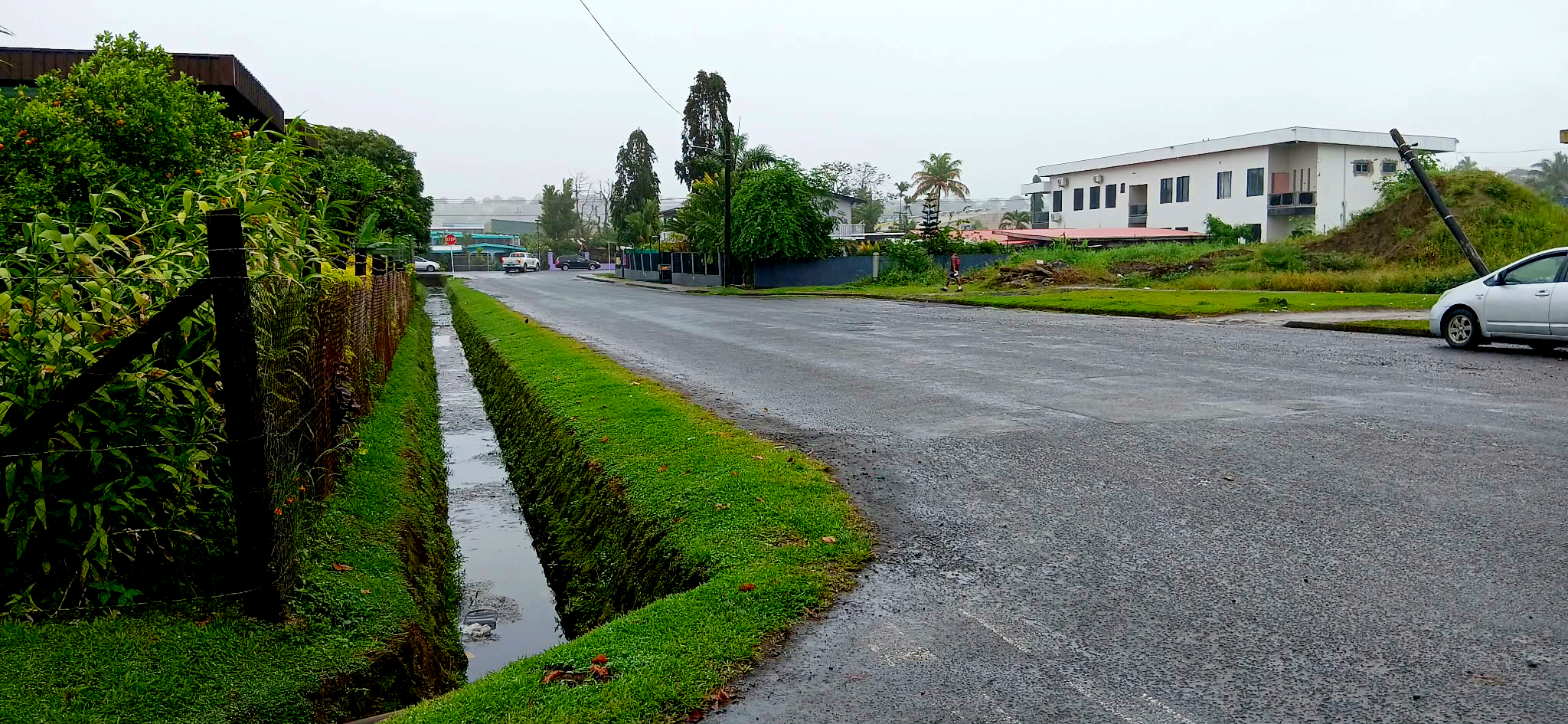
I AM writing to express deep concern over the dangerous surge in peak-hour traffic utilising Vidal Ave and the St Marcellin School private road as a shortcut to Golf Course Rd and the Rifle Range area. Vehicles of all sizes are speeding through this zone at all hours on a road never designed for such heavy transit. This traffic presents a severe safety hazard to residents and the many children who frequent the nearby sports grounds daily. Just yesterday, we nearly witnessed a fatal accident as cars sped through this restricted area. Furthermore, because this neighborhood is built on reclaimed land, the momentum of heavy vehicles creates continuous, damaging vibrations that threaten the structural integrity of nearby buildings. We urgently request relevant authorities to intervene with appropriate traffic management measures and restrictive enforcement before a tragedy occurs. BERNARD CHUTE Concerned resident, Vidal Ave, Suva
Future of Super Rugby
THE future of Super Rugby looks gloomy. I started following Super Rugby in 1996. The mighty Crusaders have been my team since then. I have great collection of beautiful memories from Super Rugby from both the Crusaders and Drua. When the South African franchises pulled out from Super Rugby, competition levels went down. This is evident with the performances of the All Blacks and Wallabies. The Flying Fijians camp was the greatest beneficiary as the Swire Shipping Drua got added to the competition alongside the Moana Pasifika in 2022. Now that New Zealand Rugby will hold a critical summit this week as it weighs major decisions over the future of Super Rugby and the National Provincial Championship, as it seeks to cut $20 million a year in costs, the Fiji Rugby Union must weight its options as well. According to New Zealand Rugby, “It is aiming to reshape the domestic game, including expanding Super Rugby with two additional teams; continuing with the current versions of Super Rugby and the NPC, but merging the Super Rugby clubs with the main provincial unions; or replacing both Super Rugby and the NPC with a new eight-10 team competition. The idea of scrapping Super Rugby and the NPC in favour of a new format has been put forward by the provincial unions. The Drua could be excluded so FRU must either look to Europe or join the Australian National Rugby Championship as it prepares for the 2027 RWC tournament in Australia. RAJNESH ISHWAR LINGAM algovind Rd, Nadawa, Nasinu
Politics without climate science
I READ with interest your report on Minister Lynda Tabuya’s comments from the Palau meeting, particularly the claim that the communiqué “actually endorsed” the link between climate change and domestic violence and “actually acknowledging women as climate leaders in the region. This had never been done. It was always just noted over the last few years. Now it’s finally endorsed.” (FT 21/09/26) Endorsement in a communiqué, however, is not the same thing as scientific causation. Cyclones, storm surges, heatwaves and floods are physical phenomena governed by dynamics, thermodynamics and large–scale circulation. A Category 5 cyclone does not distinguish between man, woman, child or LGBTQ+ person; the storm surge will take the entire bure or house if it is built in the wrong place, with inadequate design, regardless of who lives inside. The hazard is blind. What is not blind are the social, economic and cultural vulnerabilities that shape who suffers most and how. There is emerging research suggesting that climate–related shocks can act as “threat multipliers” for existing gender–based violence – by increasing stress, displacement, poverty and breakdown of services. That is an important conversation. But it is very different from the simplistic narrative that “climate change causes domestic violence”, which risks turning a complex social pathology into a slogan for talk–fests and funding pitches. Pacific communities have lived with natural climate variability for centuries – El Niño, La Niña, droughts, cyclones – and have adapted through traditional knowledge, relocation, building codes and social solidarity. To now suggest that every extreme event must be framed primarily through a gender lens, while the hard work of risk-based land–use planning, engineering standards and early warning systems is sidelined, is to confuse vulnerability analysis with meteorology. A further concern is the growing tendency across the region for climate discussions to be led almost entirely by non-meteorologists, non-academics and individuals without formal training in atmospheric or climate science. When scientific expertise is sidelined, the conversation becomes one–sided and incomplete. Policymaking must be informed by those who understand the physics, statistics and long-term behaviour of climate systems. Experts in the field should be fully involved before broad generalisations are made by public figures. Climate science is a specialised discipline, and national policy cannot be built on assumptions or enthusiasm alone. If we are serious, then let us be precise. Weather and climate natural variability increases the fluctuations, probability and intensity of certain hazards. Those hazards interact with pre-existing inequalities, including gendered power structures, to produce disproportionate impacts. The violence is not in the storm; it is in the human response before, during and after the storm. That distinction matters, because it determines whether we invest in robust science-based adaptation – stronger houses, safer locations, reliable warnings, resilient infrastructure – or in endless conferences where “gender and climate” are intoned without data, metrics or accountability. By all means, recognise women’s leadership in climate policy. By all means, study how disasters exacerbate intimate partner violence and protect those at risk. But do it with rigorous evidence, clear mechanisms and honest language – not with sweeping claims that risk turning climate science into a political catch–all. When we overload climate policy with every social issue under the sun, we risk doing none of them well. The Pacific deserves climate discourse grounded in physics, statistics and lived community resilience – not rhetoric, and not the habit of painting the entire conversation with one brush. DR SUSHIL K SHARMA Lautoka
Election date issue
IF sec 59 (2) of our Constitution states that a Writ for a general elections must be issued within seven days from the expiry of Parliament and if that expiration occurs on December 24 this year, then how can that date be the last date for the issue of the Writ ? As most of us are aware, December 24, 2026 is exactly 4 years since Parliament’s first sitting on the same date in 2022. Furthermore, if as stated in sections 59 (2), 60 and 61 that polling for a general elections commences within 51 days from the expiry of Parliament, than how can February 6, 2027 be the last date in which polling can begin? EDWARD BLAKELOCK Pacific Harbour
Responsible journalism
A FREE, independent and professional media can only remain important to a healthy democracy if it does not come under the sway of those in power. That is the true yardstick of a free press. Sychophantic journalism has no place in a vibrant democracy. Its place is in an authoritarian regime. Sychophantic journalism is reporting that flatters powerful people or institutions instead of holding them to account. That tells us why it has a place in authoritarian regimes. RAJEND NAIDU Sydney, NSW, Australia
Writer appreciation
FIRSTLY, my heartfelt sympathies to those suffering from the massive devastation in Nepal from the sudden collapse of a Himalayan glacier. I appreciate the contribution on reading in this newspaper from Swaansh Mahat of Kathmandu, Nepal. I believe, or may have overlooked, any other letter from a writer from Nepal in this column. I have not known anyone in Fiji from Nepal, however, my brother has been care given by two beautiful, loving Nepalis ladies Manisha and Namuna in Sydney, Australia. SARITA LAL Malolo St, Lautoka
No faith
ONLY 1 per cent of the Fiji’s population took part in the face to face constitution review consultation. What does that signify ladies and gentlemen? Fijians have lost all hope in the current government. Sobo! WISE MUAVONO Hedstrom Pl, Balawa, Lautoka
Overriding power
SO here is a scenario with the proposed 2026 draft Constitution – it is not an amendment if you are changing everything. Say, for example, the BLV (or GCC) doesn’t get along with the PM or the governing party. They can literally push back every law that the House of Representatives passes just by using their own eight people (of the total 19) and getting the Rotuman and Rabian senators on their side or, even easier, getting the four Opposition-appointed senators on their side. The unelected Senate could literally make the democratically elected House of Representatives dysfunctional. So much for consultations and expertise. KIRAN KHATRI Samabula, Suva
Strengthening the GCC
THE Opinion section (FT 24/09) by Sunil Chand makes interesting reading. He asks “what institutional design would strengthen the vanua and chiefly leadership while ensuring that political power exercised in the name of the iTaukei remains accountable to the ordinary iTaukei people it exists to serve?” While I strongly believe that the GCC plays an important role in iTaukei community, it can do more to wean off young people of all communities from a life of drugs, crime, drop out from educational institutions and other social problems and foster social inclusion. Stability in communities is paramount to a stable country. Just to deepen your understanding of the issue, I refer to India’s situation after independence in 1947. The Nehru Government’s “Privy Purse System resulted in a tax free annual payment and privileges granted to former princely rulers who had considerable influence over the people. This continued until the then PM Indira Gandhi abolished it in 1971 in the name of social equality. Rakesh Chand Sharma Nadi
Responsible journalism
SAVUSAVU has been a hive of activity as the Hidden Paradise hosts the 8th Pacific Islands News Association Summit. At the opening Prime Minister Sitiveni Rabuka had a timely message as he urged journalists to check and verify information before disseminating it to the public. His message will ensure that journalists and media organisations put in place measures to ensure that authentic and accurate information goes out to the public. I quote the editor-in-chief, via his editorial (FT 24/09), “In a world of misinformation and disinformation, the role of journalism and mainstream media is important, and as we anticipate important events on the domestic and international front, this becomes critically important. The obligation to uphold the values that the masses associate with the media is quite important in the greater scheme of things.” The PM was right in calling for greater caution, stressing professional standards and responsible journalism. Every media organisation at home has a responsibility to disseminate the right information and not allow artificial intelligence to deter responsible journalism. At this critical time, there is a need for credible, professional and independent journalism. To our journalists, keep striving, shining! RAJNESH ISHWAR LINGAM Balgovind Rd, Nadawa, Nasinu
A voice for iTaukei
WHO speaks for the iTaukei (FT 24/9/26)? GCC chair Ratu Villiame Seruvakula reflects on a very pertinent question given the social indicators regarding the iTaukei population in the country. RAJEND NAIDU Sydney, NSW, Australia