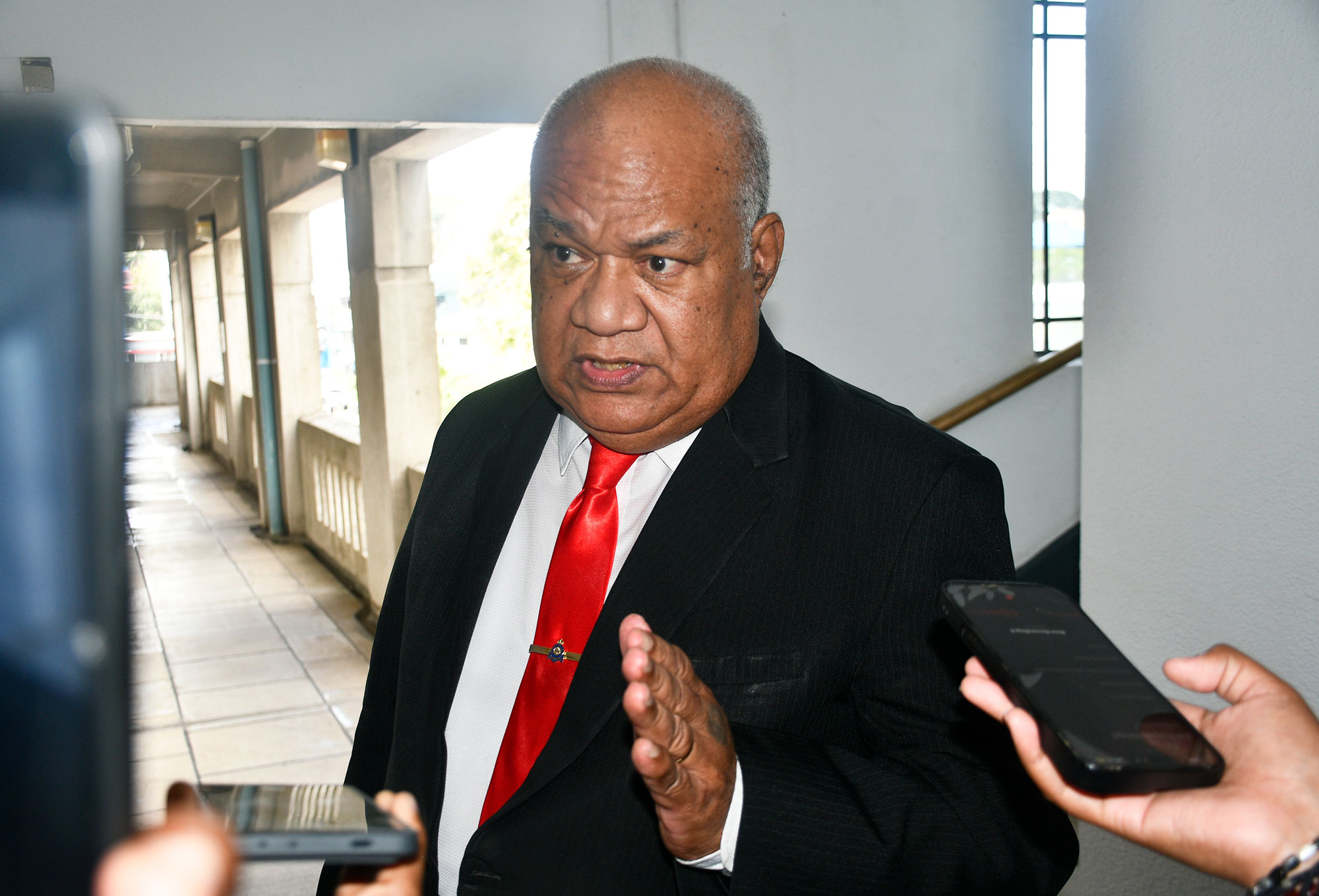
The Judiciary has begun a comprehensive review of exhibit management and security arrangements across Fiji’s courts following the reported disappearance of cocaine exhibits from the Suva High Court Registry.
In a statement issued today, Chief Justice Salesi Temo said the Judiciary was fully cooperating with the Fiji Police Force as investigations into the matter continued.
“Court officials have been directed to make available all relevant records, documentation, and information required by investigators,” Justice Temo said.
He said the Judiciary remained committed to supporting a “thorough, transparent, and independent investigation”.
The Chief Justice said Police had advised that a number of persons of interest had been identified.
However, he stressed that those identified must be treated fairly under the rule of law and reminded the public of the presumption of innocence.
“That means that every person, who may later be accused of a crime, are presumed innocent until proven guilty beyond reasonable doubt, in a court of law; not in the court of social media,” he said.
Justice Temo said if the investigation established sufficient evidence of criminal wrongdoing, it would be for the Office of the Director of Public Prosecutions to independently determine whether charges should be laid.
He said if charges were filed, the Judiciary would ensure trials were conducted within a reasonable timeframe, with a two-year timeline envisaged.
The appeal process would also be streamlined, with a 12-month timeline.
“This matter is deeply concerning,” Justice Temo said.
He said court exhibits were an integral part of the administration of justice and the integrity of criminal proceedings.
“Their secure custody, management, and preservation are essential to ensuring fair trials, protecting the rights of all parties, maintaining public confidence in the justice system, and upholding the rule of law,” he said.
The Judiciary has commenced preliminary security assessments at court facilities, with attention being given to exhibit storage, registry operations, access controls, surveillance systems and internal accountability.
Measures being implemented include a nationwide security assessment of court premises, a review of exhibit handling and storage procedures, upgrades to physical security and access controls, and expanded CCTV coverage.
The Judiciary will also strengthen chain-of-custody requirements, review staff access privileges and registry controls, and provide additional training for staff responsible for exhibits and security.
Justice Temo said the Judiciary was also assessing opportunities to modernise registry operations through improved technology, records management systems and inventory controls.
“Public confidence in the Judiciary is fundamental to the rule of law,” he said.
“As investigations remain active, it would be inappropriate to comment further on matters that may become the subject of criminal proceedings.”
He said the Judiciary would continue working with Police and other stakeholders to address any deficiencies identified and strengthen security, accountability and the integrity of court processes.