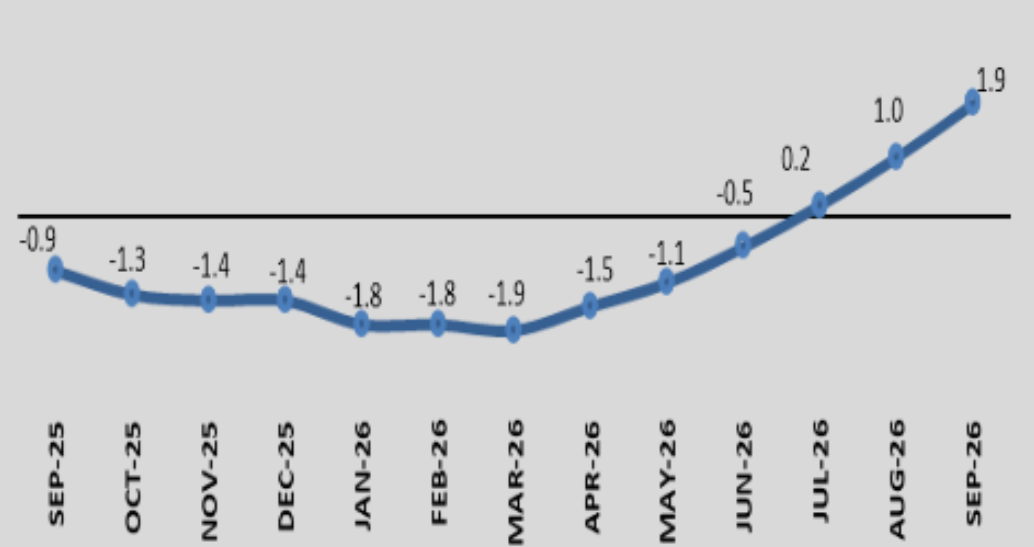
Fiji’s average annual inflation rate stood at 1.9 per cent for the 12 months ending September 2026, according to the latest Consumer Price Index (CPI) report released by the Fiji Bureau of Statistics.
The figure compares the average prices of goods and services between October 2025 and September 2026 with the preceding 12-month period.
However, the report revealed that the year-on-year inflation rate for September reached 6.8 per cent, indicating that consumer prices were significantly higher than in the same month last year.
Despite the increase in year-on-year inflation, consumers experienced some relief during September as prices of several essential household items declined.
The All Items Consumer Price Index fell by 0.4 per cent, from 118.1 in August to 117.6 in September.
Food and non-alcoholic beverage prices decreased by 1.2 per cent, with lower prices recorded for meat, fish and seafood, cooking oils and fats, vegetables and beverages.
The housing, water, electricity, gas and other fuels category recorded the largest monthly decline of 1.8 per cent, mainly due to falling gas prices.
Clothing and footwear prices dropped by 0.8 per cent, while furnishings, household equipment and routine household maintenance declined by 0.4 per cent.
However, several categories recorded price increases during the month.
Alcoholic beverages, tobacco and narcotics rose by 1.1 per cent, reflecting higher prices for spirits, beer, tobacco and yaqona.
Health-related costs increased by 0.9 per cent, driven by higher pharmaceutical prices.
Transport costs rose by 0.4 per cent due to increases in fuel and lubricant prices, while communication costs increased by 0.3 per cent following higher prices for telephone equipment.
Meanwhile, prices in the education and restaurants and hotels categories remained unchanged.
The Bureau explained that Fiji uses two measures of inflation to monitor changes in consumer prices.
The average annual inflation rate compares average prices over two consecutive 12-month periods, while the year-on-year rate measures changes between the current month and the corresponding month of the previous year.
The latest figures show that although Fiji’s average annual inflation stood at 1.9 per cent, the 6.8 per cent year-on-year increase indicates that households were paying considerably more for goods and services than they were in September 2025.
The monthly decline in prices, however, provided some relief for consumers, particularly through reduced food and cooking gas costs.