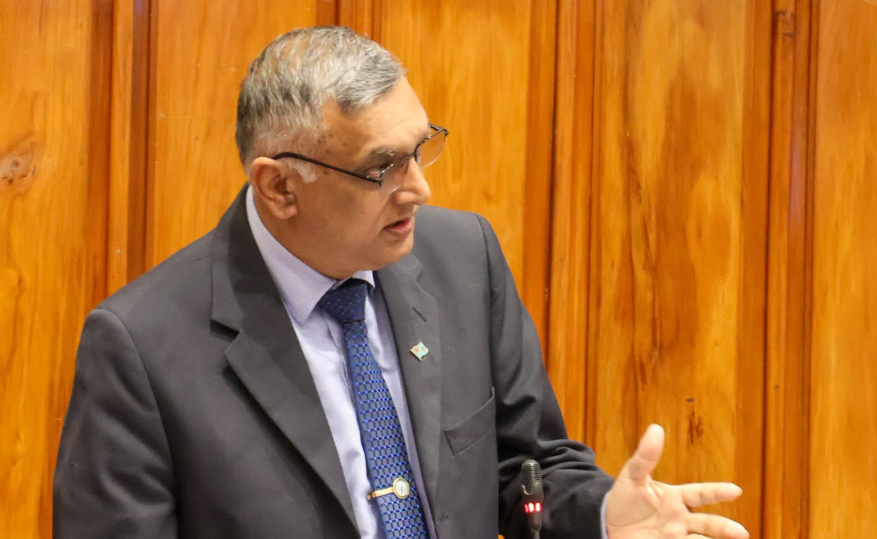
Opposition Member of Parliament Virendra Lal says the proposed Constitution must reach villages, settlements and remote communities across Fiji before people are asked to vote in a national referendum expected in December.
Mr Lal has questioned whether Fiji is adequately prepared to conduct a referendum on such extensive constitutional changes within the limited timeframe.
He says sufficient time must be provided for ordinary Fijians, particularly those in rural and maritime communities, to understand the proposed changes and their implications.
“There must be enough time for the proposed Constitution to reach villages, settlements and communities throughout Fiji,” Mr Lal said.
“People must be able to understand not merely what individual provisions say, but what they mean and how they differ from the constitutional arrangements under which they currently live.”
Mr Lal said young people, women, religious organisations, workers, employers, landowners, farmers, professionals and civil society groups must all be given a genuine opportunity to participate in the process.
He warned that a referendum should not become an exercise where people are simply presented with a document and asked to vote Yes or No after only a few weeks of public campaigning.
The Opposition MP said the Constitution (Amendment) Bill currently before Parliament proposes far-reaching changes rather than minor amendments.
He said the Bill seeks to repeal virtually all provisions of the 2013 Constitution, apart from Chapter 10, and introduce an extensive new constitutional framework.
The proposed changes cover the Bill of Rights, Parliament, the Executive, Judiciary, State Services, the Bose Levu Vakaturaga, Rotuma, independent institutions and emergency powers.
Mr Lal questioned whether ordinary citizens could reasonably be expected to read, understand and debate such extensive changes within one or two months.
He also called on the Government to explain why the referendum must be held in December.
“Why must this referendum be held in December? Why is this particular timetable necessary? What is gained by rushing it?” he questioned.
Mr Lal said Fiji’s constitutional history should serve as a reminder of the importance of stability, noting that the country has operated under the 1970, 1990, 1997 and 2013 Constitutions.
He said a Constitution should provide certainty across generations rather than undergo fundamental changes every few election cycles.
Mr Lal maintained that allowing greater public scrutiny and consultation would strengthen the constitutional reform process.
“If Government genuinely believes that these constitutional changes are in Fiji’s best interests, then it should have nothing to fear from greater scrutiny, wider discussion and more time for public understanding.”
He stressed that constitutional decisions made today would affect future generations long after the current Government and Parliament had left office.
“The Constitution belongs to the people. The timetable should therefore serve the people, rather than requiring the people to serve the Government’s timetable,” Mr Lal said.