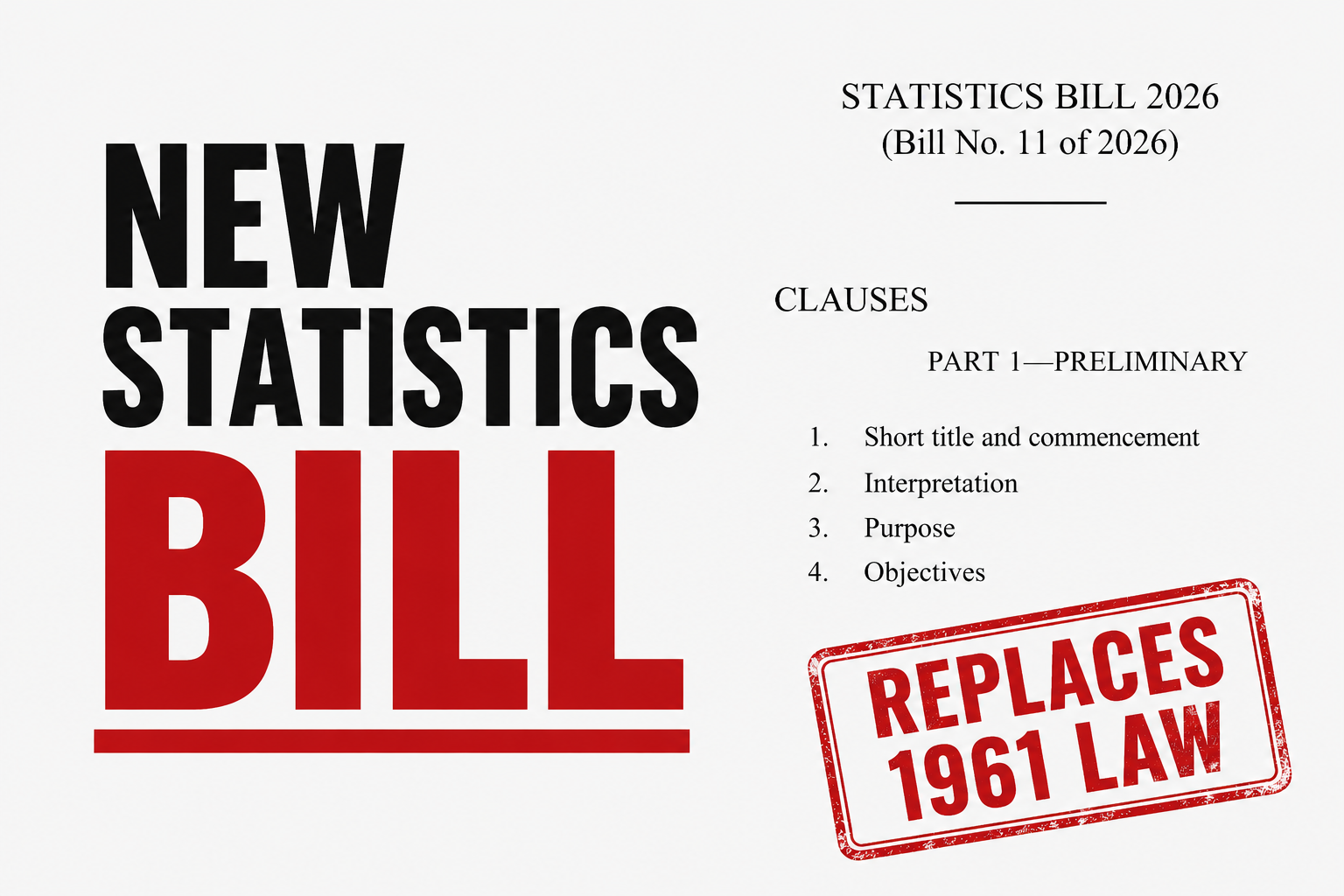
The Government yesterday introduced the Statistics Bill 2026 in Parliament under Standing Order 51, with Prime Minister Sitiveni Rabuka saying the legislation was needed to modernise Fiji’s statistical system and align it with international standards.
The Bill seeks to repeal the Statistics Act 1961 and establish a new legal framework for the collection, compilation, analysis and dissemination of official statistics in Fiji.
Introduced under Standing Order 51, the Bill is being fast-tracked through Parliament, allowing it to proceed without being referred to a parliamentary standing committee for detailed scrutiny.
The proposed law establishes a Statistical Advisory Council and strengthens the role of the Fiji Bureau of Statistics as the country’s central statistical authority. It also outlines the powers of the Government Statistician and provides for greater coordination of data collection across Government ministries and agencies.
According to the explanatory note attached to the Bill, Government said the existing law was outdated and no longer able to meet “contemporary statistical requirements and international standards”.
The explanatory note stated that Cabinet approved a review of the current legislation in May 2023 following increasing national demand for “high quality, timely, and independent statistical information”.
The Bill would also allow the Fiji Bureau of Statistics to access administrative data from public sector agencies and improve data sharing between Government bodies to reduce duplication and “survey fatigue”.
Under the proposed legislation, official statistics would have to comply with the United Nations Fundamental Principles of Official Statistics.
The Bill also includes confidentiality protections, making it an offence to unlawfully disclose statistical information collected under the Act. Offenders could face fines of up to $2,000 or imprisonment for up to two years.
The proposed law further empowers authorised officers to obtain information, access records and enter premises for statistical collection purposes.
Government said the legislation was intended to strengthen evidence-based decision making, improve data quality and support Fiji’s development planning through more coordinated and reliable official statistics.