
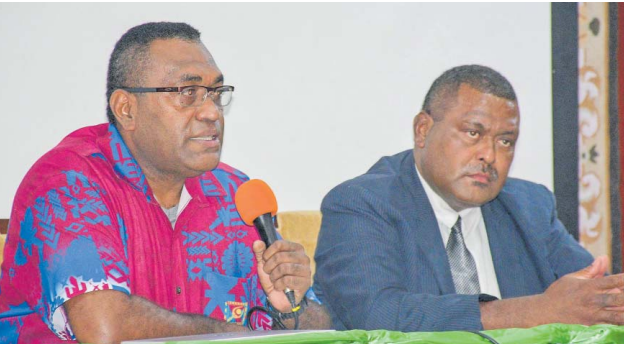
THE inability to say “no” is quietly deepening poverty and household strain in iTaukei communities.
The call to confront this financial reality at the community level was made by Reserve Bank of Fiji official, Kelemedi Dreu, as he delivered a strong message on financial discipline.
He warned that long-standing cultural and behavioural patterns around money was leaving many families financially exposed despite strong community values and resource ownership.
He said financial habits were often formed early in childhood, where money was introduced as something to be spent rather than managed.
“When we give our kids money, we tell them, ‘This is your spending’,” Mr Dreu said, highlighting how early conditioning shapes lifelong financial behaviour.
Framing modern society through a broader lens, Mr Dreu described a “four-legged stool” of development: the vanua, Government, church, and money.
He stressed that money was not separate from life, but a critical tool that supported the stability of the other three pillars.
“Money is part of daily life and a vital tool that strengthens the other components,” he said.
While acknowledging that iTaukei communities remain rich in land, culture, and resources, he warned that financial illiteracy continued to push many households below the poverty line.
One of the most damaging habits, he said, was the pressure to commit to community obligations even when personal finances could not support them.
This, he stressed, was where a cultural shift was urgently needed.
“We must learn how to say ‘No’ when we do not have money.
“You can’t be agreeing to pledges, but the jar of sugar at home runs dry.”
He urged families to prioritise household stability over social pressure.
He also challenged provincial leadership to take action, recommending that the Lomaiviti Provincial Council dedicate the first week of September to a financial literacy outreach program aimed at strengthening budgeting skills and reshaping attitudes toward spending and obligation.

