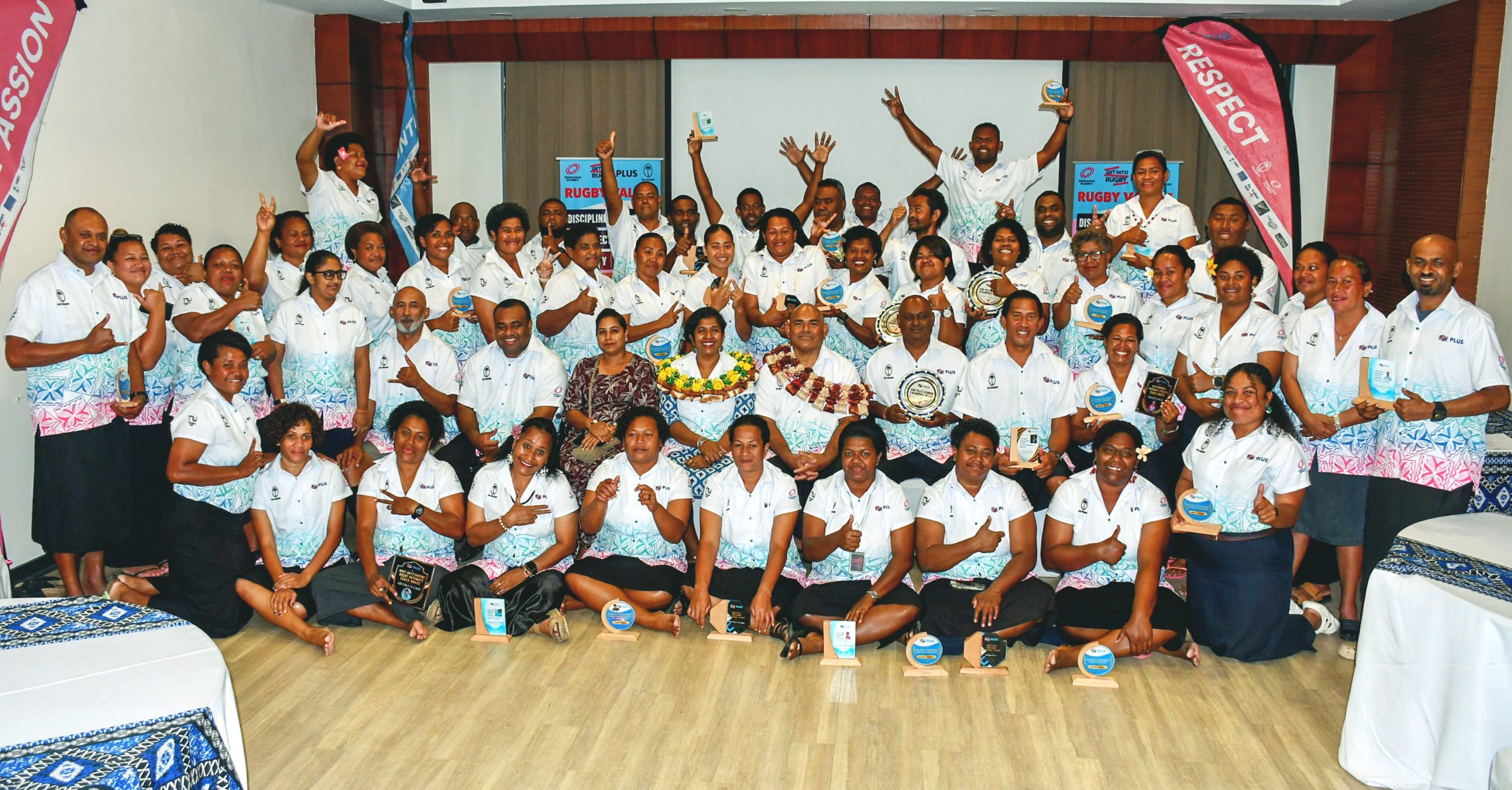
THE Get Into Rugby PLUS programme has transformed the lives of close to 10,000 children across the Pacific over the past decade, using rugby as a powerful platform to create positive social change.
Speaking during the Get Into Rugby (GIR) PLUS Awards Night at Nasau Resort and Villas in Nadi on Friday, program patron Tihrani Uluinakauvadra reflected on the remarkable journey and achievements of the initiative since its inception 10 years ago.
Uluinakauvadra said Oceania Rugby, in partnership with GIR PLUS is supported through the Australian Government Team Up program, UN Women and ChildFund Australia, had worked tirelessly to create safer, more inclusive and empowering environments for children and young people.
He said the programme had reached close to 10,000 children and trained more than 200 coaches across Fiji, Samoa and, most recently, Tonga.
The initiative has also been implemented in more than 80 schools and several communities throughout the Pacific.
“Through this journey, we have used rugby as a platform for positive social change,” he said.
One of the programme’s proudest moments came in 2023 when Get Into Rugby PLUS received international recognition after winning the Community Award at the prestigious Leaders Sports Awards in London.
Uluinakauvadra said the achievement reflected the programme’s contribution towards addressing social issues, breaking down barriers and creating meaningful opportunities for young people through sport.
The recognition was made even more significant by the calibre of organisations shortlisted alongside GIR PLUS, including programmes associated with the International Olympic Committee, Harvard University, the Ohio Department of Education, the National Lottery of England and the Liverpool Football Club Foundation.
“To stand among such globally recognised organisations and emerge as the winner was a proud moment,” he said.
The programme has also received recognition from researchers, with the GIR PLUS curriculum identified as one of only 55 curricula from 42 programmes across 23 countries reviewed for its contribution towards preventing Intimate Partner Violence.
Uluinakauvadra said preliminary findings from a recent programme evaluation conducted by the Nossal Institute for Global Health at the Melbourne School of Population and Global Health further reaffirmed the programme’s impact.