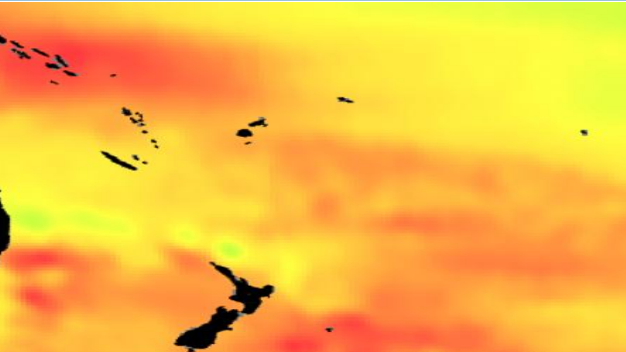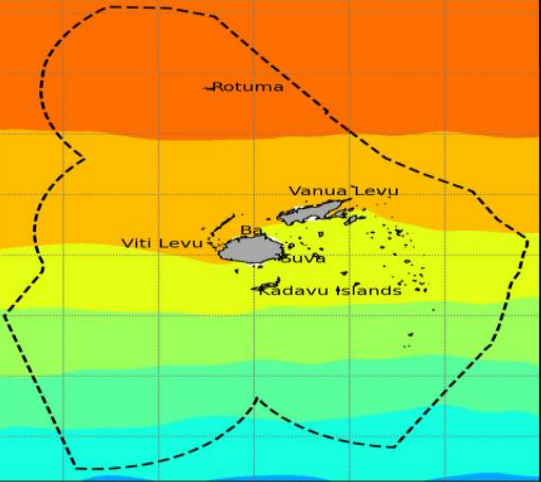
Sea surface temperatures in parts of Fiji’s waters rose by as much as two degrees Celsius above normal in 2025, according to the Fiji Meteorological Service’s Annual Climate Summary.
The report revealed that warmer-than-normal ocean temperatures were recorded across most of Fiji’s Exclusive Economic Zone (EEZ), with temperature anomalies generally ranging from 0.4°C to 1.2°C above the 1971–2000 average.
However, a small area west of Viti Levu experienced even warmer conditions, with anomalies ranging from 1.2°C to 2°C above normal.
The Fiji Meteorological Service reported that sea surface temperatures around Fiji during 2025 were classified as above average to very much above average when compared with records dating back to 1982.
Rotuma recorded some of the warmest ocean conditions, with mean sea surface temperatures ranging between 29°C and 30°C.
In the Western and Northern Divisions, average sea surface temperatures ranged between 27°C and 29°C.
The Central Division recorded temperatures of 27°C to 28°C, while the Eastern Division experienced slightly cooler conditions ranging from 26°C to 28°C.
The report also highlighted a longer-term warming trend in Fiji’s surrounding waters.
Since 1950, sea surface temperatures have increased by an estimated 0.1°C to 0.2°C per decade across most of Fiji’s Exclusive Economic Zone.
Parts of the northern and southern Lau Group experienced smaller increases of between 0°C and 0.1°C per decade.
The Fiji Meteorological Service said the El Niño–Southern Oscillation (ENSO) plays a significant role in influencing sea surface temperatures across the tropical Pacific Ocean.
The findings show that warming ocean conditions around Fiji are not limited to individual years but form part of a longer-term upward trend recorded over several decades.
The latest figures add to evidence of changing marine conditions in the region, with Fiji’s surrounding waters continuing to experience above-normal temperatures.