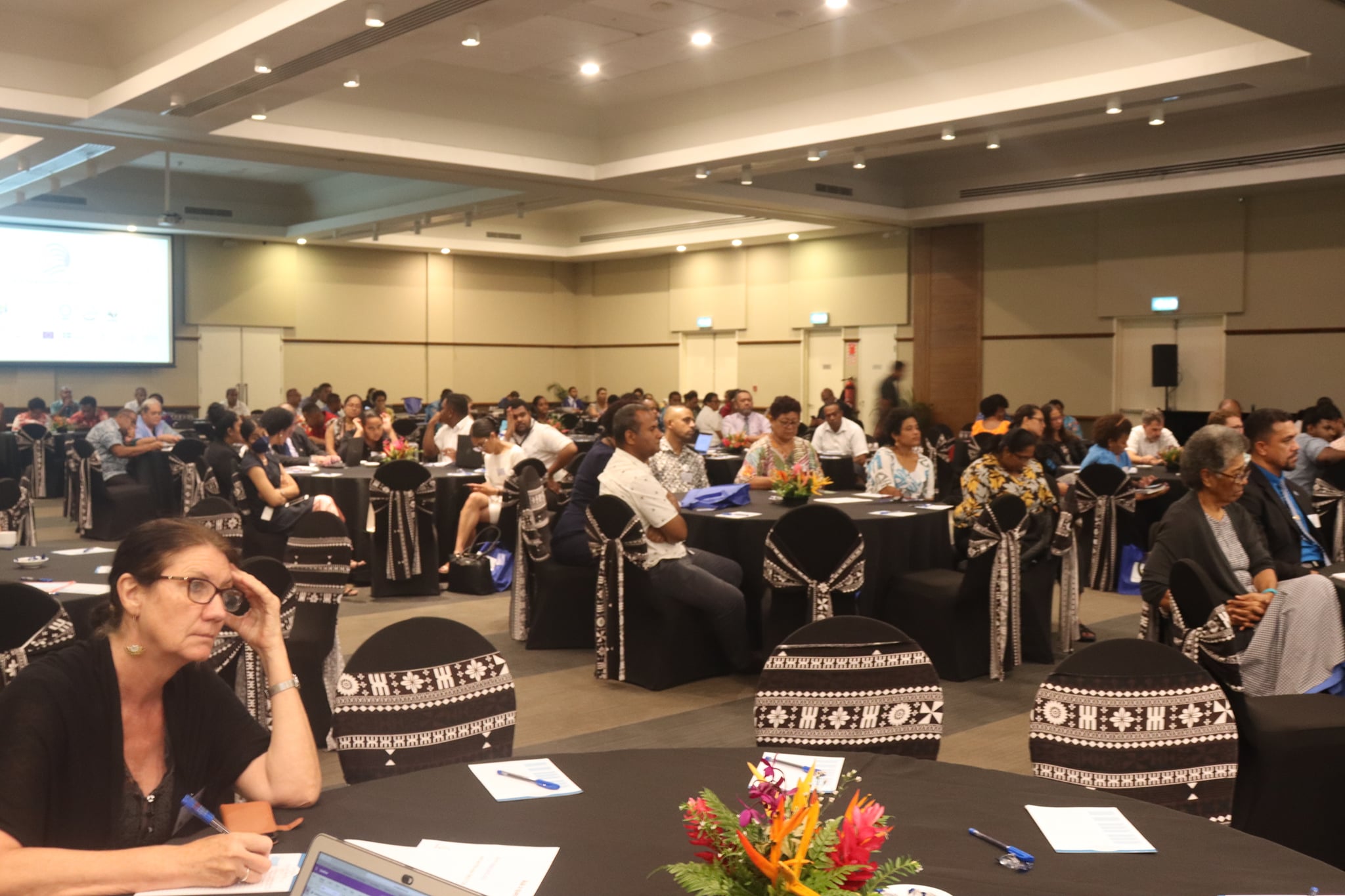
The Fiji Seascape Symposium continues into its second day today at the GPH in Suva.
Fijian President and ocean conservation advocate Ratu Wiliame Katonivere said the islands and the four seascapes in the country – the Great Sea Reef or Cakaulevu, Vatu-i-Ra Seascape, Kadavu Astrolabe Reef Seascape, and the latest addition Lau Seascape were at a defining moment in time.
“As climate change impacts accelerate, the window of opportunity, inclusive of planned policies and national action to establish the protection and development of these ocean areas is critical,” Ratu Wiliame said in his official address yesterday.
He said Fiji was committed to supporting the protection and management of those four seascapes.
And he added that the symposium provided a platform for celebration, reflection and planning for the future of ocean action in the country, and to recognise the determination and aspiration of the people to preserve their ocean biodiversity, economy and culture in the face of climate change and other external threats.
The four seascapes in Fiji:
Great Sea Reef or Cakaulevu
The Great Sea Reef, which spans an area of roughly 1200 square kilometres, extends from the northern tip of Vanua Levu to the western parts of Viti Levu across Macuata, Bua, Ba and Nadroga provinces.
It is the world’s third-longest continuous barrier reef system, and is home to a collection of unique mangrove island habitats, endemic fish and coral species, and other globally significant and diverse marine life.
Vatu-i-Ra Seascape
Connected to the Great Sea Reef is the Vatu-i-Ra Seascape, and it stretches between the two main islands of Viti Levu and Vanua Levu.
It is a vibrant sea containing more than 300 coral species, and an overabundance of marine species, and adjoining to coastal forests that house crested iguanas, tree frogs, and sea birds.
The Wildlife Conservation Society (WCS) is working with communities across Ra, Bua, Lomaiviti, Tailevu and parts of Cakaudrove provinces in an area of roughly 28,000 square kilometres to conserve ocean life and support the well-being and livelihoods of many Fijians.
Kadavu Astrolabe Seascape
In the Eastern Division, the Fiji Locally Managed Marine network or FLMMA – and the Institute of Applied Sciences have been closely engaged with other partners, in the development of the Kadavu Astrolabe Seascape.
This is a major repository of marine and terrestrial biodiversity, surrounded by the Great Astrolabe Reef, the world’s fourth largest barrier reef which is 5270 square kilometres and home to many large billfish species, sharks, other pelagic fish species like tuna, and mahi-mahi.
Lau Seascape
The fourth is, the Lau Seascape – the most far-flung group among Fiji’s constellation of islands.
The Lau archipelago is pristine and contains a wealth of unspecified species and stunning ecosystems that provide food, cultural value and livelihoods for its 9600 inhabitants.
Conservation International and its network of partners have worked closely with the vanua o Lau to develop the Lau Seascape Strategy that aims to work with stakeholders to protect and manage the project at a huge scale, with a strong focus on climate resilience, ocean protection, strengthening local livelihoods, and sustainable fisheries management.
(Source: Ratu Wiliame Katonivere’s address, Fiji Seascape Symposium)