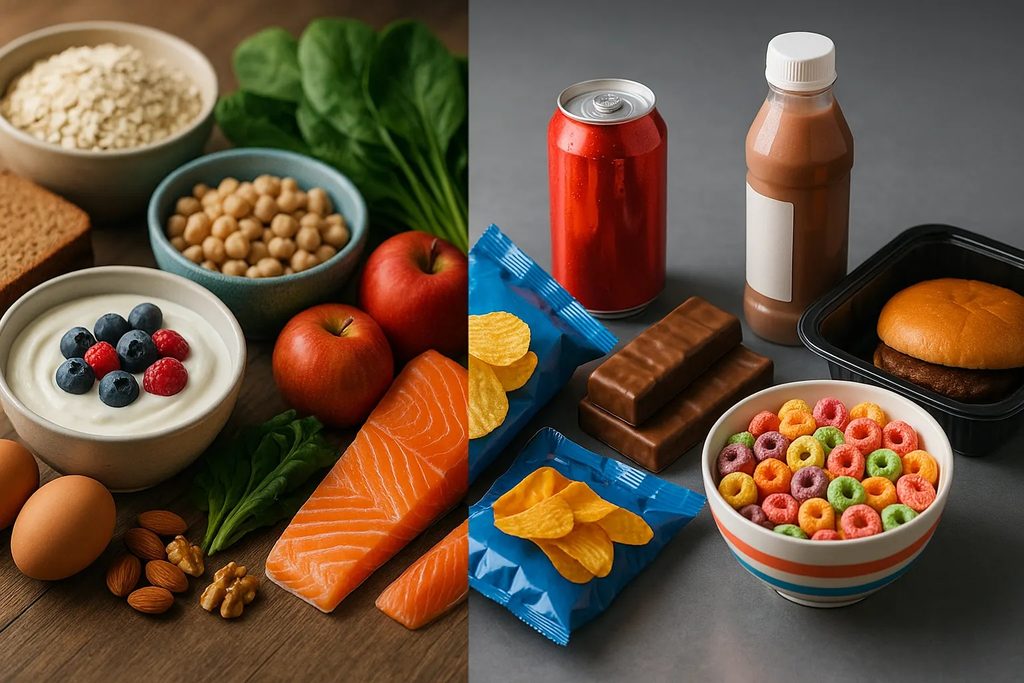
THE foods we eat on our kitchen table daily, could be shaping our long-term health.
From breakfast cereals to instant meals and fizzy drinks, ultra-processed foods (UPFs) have become an integral part of modern diets.
Published in the open access journal Family Medicine and Community Health, a new research suggests that the more people consume UPFs, the greater their risk of facing a range of chronic health problems, non-communicable diseases and premature death.
Walk through any supermarket aisle or neighbourhood store and ultra-processed foods would become something hard to miss.
That’s because they are convenient, inexpensive, heavily marketed as ready-to-eat or drink, and require little preparation. Because of these, they have become a common part of breakfast, lunch and dinner.
But a massive research analysis, one involving almost 9 million people, suggests there may be a significant health cost associated with diets high in ultra-processed foods.
Researchers analysed 51 prospective studies from around the world and found that higher consumption of ultra-processed foods was associated with increased risks of “cardiovascular disease, cancer, obesity, diabetes and metabolic syndrome, digestive diseases, high blood pressure, depression and anxiety, and death”.
And importantly, the risks tended to increase as consumption increased.
A global dietary shift
Ultra-processed foods, commonly referred to as UPFs, are not simply foods that have been processed.
Processing can be as straightforward as freezing vegetables, pasteurising milk or fermenting food. UPFs are generally products that have undergone “extensive industrial processing” and contain a combination of ‘ingredients and additives’ rarely used in home kitchens.
Energy-dense, they are high in “sugar, salt and fat”, while providing relatively little “fibre, protein, vitamins and minerals”.
Their consumption has risen sharply in many parts of the world, including the Pacific, prompting researchers to investigate whether increasingly processed diets could be contributing to the growing burden of chronic disease.
For the new analysis, researchers searched scientific databases for relevant studies published up to the end of April 2026.
The 51 studies they identified involved 8,819,894 participants, with studies conducted across the Americas, Europe, Asia and Oceania.
Participants were followed for between two and 32 years.
More UPF, greater risk
Compared with people consuming less, those consuming high amounts of UPFs had: a 24 per cent higher risk of cardiovascular events; a 12 per cent higher risk of cancer; a 23 per cent higher risk of overweight or obesity; a 24 per cent higher risk of metabolic syndrome or diabetes; a 27 per cent higher risk of depression or anxiety; a 31 per cent higher risk of digestive diseases; an 11 per cent higher risk of high blood pressure; and an 18 per cent higher risk of death from any cause.
The researchers also looked at what happened as consumption increased. In this case, for every additional 100 grams of ultra-processed food consumed per day, the analysis found corresponding increases in several risks: cardiovascular events rose by 14 per cent, cancer by 4 per cent, death from any cause by 3 per cent, and metabolic syndrome or diabetes by 2 per cent.
The researchers also reported that every 10 per cent increase in dietary weight or energy intake was associated with a 16 per cent higher risk of metabolic syndrome or diabetes.
These figures describe associations observed across the studies. They do not, on their own, prove that eating an additional 100 grams of UPF directly causes a particular disease.
Fiji and UPFs
Scientists are still working to understand exactly why diets high in ultra-processed foods might be associated with poorer health.
One possibility is that the foods themselves are nutritionally different from minimally processed alternatives. Many UPFs are high in calories, sugar, salt and unhealthy fats while being relatively low in fibre and other nutrients.
But researchers are also investigating the effects of processing itself.
According to 2025 study conducted in Fiji, UPFs appeared to be a large contributor to energy, sodium, fat and sugar intake in adults in the Central Division, with the main sources being bread and bakery products, non-alcoholic beverages, and convenience foods.
Findings suggest that there is an opportunity to focus regulation and consumer change campaigns in Fiji to target UPF consumption and promote the consumption of less processed options, to support healthier diets and reduce the burden of diet-related disease.
A reduction of UPF consumption in Fiji may lead to a reduction of harmful nutrients such as sodium, fat, and sugar, crucial to reducing the diet-related burden of disease.
The study was the result of a cross-sectional survey of over 500 adults in the Central Division, and follows trends in the Pacific Islands, where countries experience a high prevalence of non-communicable diseases (NCDs) due to an ongoing nutrition transition away from traditional foods and increased accessibility and affordability of imported prepackaged foods high in sodium, sugar and fat.
Qualified nutritionist, lifestyle medicine professional and author, Vittoria Pasca recently said in The Fiji Times that the issue with UPFS was that they had become such a large part of our diets.
“And this is a problem because generally these are high-calorie foods that contain a high amount of ingredients considered harmful in excess, such as salt, sugar, total fats, trans and saturated fats. Because they have been substantially transformed from their original form, they also tend to have a higher glycaemic index, which can trigger sugar spikes, cause inflammation and make them less satiating (often resulting in overeating),” Pasca said.
“These foods tend to be lower in healthy nutrients like dietary fibre (which is often removed during processing), vitamins and minerals. Consequently, when UPFS are eaten regularly and in large proportions, they can have a negative impact on overall diet quality.”
In a 2025 survey, Consumer Council of Fiji explored whether individuals considered the health impacts of processed foods when making purchasing decisions.
The findings revealed a varied pattern of behaviour. A significant number – 313 participants – indicated that they sometimes take health impacts into account, suggesting a moderate level of health awareness that may be situational or dependent on available options and time constraints. Meanwhile, 171 participants stated that they always consider the health effects of processed foods, reflecting a strong commitment to maintaining healthier dietary habits. On the other end of the spectrum, 46 respondents admitted to rarely considering such impacts, while four participants reported that they never take health consequences into account when purchasing processed foods.
“These figures indicate that while there is a growing consciousness around health and diet, a considerable portion of the population still requires further education and motivation to consistently factor health outcomes into their food choices – an area where front-of-pack labelling (FOPL) could play a crucial role,” the report noted.
Furthermore, in a case study on food systems, diets and health, Food and Agriculture Organisation (FAO) noted that people in Fiji had easy access to highly-processed, calling it a major health concern.
“Easy access to highly-processed and poor nutrient foods is a major health concern. Fiji shows high rates of consumption of highly-processed foods, which have been linked to several poor health outcomes, and specifically to overweight and obesity and other diet-related NCDs,” the case study said.
In rural areas, the availability of more processed food staples such as white rice was higher than that of less processed or lower-fat options like fresh fruits and vegetables.
“…many of these highly-processed items were also found in the areas surrounding schools, indicating that children have wide access to these foods. Many of these foods are cheaper than less processed local and traditional foods: white flour was more affordable than wholemeal flour, while white rice was more available compared to brown rice in all stores.”
Avoid ultra-processed foods?
The international research does not provide a simple number that can be described as a universally “safe” amount of ultra-processed food.
Instead, it adds to evidence suggesting that overall dietary patterns matter – and that diets dominated by highly processed products may be associated with poorer long-term health.
That does not mean all processed foods should be treated as unhealthy. Freezing, cooking, pasteurisation, fermentation and other forms of processing can improve food safety, shelf life and nutritional availability.
The distinction is the degree and purpose of processing, as well as the nutritional quality of the resulting food.
The researchers conclude that reducing ultra-processed food consumption and replacing it with minimally processed alternatives could be relevant to chronic disease prevention and primary care, particularly because multiple chronic conditions often occur together.