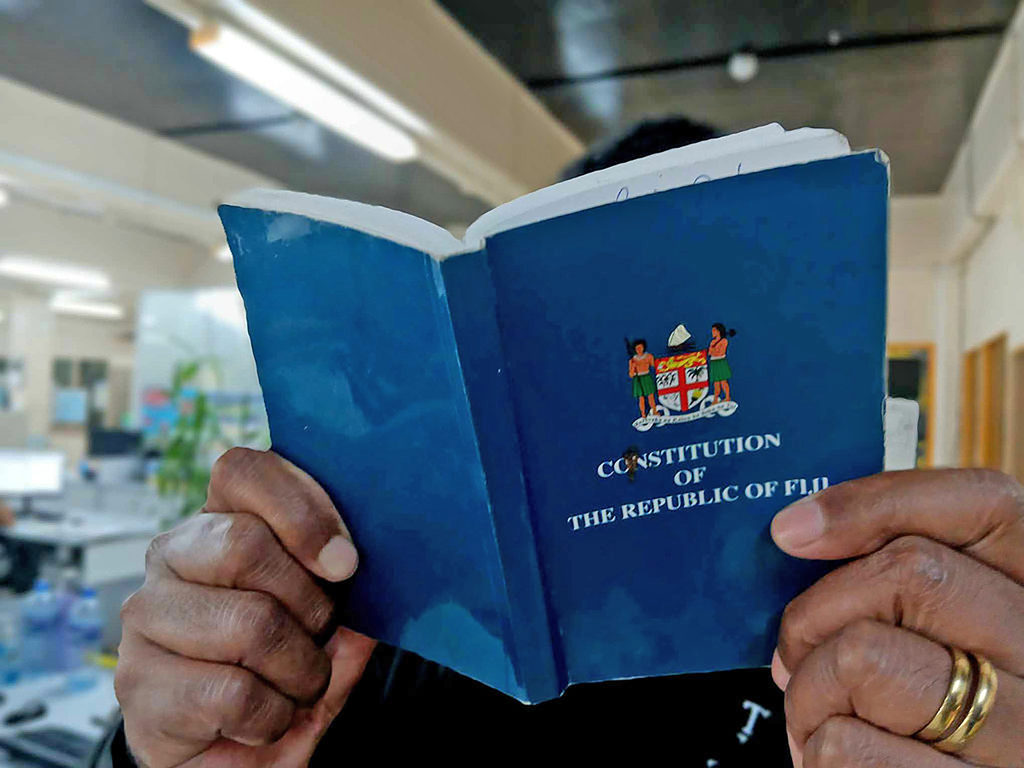
AT one stage in our nation’s history, we had a day set aside for the Constitution.
It was a day when we reflected on our Constitution. Well, we were expected to reflect on it.
It was a day when we were supposed to place value on something that serves as the supreme legal document for our nation.
With so much attention now placed on our Constitution, it is apt that we discuss it today, the day on which we once reflected on this special document.
Prime Minister Sitiveni Rabuka has been a prominent figure in our constitutional reform process.
Just four days ago, we read that the Constitution Review Commission’s report containing recommendations for a new Constitution could be made public after it is considered by Cabinet. That was the word from PM Rabuka.
Speaking to the media last week, Mr Rabuka said Cabinet would receive the report first, allowing ministers time to study its contents before Parliament resumes later this month.
When asked whether the report would be released, Mr Rabuka said it could be made available electronically, likely online, allowing Fijians to access its contents without having to obtain what he described as a “voluminous book”.
Government, he said, would consider the commission’s recommendations and the views gathered through its public and stakeholder consultations as a whole, rather than selecting individual proposals.
The recommendations would first go before Cabinet before any proposed constitutional amendments were drafted into a Bill and taken to Parliament.
In saying that, we also reflect on what Australian constitutional law expert Professor Anthony Regan said back in August, 2024.
He believes Fiji’s Coalition Government came into power “by the skin of its teeth”.
In the face of that, he believes it is not an option to leave the 2013 Constitution “as it is!”
Prof Regan spoke at the Fiji National University’s Vice-Chancellor’s Leadership Seminar in Nasinu that year on “Constitutional Change in Fiji: Looking to the Future”.
He voiced caution about the stability of the 2013 Constitution, saying leaving it unchanged was possible, but could carry risks because every government could face pressures and temptations.
As we now look forward to the General Elections, we reflect on how Prof Regan spoke about Fiji’s electoral system, describing it as problematic, and arguing it could help keep certain parties in power.
The Coalition Government, he said, got in by the skin of its teeth under that system.
The system, he argued, could increase the risk of a less favourable government gaining power in the future.
And this, he warned, could cause problems, including the potential overriding of human rights and weakening of accountability institutions.
He believes the required 75 per cent parliamentary majority to amend the Constitution may eventually be possible. He has also suggested possible ways to move on reforms, including changes to electoral legislation and compulsory voting to raise turnout and possibly build support for constitutional reforms.
Change, though, as the good professor notes, will need support and a united front.
That will mean awareness campaigns designed to raise understanding of any need for reforms and encourage participation. That will mean taking the message out to the masses, and encouraging them to buy into any bid to make changes.
Now, we know, that isn’t going to be a walk in the park. We can only look at Prof Regan’s opinions as a basis to stimulate discussion on this important topic and encourage people to consider whether it is important enough for them to participate.
So, we have what he considers a constitution vulnerable to potential abuse by future governments if it is left like this. And in the face of that sits the need for us to carefully consider what we must do moving forward. We have layers of complexities, and major challenges that will need careful consideration and discussion. It is clear that we need to be talking about this important document!