In the forest of Noikoro, Navosa, the remains of an old village tell the story of a people whose homes have long disappeared, but whose connections to the place continue through the stories passed down by elders.
The old village site or koro makawa known as Matawalu, is about an hour’s walk into the forest from Vatubalavu Village in Navosa.
For Seveci Lumelume, former village headman and district representative of Vatubalavu, Matawalu is more than a collection of abandoned earth mounds and stone foundations.
It is part of the history of the people – a history of movement that began at an earlier settlement known as Nakuruvakawalu before the people moved to Matawalu and later to Vatubalavu, where they live today.
From Nakuruvakawalu to Matawalu
Lumelume said the history of the movement was shared with him by elders of Vatubalavu.
“From my understanding, as shared to me by the elders, was that they had moved from the original village site called Nakuruvakawalu to Matawalu Village,” he said.
The movement did not end at Matawalu.
“From Matawalu, villagers then moved to Vatubalavu Village where they live to this day,” he said.
Today, none of the people living in Vatubalavu were born at Matawalu.
Their knowledge of the koro makawa comes from the stories of those who came before them and from what remains at the site.
Lumelume said the elders who made the journey have since passed on.
The physical evidence of their former home, however, remains scattered throughout the forest.
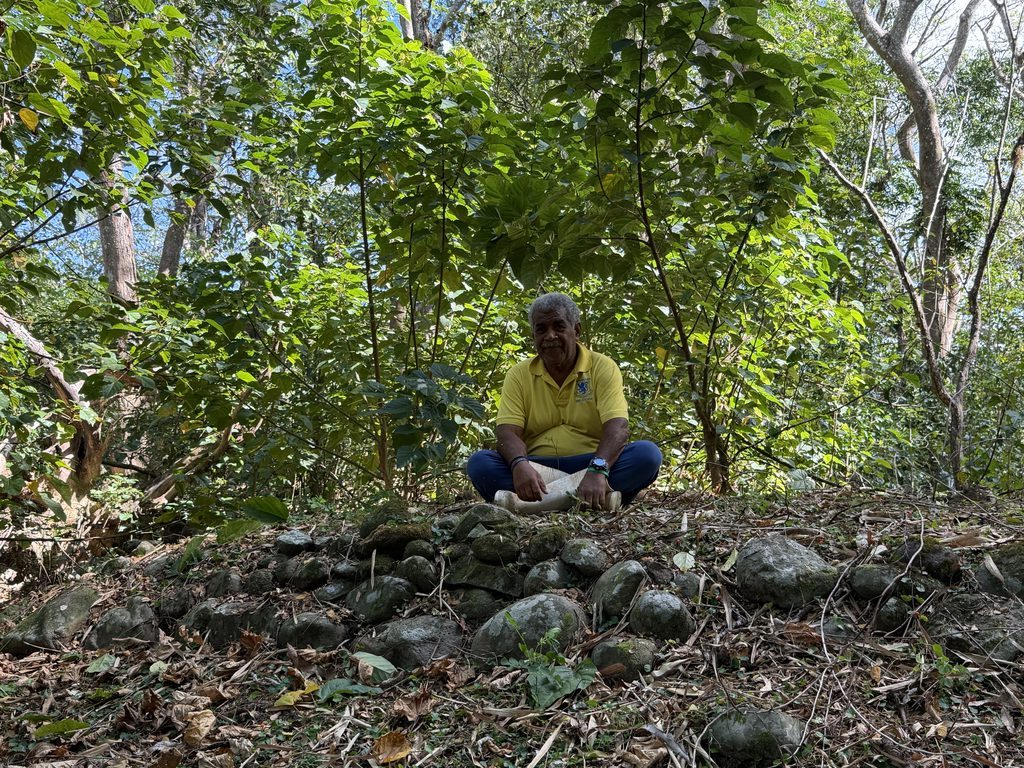
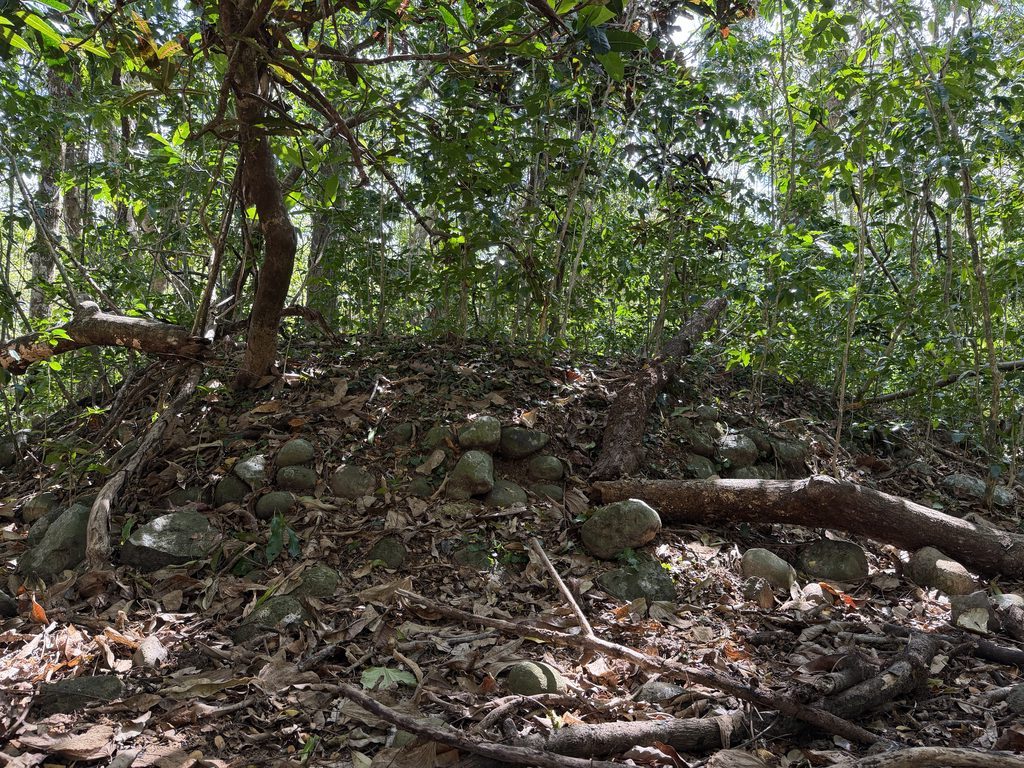
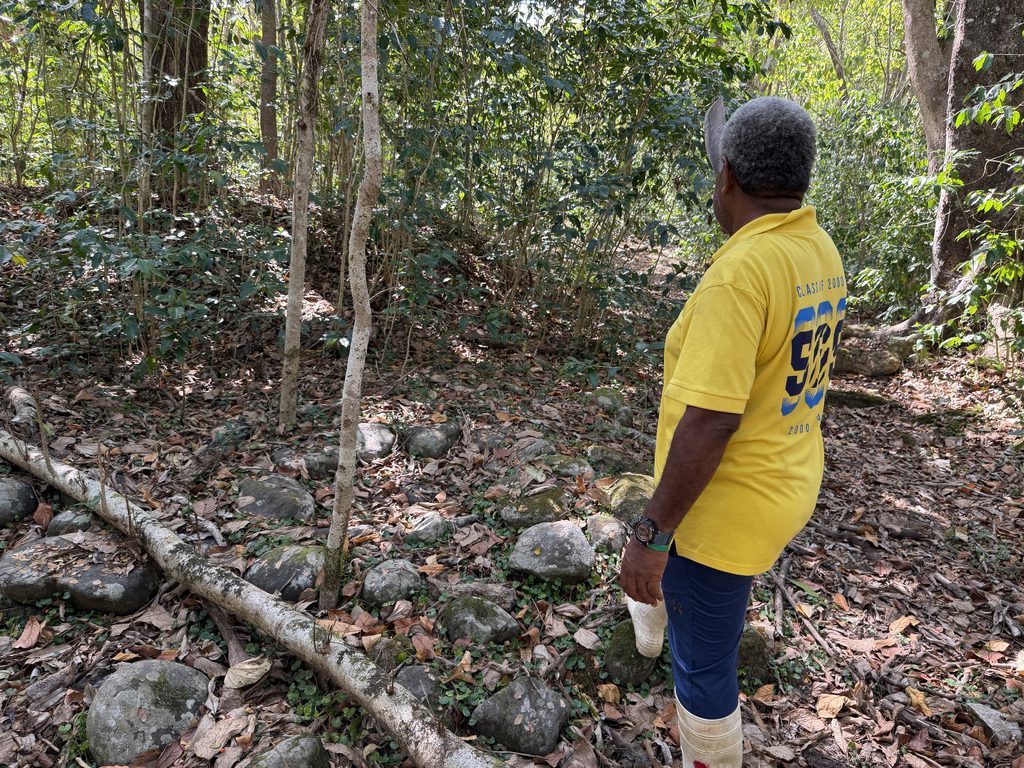
More than 30 house earth mounds can still be seen at the old village site.
Stones remain piled on the mounds, marking the foundations of former bure.
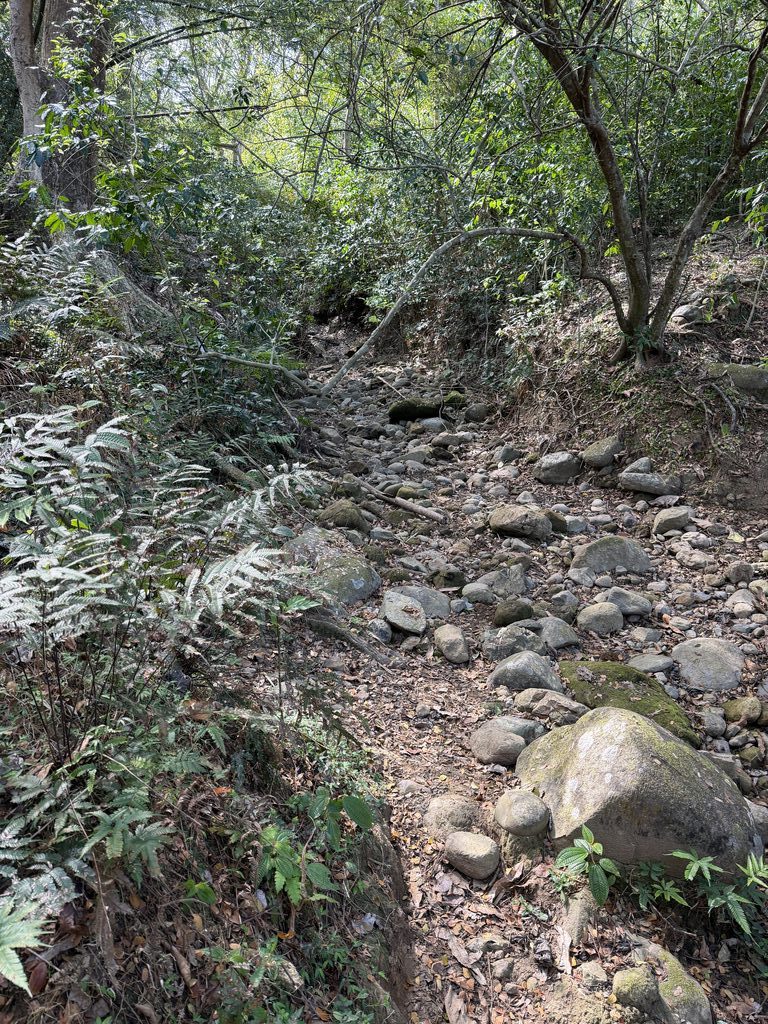
Paths that once connected homes can still be traced, while old burial mounds are marked by piles of rocks.
Ruined defensive earthworks and extensive house mounds stretch through the jungle, offering a glimpse of a site that was once a thriving village.
A village left behind
Matawalu was once part of the old district of Naqaqa, which is now Noikoro.
The site is also remembered through its association with Tevita Nagusudradra, a strong man who once went against the colonial government.
The stories surrounding Matawalu itself were also enough to make the old village a place people feared.
“What I’ve heard of the village is it was always considered a scary place to visit – no one dared to visit it,” Lumelume said.
When much of the old village was still intact, people were not allowed to enter.
“Before no one was allowed there or to step foot there, people weren’t allowed to make noises at the koro makawa,” he said.
Today, people can visit the site, although much of what once stood there has fallen into ruin.
The traces left in the forest
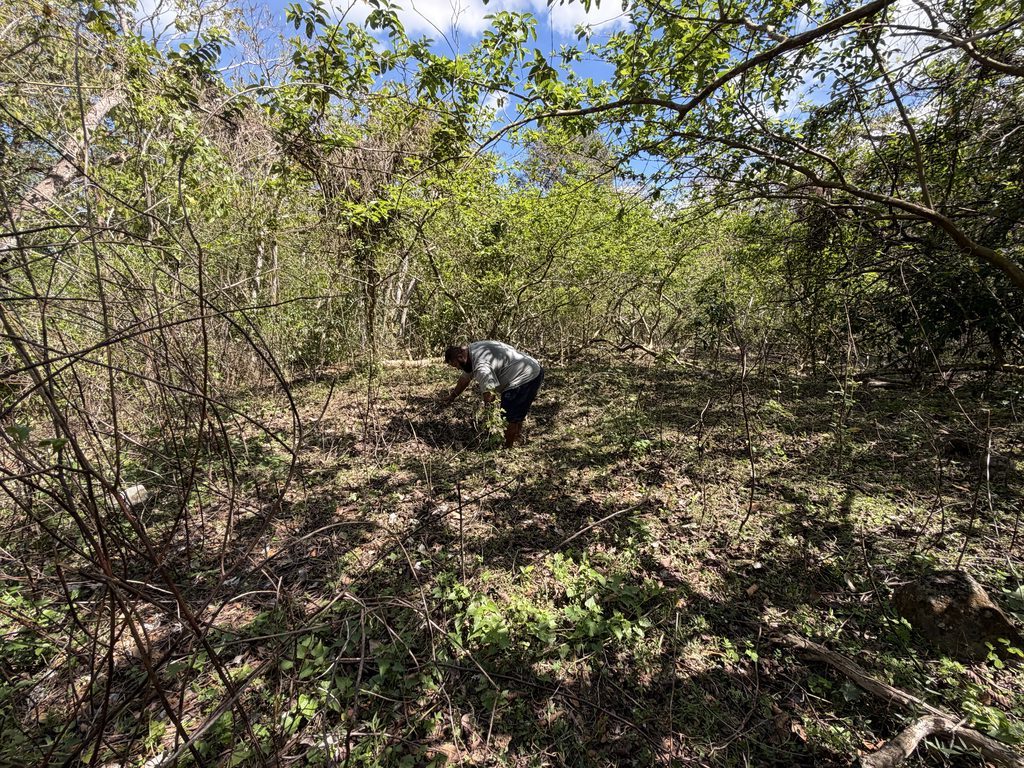
Nature has gradually reclaimed the old village.
As visitors move through the site, qisa plants can be seen growing through the koro makawa.
Lumelume said the plant was traditionally found growing along village boundaries and signified a place that had once been inhabited.
Coffee and salato plants can also be found at the old site.
“I don’t know when the coffee plants were planted there or if it just grew wildly after the elders left the area,” he said.
The vegetation now grows among the remains of the settlement, where the paths, mounds and stone formations provide physical reminders of the people who once lived there.
There is also an understanding that a nanaga or naga may have stood within the old village boundaries.
Lumelume said it was believed to have been situated near the river side as people entered the old village boundaries.
A few stone formations and a cleared area can still be seen at the site, which are believed to indicate where the nanaga may have been located.
The people who moved on
The story of Matawalu is also a story of movement beyond Vatubalavu.
When elders were living at Matawalu and later moved to Vatubalavu, various yavusa also moved from the area and established connections with other settlements.
Some moved to Ba, while others went to the district of Namataku.
Others moved to Nakasayaga Village.
Lumelume said those who moved to Namataku included the yavusa Nukuvura.
Others travelled to the old district of Magodro, to a village called Devo. These were the yavusa Matalima, who also moved from the area.
Most of these groups, Lumelume said moved from Vatubalavu rather than directly from Matawalu.
The connection to their earlier home has not disappeared.
“They still have their old village sites in this village,” he said.
The movements of these groups show how the old settlement was connected to a wider network of communities.
People left, established themselves elsewhere and carried their histories with them.
A history beneath the forest
The story of Matawalu reaches beyond the visible foundations of houses.
According to Adolph Brewster’s The Hilltribes of Fiji, the nanaga, or naga, was likely introduced by two mystic individuals who were said to have come from the north-west and taught certain rites to the people at the place where they landed.
“Its legend may be the dim record of a distant immigration, and the creed it imparted makes me think of the old-time deities, Baal and Ashtoreth,” Brewster wrote.
For those who live in Vatubalavu today the old village is a place known through the memories and stories of elders, even though no one living there today was born at Matawalu.
The journey from Nakuruvakawalu to Matawalu, and from Matawalu to Vatubalavu, is preserved in those stories.
And beyond Vatubalavu, the movement continued, with different yavusa establishing themselves in Namataku, Nakasayaga, Devo and other places.
What remains at Matawalu are the physical traces of that earlier life – more than 30 house mounds, stone foundations, burial mounds, old paths and defensive earthworks.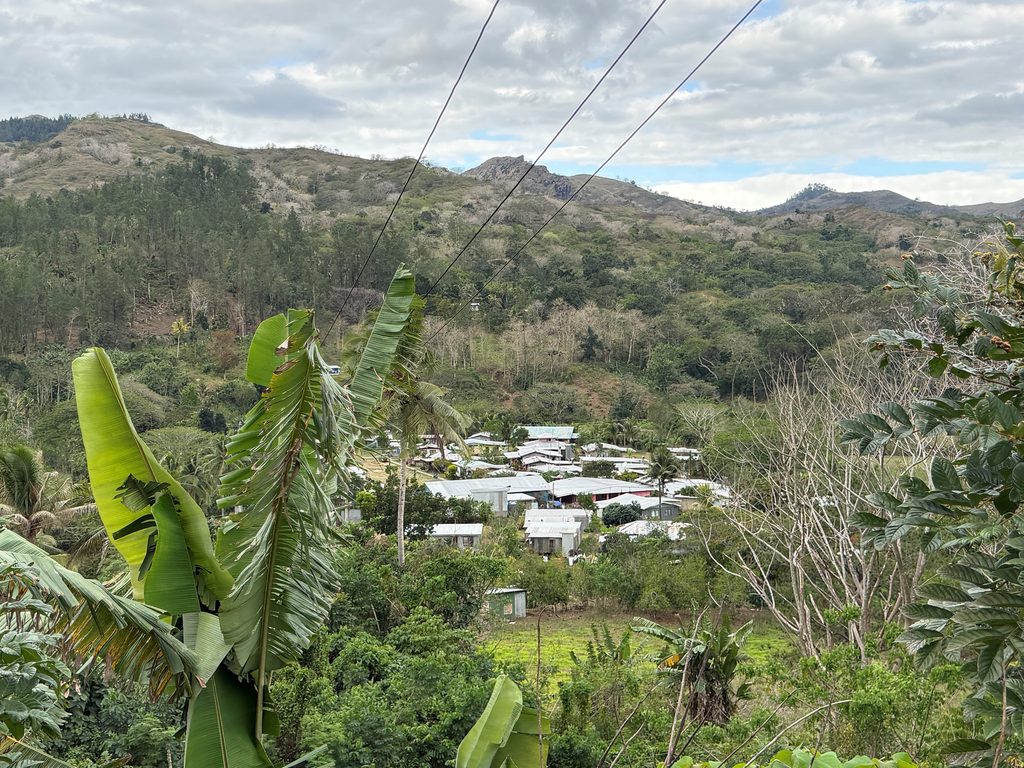
The village of Vatubalavu in the district of Noikoro in Navosa. Picture: ANA MADIGIBULI
Picture: ANA MADIGIBULI
Picture: ANA MADIGIBULI
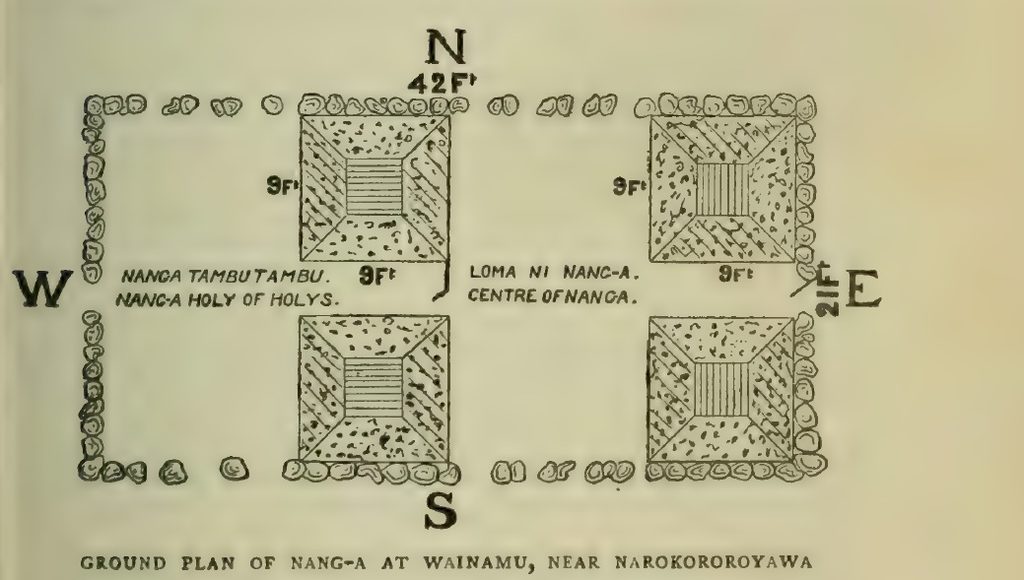
An illustration of the naga by Adolph Brewster in his book The Hilltribes of Fiji. Picture: ADOLPH BREWSTER
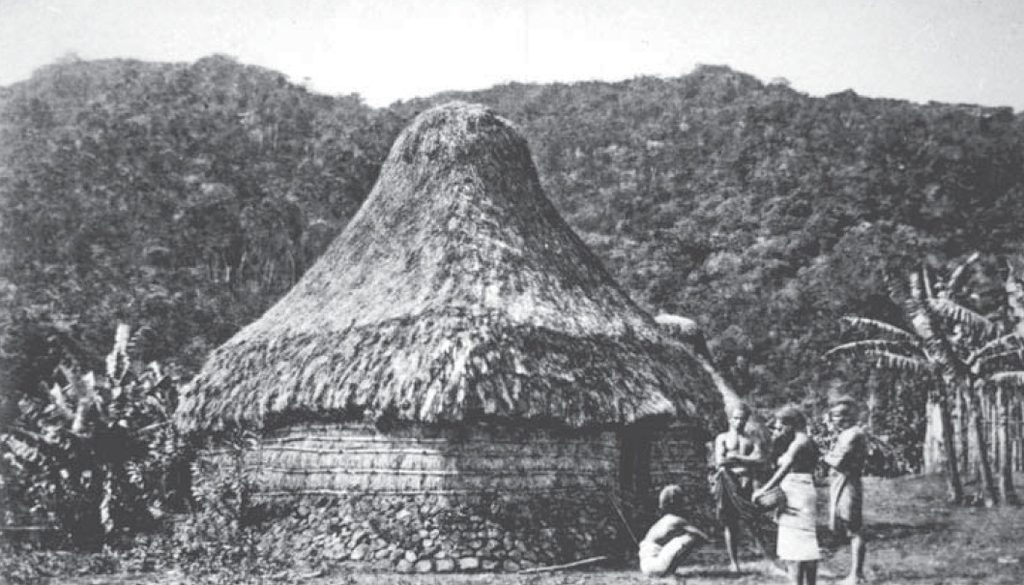
An old bure with stone mounds at the bottom.
Picture: University of Canterbury Library.
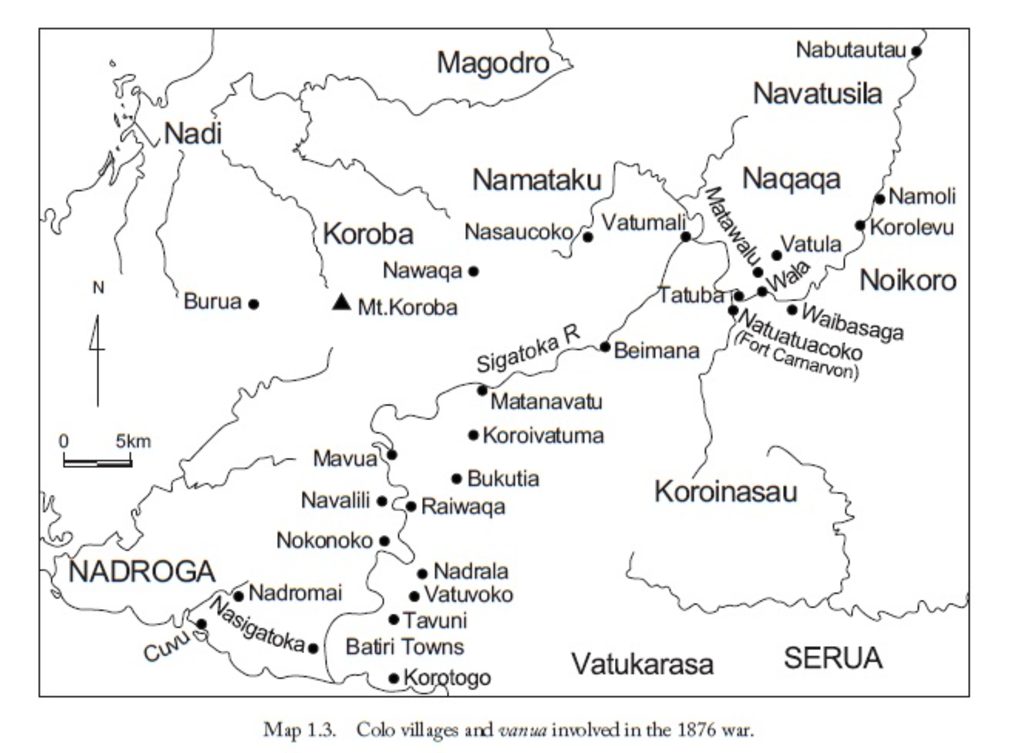
A map of the colo villages and vanua which includes the district of Naqaqa circled in red.
Picture: ROBERT NICOLE