TWO weeks in Fiji in October 1838 left behind a remarkable visual record of a country on the threshold of profound political and social change.
Nearly two centuries later, the sketches of French artist Ernest Goupil have become a window into that period, revealing Fijian people, leaders, dress, traditions and encounters with Europeans at a time when Fiji was already connected to a rapidly expanding global economy.
Those sketches formed the heart of Fiji 1838: Face to Face / Fidji 1838: Face à Face, an exhibition held at the Musée des Beaux-Arts de Chartres in Chartres, France.
The exhibition was launched on April 3 and opened to the public the following day running until August 2 this year.
At its centre was the 1838 visit of French explorer Jules Dumont d’Urville and the visual record created during his expedition.
For Fiji-French artist and co-curator Samson Verma, the exhibition was not simply an examination of a French expedition to Fiji. It was an opportunity to bring together French museum collections, historical records and contemporary perspectives on Fiji.
The idea began three years earlier when Stephanie Leclerc-Caffarel, curator of Pacific collections at the Musée du quai Branly – Jacques Chirac and research associate to the Fiji Museum since 2010, became involved in plans to rethink the Musée des Beaux-Arts de Chartres before a major renovation.
Having worked for two decades on Dumont d’Urville’s voyage (its related collections and archives) she recognised the importance of Goupil’s drawings and their relevance to contemporary Fiji.
“The dialogue with collections held elsewhere in France primarily at the quai Branly and the conversation with contemporary Fiji, including the idea of having twin exhibitions in France and Fiji were there from the start,” Verma said.
“And this is how the project began, through a dialogue between several possible partners.”
A meeting of collections
The connection between the Musée des Beaux-Arts de Chartres and the Musée du quai Branly – Jacques Chirac was strengthened by a collection held in Chartres that had a direct link to Oceania.
The collection belonged to Louis-Joseph Bouge, a colonial administrator active at the beginning of the 20th century who had developed an interest in the arts and cultures of Oceania.
Among the collection were the original sketches made by Ernest Goupil during Dumont d’Urville’s second voyage to Fiji.
“This collection is important as it contained the original sketches drawn by Ernest Goupil during the second voyage into Fiji of Dumont d’Urville,” Verma said.
The material attracted the interest of the Musée du quai Branly through Leclerc-Caffarel, whose work on Pacific collections helped bring the two institutions into closer dialogue.
The Musée du quai Branly houses the largest collection of indigenous items acquired by Dumont d’Urville and his crews, among others in Oceania during the beginning of the 19th century.
The exhibition therefore brought together material that had been separated across collections and institutions, allowing visitors to examine the 1838 expedition through several forms of historical evidence.
Looking beyond the expedition’s records
Presenting an account of Fiji from nearly two centuries ago came with its own challenges.
The exhibition drew on the journals of the captain and his shipmates, Goupil’s original sketches and drawings, and engravings later produced from those sketches.
But the engravings had been created without Goupil’s supervision. He died a year after the Fiji expedition and was buried in Tasmania, Australia.
For the curators, another important challenge was ensuring that the story was not told exclusively through the eyes of the French expedition.
“Another one of the challenges was how to present as accurately as possible balanced points of view from the indigenous Fijian perspectives as well, and not depending solely on Dumont d’Urville’s accounts, unsurprisingly tainted with the stereotypes of the time,” Verma said.
The sources were therefore questioned and confronted with one another, allowing visitors to consider the material from more than one perspective.
What Goupil saw
Goupil’s sketches offer a detailed record of Fijians during a period of significant transition.
The expedition spent only two weeks in Fiji in October 1838, but the encounters and observations recorded during that time provide what Verma describes as a particularly relevant “time capsule”.
The period was one of structural change, marked by the arrival and mastery of European guns by warlord clans in Fiji and throughout the Pacific, alongside the movement of whalebone, tabua and European goods.
The sketches also preserve details of Fijian life that might otherwise be difficult to visualise.
Traditional dress, accessories and ornamentation were among the details that stood out during the research. Accessories were important markers of rank and status. The sketches show women wearing the ‘ulu mate’ and chiefs wearing the ‘isala’, or masi head wrappings.
They also record bure kalou or ossuaries in trees, one of the oldest preserved pieces of masi decorated with bitunikesa, and the skills of Fijian women in producing a diverse range of material goods.
The works also provide evidence of tattooing and highly developed craft and artistic skills.
Portraits beyond stereotypes
One of the strongest contrasts in the exhibition was between Goupil’s original sketches and the engravings later produced from them.
The written accounts contained opinions and preconceived ideas about Fijian society, while Goupil’s drawings captured his subjects in striking detail and precision.
Verma said Goupil appeared to hold the people he was sketching in awe and treated them with respect.
His drawings of women, canoes and male figures contrasted with some of the negative presumptions and stereotypes found in contemporary written accounts.
The difference becomes particularly striking in portraits of prominent Fijian leaders.
The realistic portraits made by Goupil differed considerably from the later engravings, which were produced in France after his death.
According to Verma, the engravings reveal racial stereotypes and caricatures typical of European portraits of non-Europeans at the time.
Yet the original works also offer an unexpected glimpse into the personalities of major figures in Fijian history.
One example is Ratu Tanoa Visawaqa.
Goupil depicted him shortly after the yaqona ceremony following the burning of Viwa by the unwilling allies of Bau.
Tanoa had just become one of the most powerful chiefs in the region following the fall of his rival.
He is shown seated quietly, looking into the distance. For Verma, the image conveys more than authority. It offers a glimpse of a leader whose political mastery included the ability to recognise and seize opportunities.
The Viwa incident
Among the stories visitors could learn through the exhibition was the Viwa incident and its consequences for Fijian politics. Dumont d’Urville was the French explorer known for dividing the Pacific into the three principal regions of Melanesia, Polynesia and Micronesia. He was also the first to map Fiji.
During his visit, Viwa was burned after Dumont d’Urville received approval from Tanoa Visawaqa.
The incident contributed to the rise of the Vunivalu of Bau as the dominant power in eastern Fijian politics.
Viwa was reduced to allegiance to Bau and forced to relinquish its ancient ties to Verata. The event also became embedded in Fiji’s oral history.
Following the birth of the son or nephew of the Roko Tui Viwa, he was named Ratu Varani – the Fijian word for France – in memory of the French burning of Viwa.
His kinswoman, born in Lovoni Na Koro, was named and titled Adi Varanisese in memory of the same incident.
Their later lives became intertwined with Fiji’s political history.
Ratu Varani was eventually assassinated in Lovoni while serving as an emissary of Ratu Seru Cakobau, seeking to persuade the Lovoni people to submit to the authority of the Vunivalu of Bau.
Adi Varanisese would also endure upheaval.
After the assassination of her husband, Ratu Kulati Rakavono, Na Qaqa kei Lovoni and High Chief of Lovoni, she fled with her children to coastal Ovalau, where she helped rebuild and refound Nakorovatu-Nasinu with the support of her kinsmen, including the Roko Tui Tokou.
A society in transition
The exhibition ultimately presented Fiji in 1838 as a society undergoing profound transformation.
The drawings show Fijians and Europeans interacting at a time when economic relationships were expanding.
Fiji was already part of a globalised market, with Europeans trading with Fijians for turtle shell, sandalwood and beche de mer, while whaling was taking place in Fiji’s waters.
At the same time, traditional leadership and political structures were changing.
Fijian chiefs were confronting foreigners with superior weapons and other means, while also recognising that Europeans could be used in pursuit of their own internal political agendas.
Dumont d’Urville’s role in the Viwa incident became part of that larger political transformation.
For visitors to Fiji 1838: Face to Face, the sketches therefore offered more than portraits from a distant expedition.
They provided a way to look directly at a moment when Fijian society, already connected to the wider world, was negotiating new relationships, new technologies and shifting centres of power.
Nearly 200 years later, Goupil’s images continue to preserve those encounters – not as a complete account of Fiji, but as a visual record that can be questioned, compared with written accounts and considered alongside Fijian perspectives.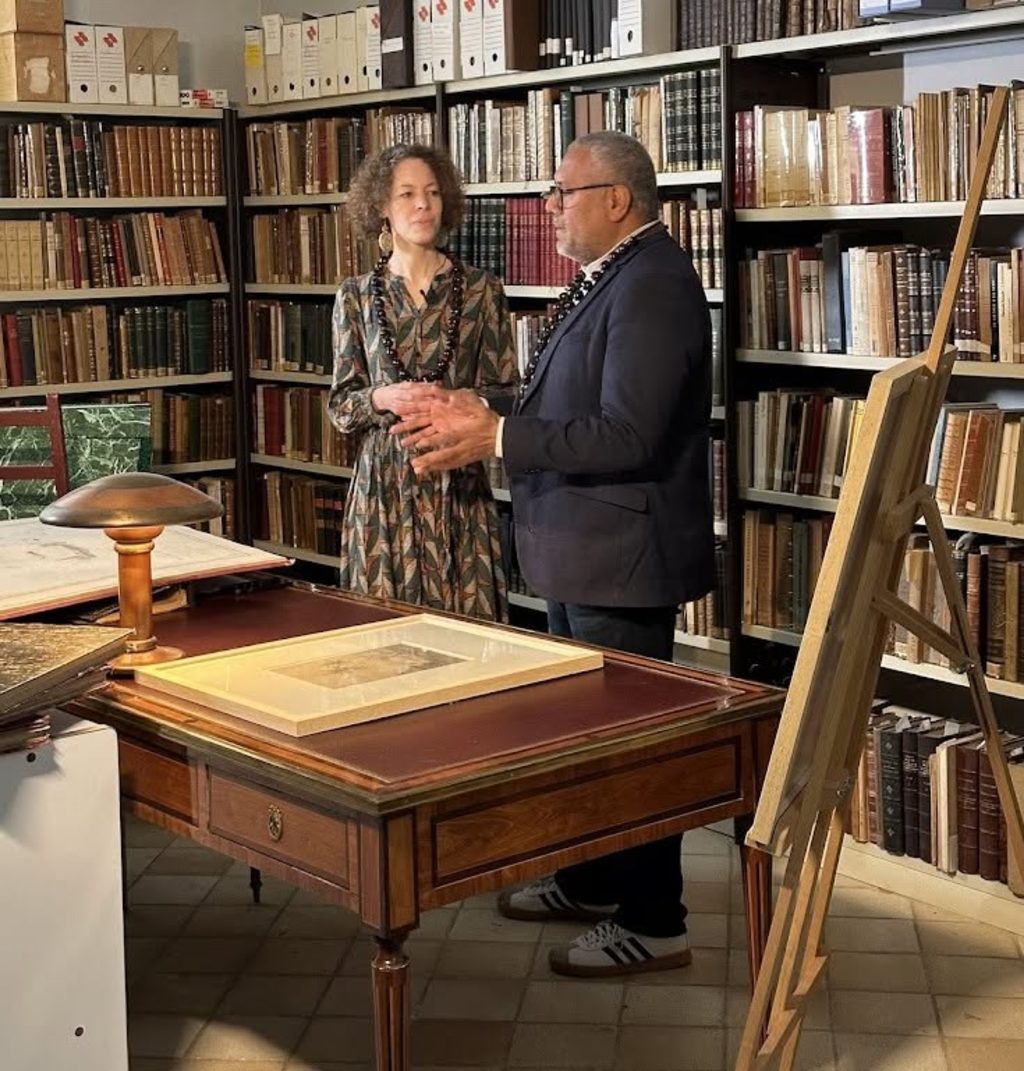
Top: Fijian artist and co-curator of the French Exhibition Samson Verma, and Stéphanie Leclerc Caffarel, curator of the Oceania collections at the Musée du quai Branly – Jacques Chirac in Paris. Picture: FIJI MISSION GENEVA
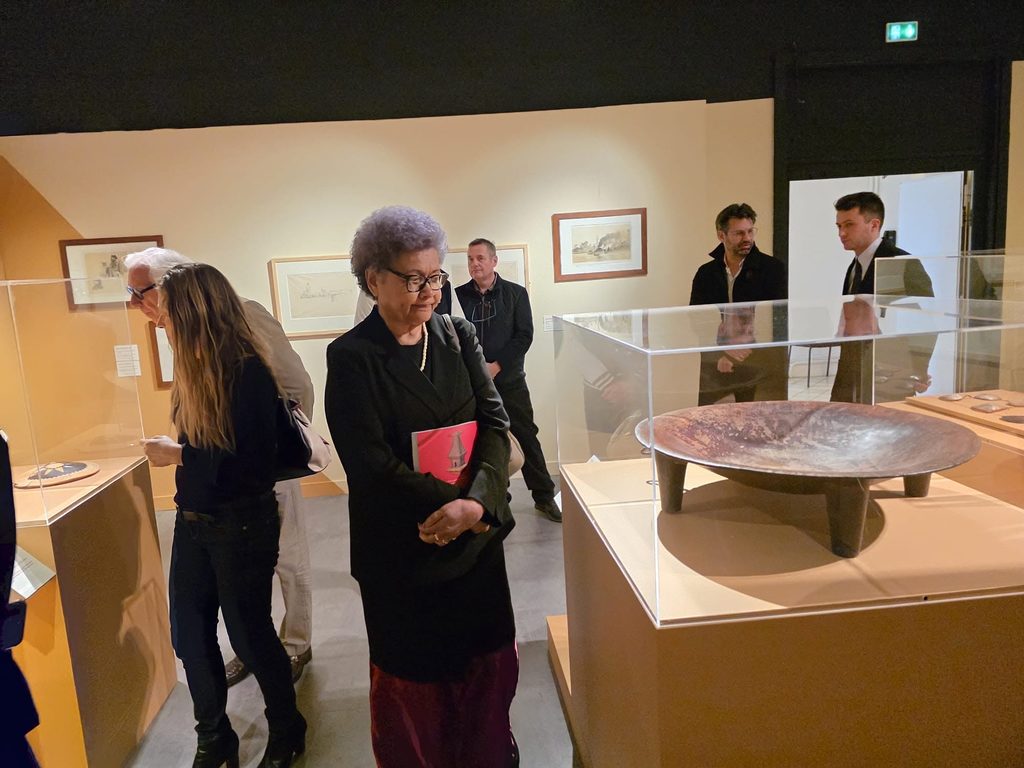
The exhibition therefore brought together material that had been separated across collections and institutions, allowing visitors to examine the 1838 expedition through several forms of historical evidence.
Picture: FIJI MISSION GENEVA
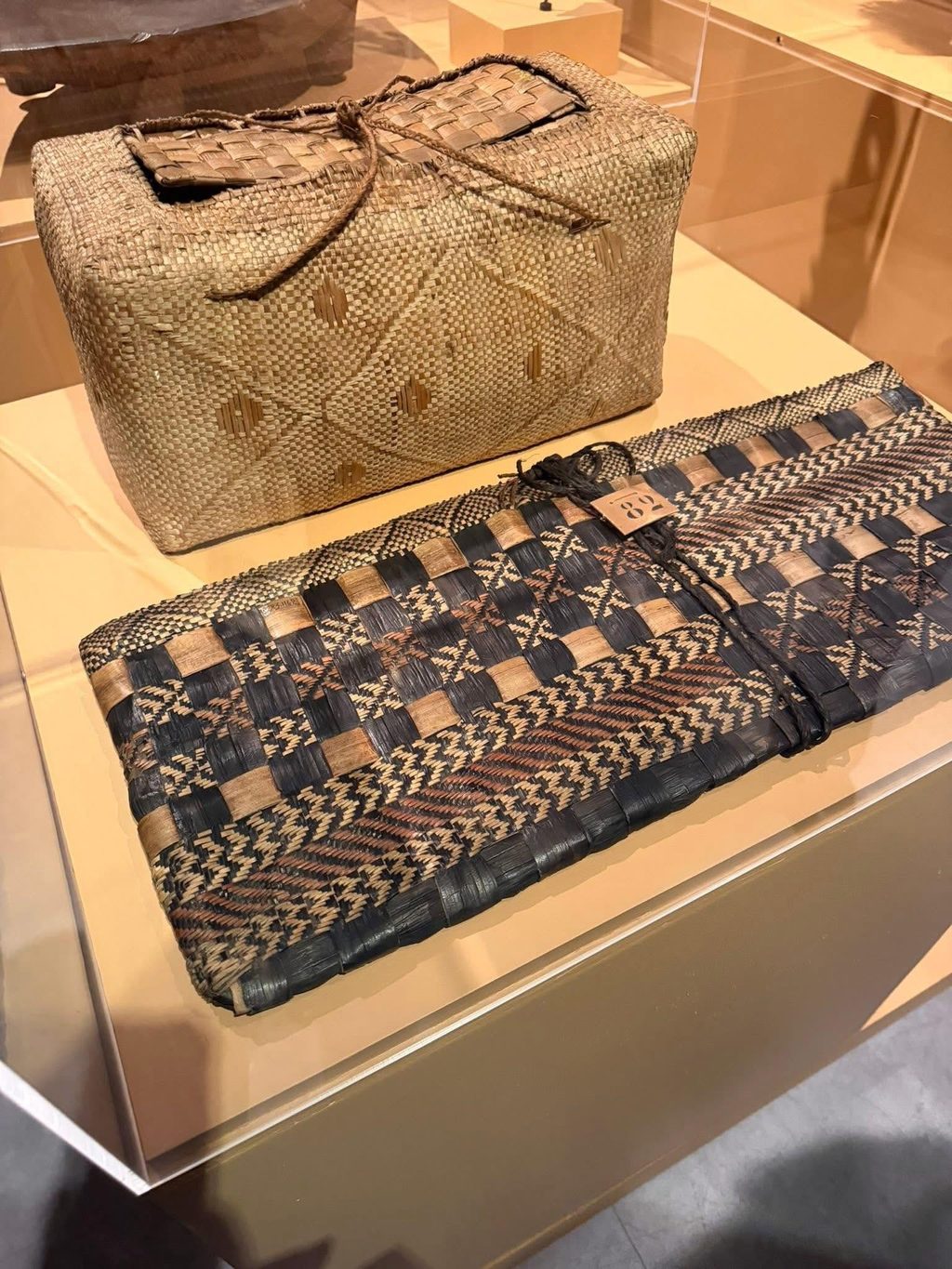
The exhibition ultimately presented Fiji in 1838 as a society undergoing profound transformation. Picture: FIJI MISSION GENEVA
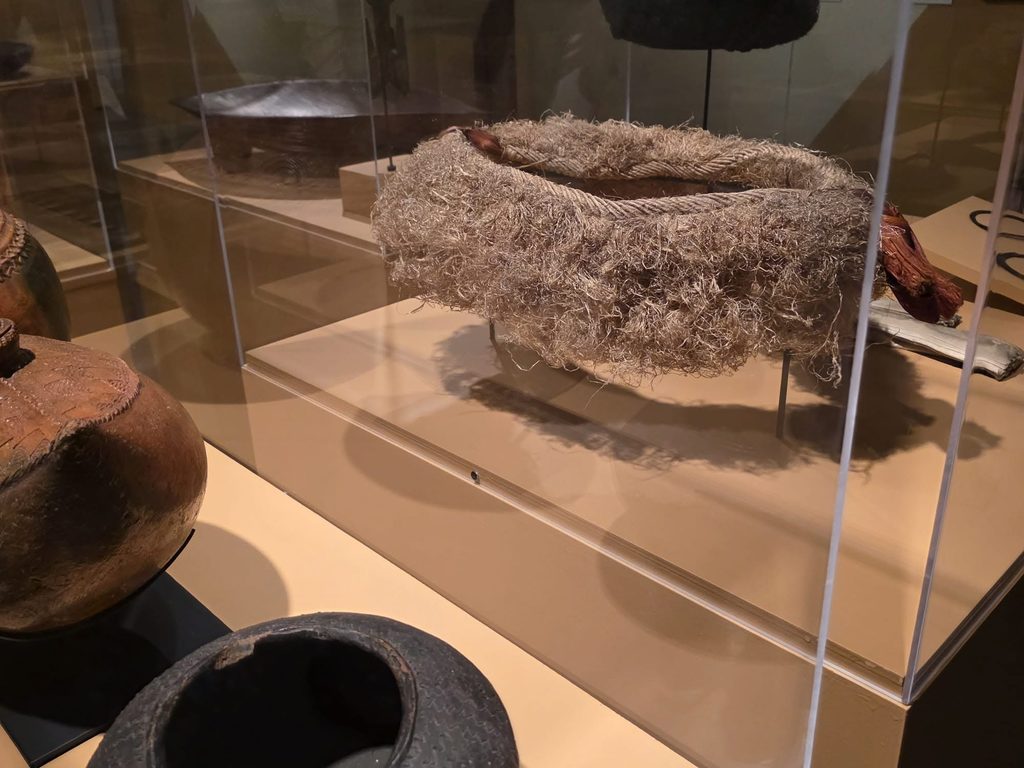
Traditional dress, accessories and ornamentation were among the details that stood out during the research. Picture: FIJI MISSION GENEVA
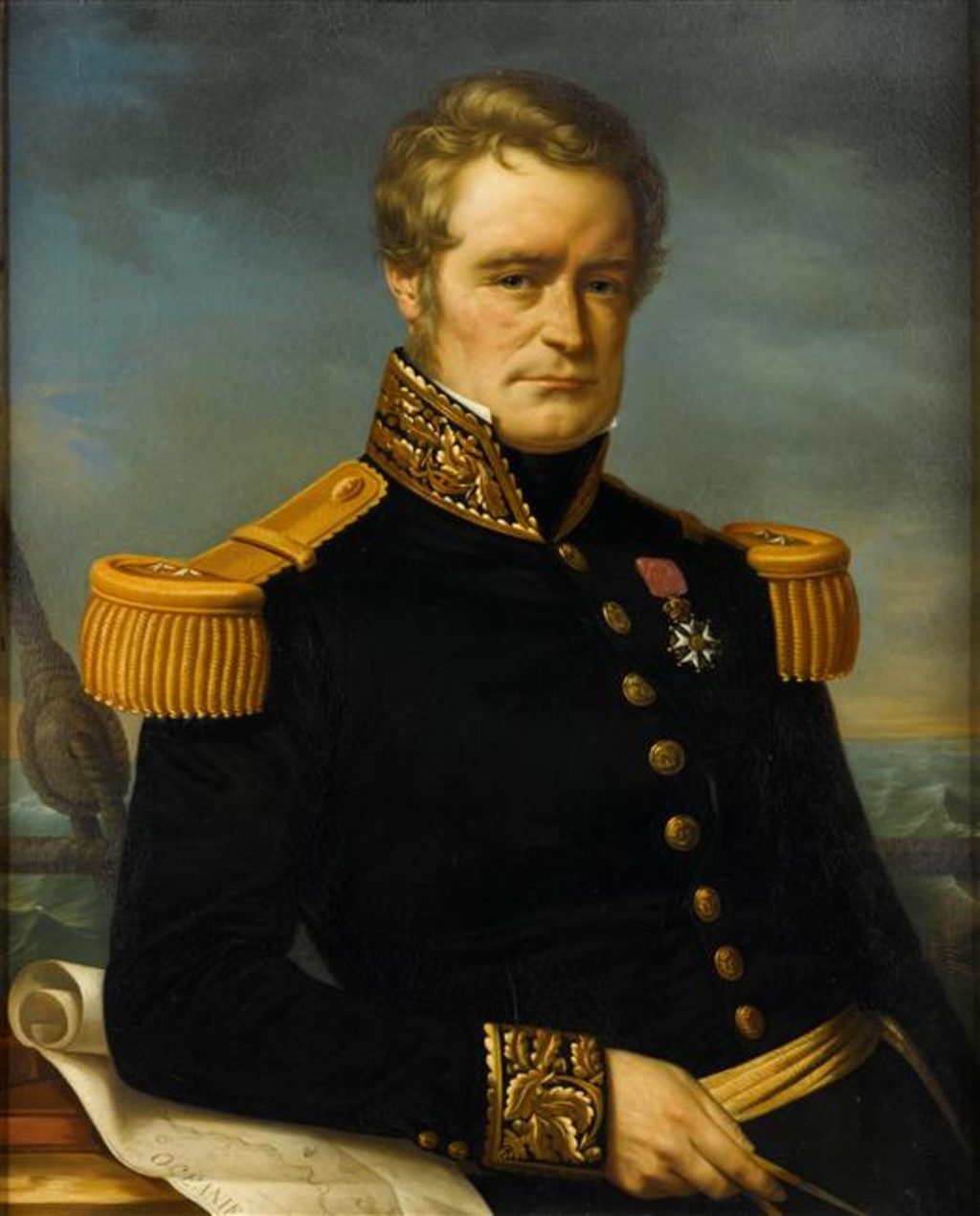
French explorer Jules Dumont d’Urville. Picture: WIKIPEDIA