Bangladesh has put forward a series of requests to Fiji aimed at making it easier for its citizens to secure employment, obtain work permits and take up jobs in the country.
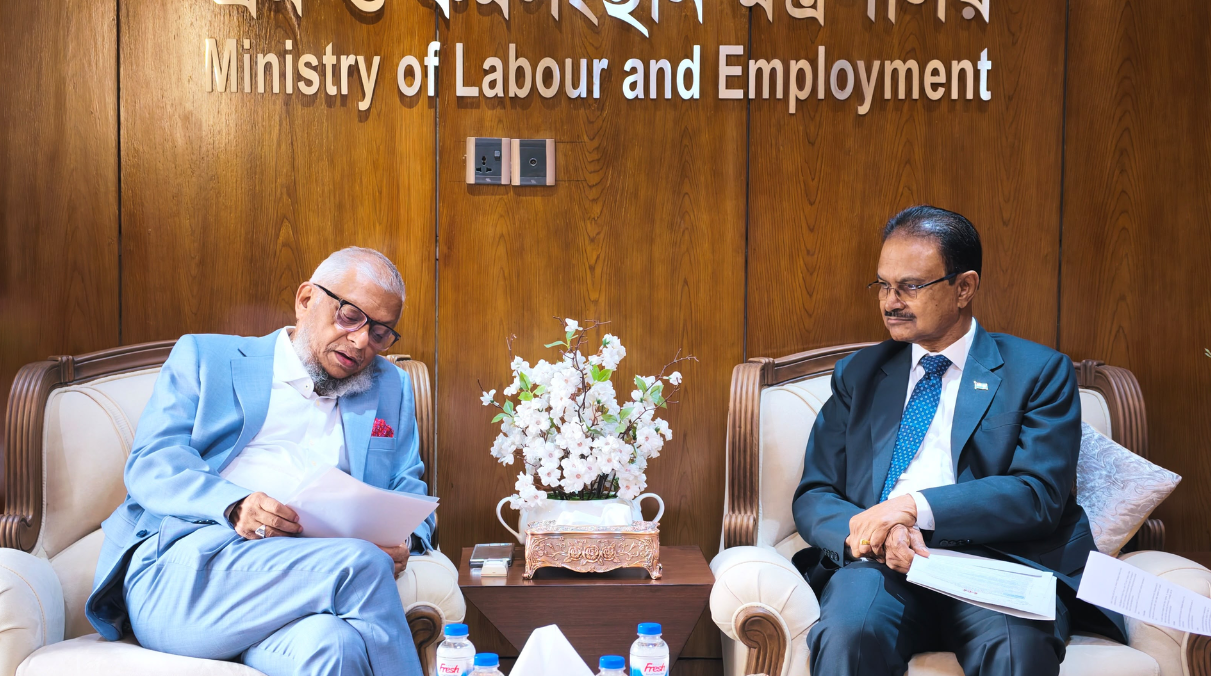
The requests were raised during a meeting between Bangladesh’s Labour and Employment and Expatriates’ Welfare and Overseas Employment Minister Ariful Haque Chowdhury and Fiji’s High Commissioner to India, Jagannath Sami, on November 17.
Among the key requests were expanding employment opportunities for Bangladeshi nationals, simplifying recruitment procedures and making it easier to obtain and renew work permits.
Bangladesh also requested Fiji to reduce the current three-month processing period for issuing or converting driving licences for Bangladeshi workers.
Another proposal would allow Bangladeshi workers to renew their work permits without having to return to Bangladesh when their existing permits expire.
The Bangladesh Government also called for the early signing of a proposed memorandum of understanding, which has already been submitted through diplomatic channels.
Minister Chowdhury proposed three additional measures to facilitate recruitment.
These included Fiji providing specific information about sectors facing labour shortages and the skills required, allowing Bangladeshi workers to undergo appropriate training before arriving in the country.
He also proposed stronger communication between public and private sector organisations in both countries to accelerate recruitment and assess labour demand.
The minister suggested using Bangladesh Overseas Employment and Services Limited (BOESL) to facilitate worker deployment.
His third proposal called for regular communication and information sharing between relevant ministries and agencies to identify areas of cooperation and implement joint initiatives.
Mr Chowdhury also sought Fiji’s cooperation in ensuring Bangladeshi workers were provided with safe working conditions and that their rights and benefits were protected.
He identified construction, agriculture, tourism, hotels and restaurants, and technical services as sectors where Bangladeshi workers could help meet Fiji’s labour needs.
Meanwhile, Bangladesh’s Ministry of Expatriates’ Welfare and Overseas Employment Secretary Md Mokhtar Ahmed revealed that approximately 8,000 Bangladeshi workers were currently employed in Fiji.
He said another 3,300 Bangladeshi workers had travelled to Fiji this year.
Mr Ahmed proposed using Bangladesh’s 104 Technical Training Centres to provide specialised training to prospective workers based on Fiji’s employment requirements.
Mr Sami acknowledged Fiji’s demand for skilled foreign workers, saying many Fijians moved overseas after completing their higher education.
He said Bangladesh could become a potential source of workers because of similarities in climate and culture between the two countries.
Mr Sami assured the minister that he would raise the requests and proposals with the relevant Fijian authorities for consideration.
The discussions also covered bilateral trade, investment, aviation cooperation and the exchange of expertise in sustainable agriculture.