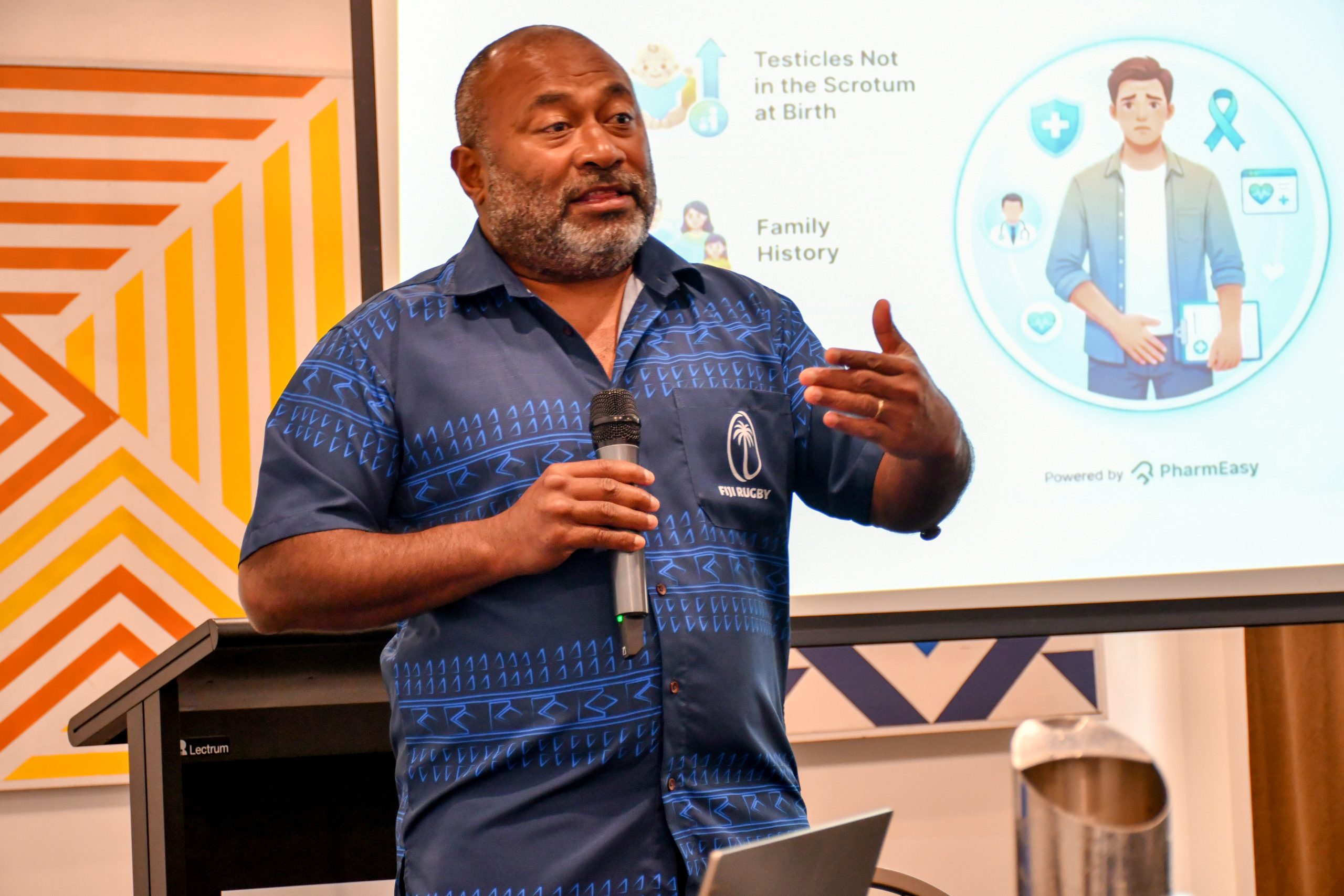
FORMER health minister Dr Ifereimi Waqainabete has urged men not to allow shame or stigma to prevent them from taking medication and seeking medical attention.
He was speaking at a special International Men’s Day breakfast hosted by The Fiji Times in Suva yesterday for its male staff, as part of efforts to raise awareness about men’s health and the Movember campaign.
The breakfast provided an opportunity for staff to come together and openly discuss men’s health and wellbeing in a relaxed and supportive environment.
As the guest speaker, Dr Waqainabete highlighted the importance of regular health checks, recognising the signs and symptoms of prostate cancer, early detection and seeking medical advice.
“Better to take medicine and live longer than be ashamed of taking medicine and die tomorrow,” he warned.
“The choice is yours.”
He also discussed the support, treatment and counselling services available to men diagnosed with cancer, as well as the importance of mental health and speaking openly about health concerns.
Dr Waqainabete explained how the human body continuously produces new cells while old ones die, with natural genetic mechanisms designed to identify and eliminate abnormal cells.
“That’s why we don’t have cancer. Because when abnormal cells are made, they’ve been picked up straight away.”
However, he warned that when these natural protective mechanisms failed, abnormal cells could multiply and develop into cancer.
He said while some people had genetic problems that affected these mechanisms, environmental factors also played a significant role.
“Too much of smoking, too much fat in the diet, too much oil, and all these things affect these immune restraints and it (affected cells) keeps on growing.”
Dr Waqainabete also highlighted the importance of drinking water, explaining that about 70 per cent of the human body was made up of water.
The event reinforced the importance of men taking responsibility for their health, undergoing regular medical checks and seeking help early rather than waiting until health problems became serious.